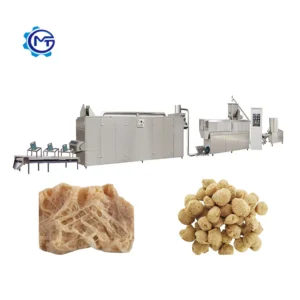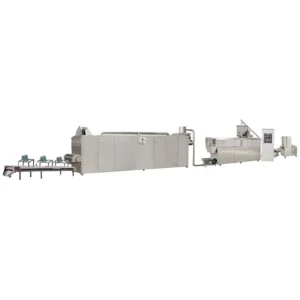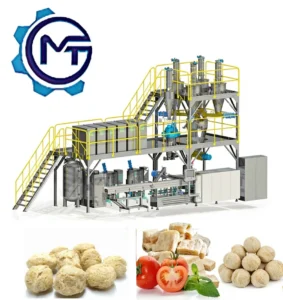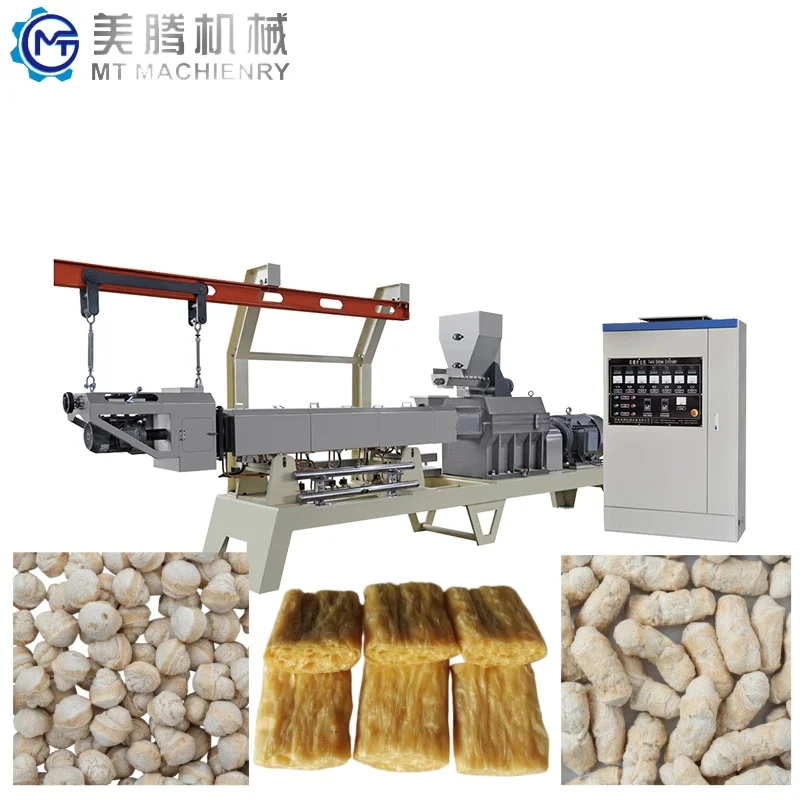

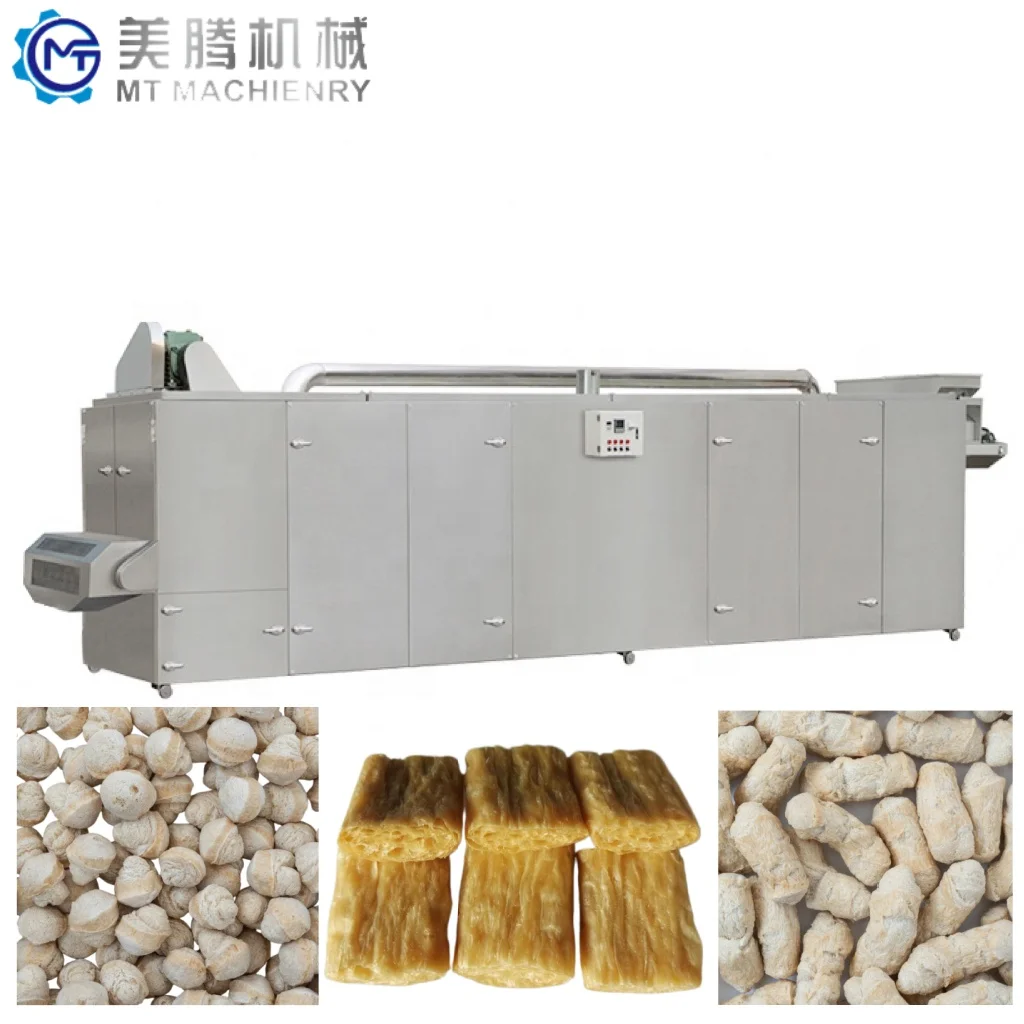
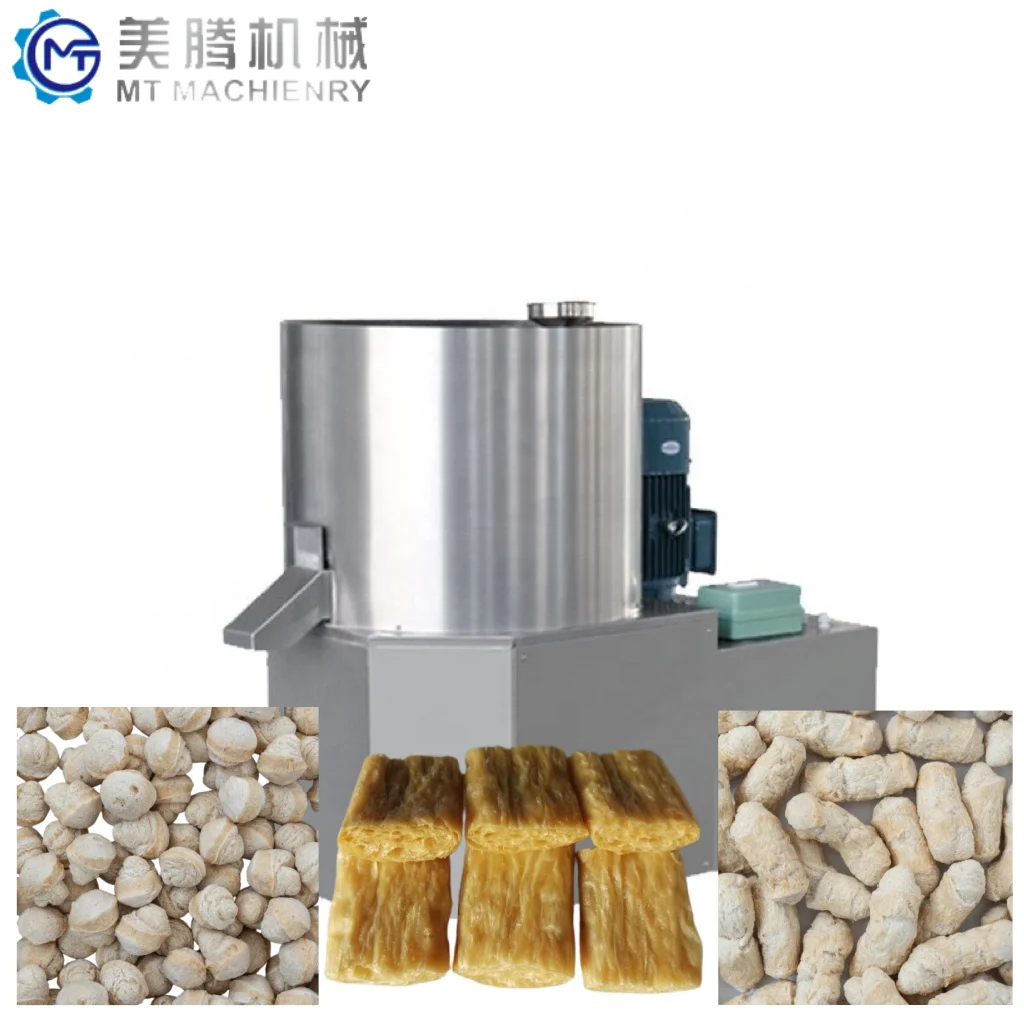

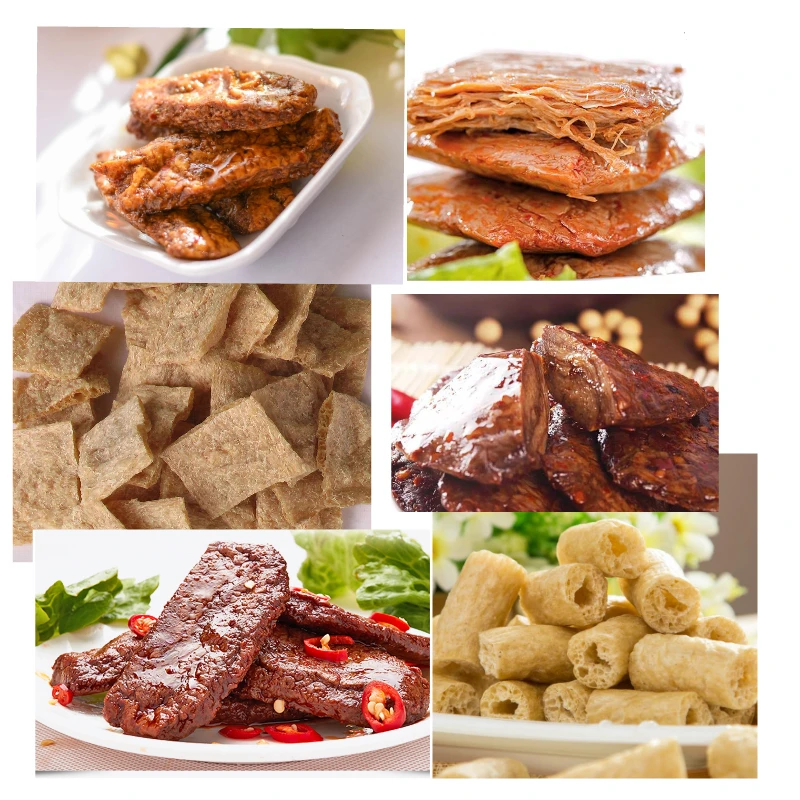
MT65 / MT70 / MT85 Textured Soy Protein Extrusion Line, Twin-Screw, CE Certified — engineered as a turnkey project where every station from mixer to dryer is sized to the same throughput target.
- Screw configuration and die design specified to your soybean meal formulation and target fiber structure
- Line capacity verified on buyer’s actual raw material through pre-shipment trial runs in our testing workshop
- Throughput balanced across mixing, extrusion, drying and cooling to eliminate bottlenecks
Supported by complete documentation including line layout, electrical schematics with voltage confirmation, and operation manuals — from inquiry through on-site commissioning and ongoing wear parts supply.
Description
Matched Throughput Across Stations — the textured soy protein extrusion line is engineered so mixing, extrusion, drying and packing share the same validated capacity target rather than being assembled from mismatched vendors.
Technical Specifications
| Parameter | Value |
|---|---|
| Product Type | Textured Soy Protein Extrusion Line |
| Model Options | MT65 / MT70 / MT85 |
| Extruder Type | Twin-screw |
| Installed Power (Line) | 85 kW (MT65) / 120 kW (MT70) / 195 kW (MT85) |
| Real Power Consumption | 65 kW (MT65) / 90 kW (MT70) / 165 kW (MT85) |
| Output Capacity | 150–200 kg/h (MT65) / 200–300 kg/h (MT70) / 600–800 kg/h (MT85) (basis not stated in source — confirm raw material formulation / moisture content) |
| Extruder Main Motor | 30 kW |
| Extruder Dimension | 2800 × 830 × 1875 mm |
| Powder Mixer Tank Volume | 150 kg |
| Powder Mixer Rotary Speed | 385 rpm |
| Powder Mixer Cycle Time | 10 min per batch |
| High-Temperature Roaster Belt Length | 3.5 m effective |
| High-Temperature Roaster Heater | 3.9 kW × 24 far infrared elements |
| Cooling Machine Temperature Range | 0–60 °C |
| Overall Line Dimension (L×W×H) | 18000×1300×2300 mm (MT65) / 20000×1500×2400 mm (MT70) / 24000×3500×4300 mm (MT85) |
| Contact Material | Food-grade stainless steel |
| Assembly State | Complete line from batching to packing |
| Certifications | CE / ISO |
Application Suitability
| Application | Material or Output |
|---|---|
| Textured soy protein chunks and granules | Low-temperature soybean meal, soy isolate, peanut meal |
| Vegetarian meat analogues for further processing | TVP as input for ham, sausage, canned food formulations |
| Plant-based meat slices and strips | Defatted soy flour blends with vital wheat gluten |
| Ingredient supply for quick-frozen food producers | Semi-finished TVP granules for dumpling and patty fill |
| Small-batch pilot production for new product development | Owner-operated plants testing new fiber structures |
Why Nominal Capacity Numbers Mislead Textured Soy Protein Buyers
A Textured Soy Protein Production Line turnkey quote showing a round capacity figure often hides the fact that the test was run on a generic soy isolate formula, not on the buyer’s actual defatted soy flour and vital wheat gluten blend. The only capacity number that matters is the one validated on your specific raw material at your target moisture. I have watched lines stall at the extruder because the supplier sized the screw for isolate while the customer was running a cheaper meal-and-gluten mix — the material did not gelatinize properly, output dropped, and the downstream dryer sat half-empty [NEED_CITE: twin-screw extrusion behavior on varying soy protein formulations]. When throughput is quoted without stating the raw material basis, the buyer ends up paying for a nameplate that the line cannot hold in daily production.
How Screw and Die Design Shape Fiber Structure
The twin-screw extruder in a Textured Soy Protein Production Line turnkey system does more than push material through a barrel — it controls shear, residence time and pressure profile simultaneously. Screw element sequencing determines whether the soy protein unfolds into long fibrous strands suitable for chunk-style meat analogues or shorter, denser granules for minced applications. Die geometry then locks in the cross-section and expansion ratio. A configuration that works for pure soy isolate will behave differently when the feedstock contains starch from wheat gluten, which is why the screw combination must be matched to the buyer’s actual blend before the machine is finalized.
Throughput Matching from Mixer to Packing Station
A recurring failure mode in plant-based meat projects is an extruder that runs at full output while the dryer cannot keep up, forcing the operator to throttle the extruder down. On the MT65, MT70 and MT85 configurations, mixing batch cycle, extruder throughput, roaster belt speed and cooling capacity are all calculated against the same target output so that no single station dictates the line speed. The powder mixer completes a 150 kg batch in roughly 10 minutes at 385 rpm, which feeds the extruder continuously without surge or starvation. Downstream, the high-temperature roaster with its 3.5 m belt and far infrared heater array handles the extrudate at a matching rate before the cooling machine brings product temperature into the packing range [NEED_CITE: line throughput balancing methodology for extrusion-based food processing].
Reading the Power and Dimension Data
The installed-to-real power gap on these models — for example 120 kW installed versus 90 kW real consumption on the MT70 — reflects the difference between peak motor rating and typical running load across all stations. Buyers should size the main supply breaker on installed power but calculate energy cost on real consumption. The MT85 line stretches to 24 m in length and 3.5 m in width, which means a clear rectangular floor area with utility trenches for water, steam and electrical runs must be prepared before delivery. The extruder’s 30 kW main motor drives the twin screws through a gearbox; actual draw sits between 30 and 35 kW depending on material viscosity and moisture at the feed throat.
The Cost of Skipping a Pre-Shipment Trial Run
When a Textured Soy Protein Production Line turnkey project ships without a factory trial on the buyer’s real formulation, all recipe development happens during on-site commissioning — on the customer’s time and raw material budget. Screw combinations that looked correct on paper may produce under-expanded, sticky extrudate once the actual meal blend hits the barrel. Reworking the screw stack and adjusting moisture targets after installation extends the commissioning window and delays revenue. The alternative — running the buyer’s material in the testing workshop before crating — compresses the on-site phase to a few days of fine-tuning rather than weeks of troubleshooting [NEED_CITE: factory acceptance test practices for food extrusion equipment].
Why Buyers Source This Line Here
The complete line from batching through packing stays under one engineering scope, so throughput calculations are internally consistent instead of negotiated between separate vendors. Screw configuration and die design are specified against the buyer’s raw material sample, not copied from a generic build file. An in-house testing workshop runs the actual soybean meal or peanut meal blend before shipment, generating a documented trial report. Twin-screw expertise covers not only TVP but adjacent categories like pet food and breakfast cereal, which means process knowledge transfers across product families. Pre-sales layout drawings through to on-site commissioning and operator training are delivered by the same team that assembled the line.
Documentation & Verification
- Line layout drawing showing matched throughput per station on your soy meal formulation
- Screw and die configuration record tied to your specific raw material blend
- Electrical schematic with voltage and frequency confirmed for your destination country
- Trial run report produced on your material before shipment with moisture and expansion data
- CE declaration of conformity and ISO certificate for customs and regulatory clearance
- Operation and maintenance manual plus itemized wear parts list with part numbers
Installation, Commissioning & Support
- Foundation and utility trench layout provided based on the MT65/70/85 footprint and 85–195 kW power range
- Dedicated electrical circuit sized to installed power with breaker and cable schedule included
- Line arrives in modular sections; extruder, roaster and cooler are positioned and aligned on site
- First production run supervised by a process engineer who verifies screw configuration against trial data
- Operator training covers batch mixing ratios, extruder barrel temperature zones and dryer belt speed adjustment
- Wear parts list identifies screw elements, die plates and seals with recommended replacement intervals
What We Need to Configure Your Line
To prepare a line layout and capacity proposal, share the raw material specification — soy isolate, defatted meal, gluten ratio and target moisture content — along with the desired TVP format such as chunks, granules or slices. Include your daily production target and the available workshop dimensions so the MT65, MT70 or MT85 footprint can be mapped. Confirm local voltage and frequency, control language preference, and whether existing upstream or downstream equipment needs to be integrated.
Frequently Asked Questions
Q: How is line capacity verified on my actual soybean meal formulation rather than a generic figure?
A: We run your raw material sample in the testing workshop using the proposed screw and die configuration. The trial report records actual throughput, moisture content and expansion ratio at steady state. The capacity figure in your quotation references this trial data, not a generic test on soy isolate.
Q: How are screw and die configurations chosen for different TVP shapes?
A: Chunk-style TVP needs longer residence and higher shear to develop coarse fibers, so the screw stack uses more kneading blocks. Granules require shorter elements and a multi-hole die for rapid expansion. We document the element sequence and die drawing for each product shape before production starts.
Q: How is throughput balanced between extruder, dryer and cooler to avoid bottlenecks?
A: Each station is sized to the same target output during layout design. The mixer cycle time, extruder screw speed, roaster belt length and cooling capacity are cross-checked so that no unit forces the others to run below their rated point. The proposal includes a station-by-station capacity table.
Q: What utility planning is needed for the complete line footprint?
A: You will receive a utility schedule covering electrical load at your local voltage and frequency, water supply for the mixer and barrel cooling, gas or steam for the roaster, and compressed air for pneumatic gates. The layout drawing marks every connection point against the MT65, MT70 or MT85 dimensions.
Q: What does on-site installation and commissioning include?
A: An engineer supervises positioning, alignment and utility connection of every station, then runs your raw material through the line to verify output against the trial report. Operator training covers daily start-up, barrel temperature adjustment and wear part replacement. A phased schedule is agreed before the team travels.
Related products
-
High Productivity Single Screw Extruder Machine New Condition Textured Soya Meat & Soy Protein Like Meat Making Machine
Price range: ¥20.00 through ¥30.00 Select options This product has multiple variants. The options may be chosen on the product page -
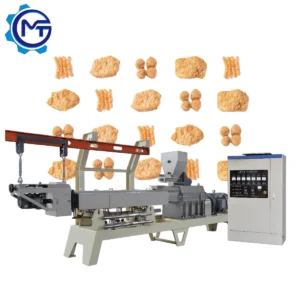
Textured Soy Protein Production Line for Vegetarian Meat Nugget Manufacturing
¥8,238.27 Select options This product has multiple variants. The options may be chosen on the product page -
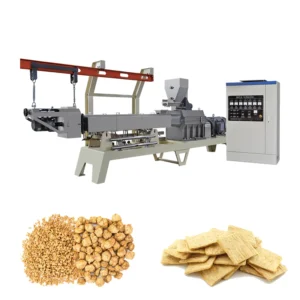
New Condition Soybean Protein Machine for Soy Chunks Production Textured Vegetable Protein Production Line
¥30.00 Select options This product has multiple variants. The options may be chosen on the product page -
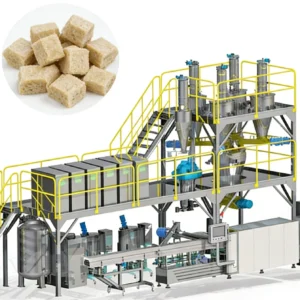
CE Certified Vegetarian Meat Processing Machine
¥9,500.00 Select options This product has multiple variants. The options may be chosen on the product page