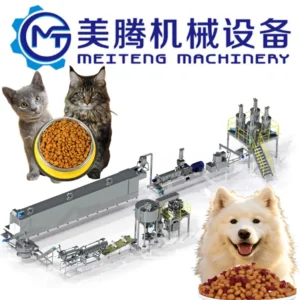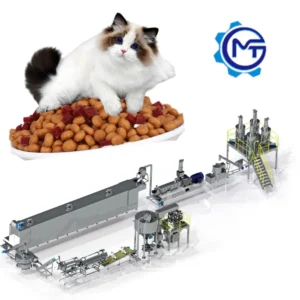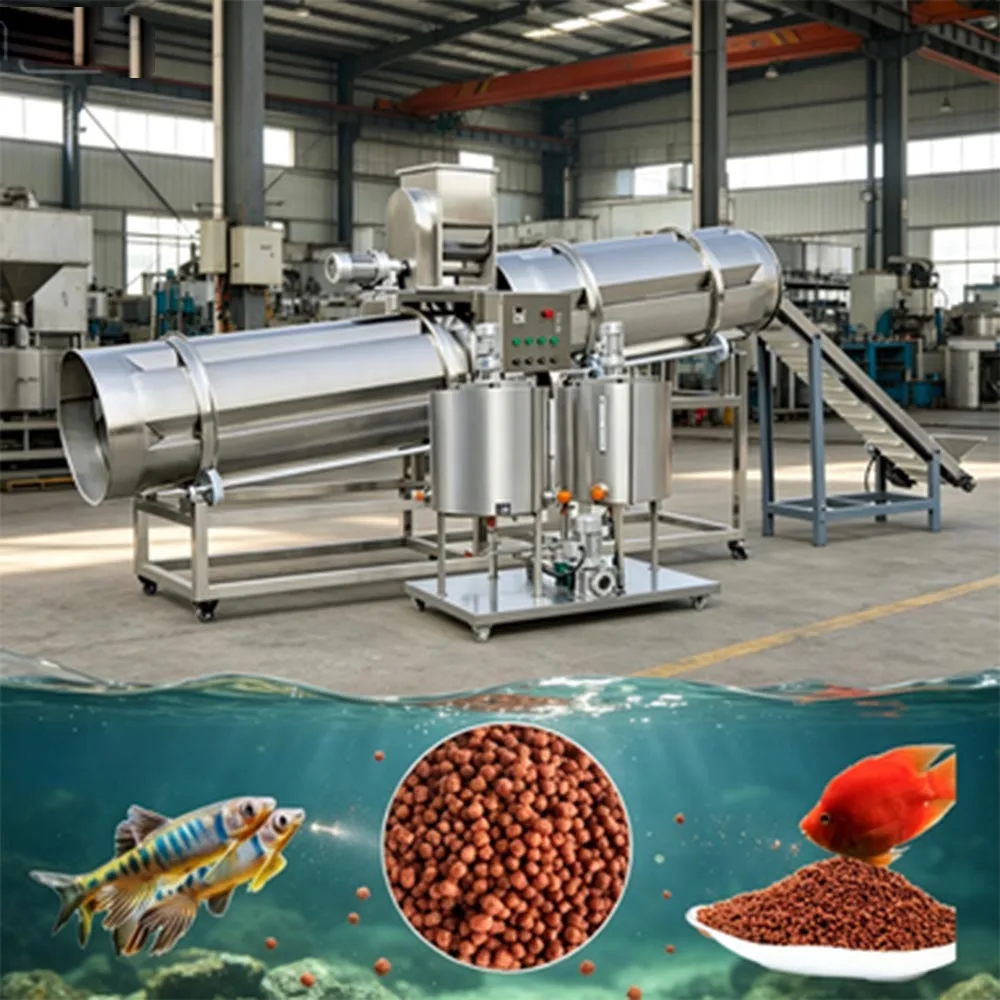
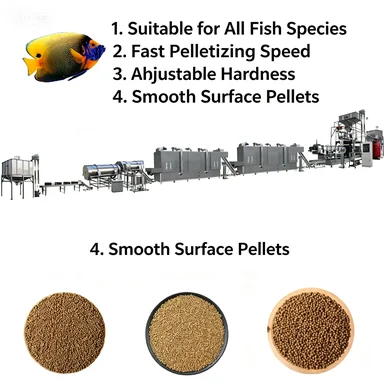
Twin Screw Aquatic Fish Feed Production Line, Wet Extrusion, PLC Control — engineered for floating and sinking pellet output with screw configuration and die design matched to your raw material and target buoyancy.
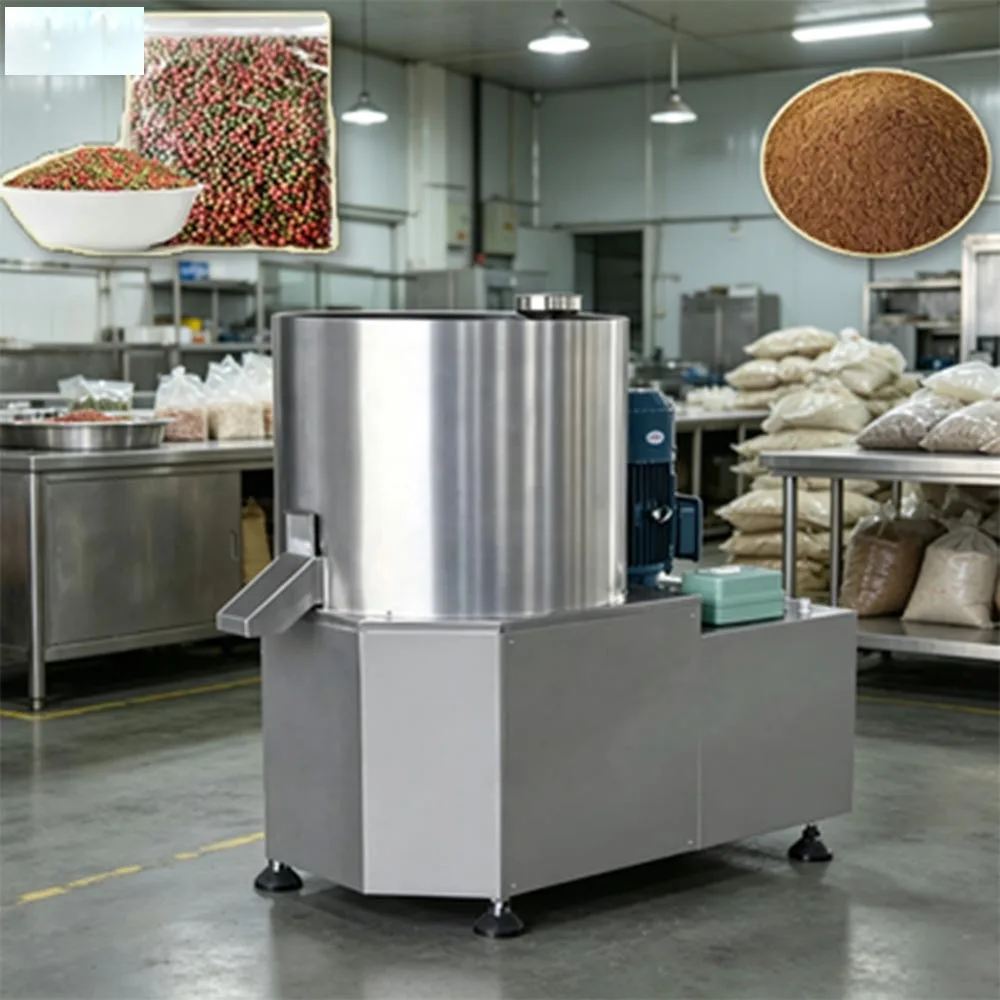
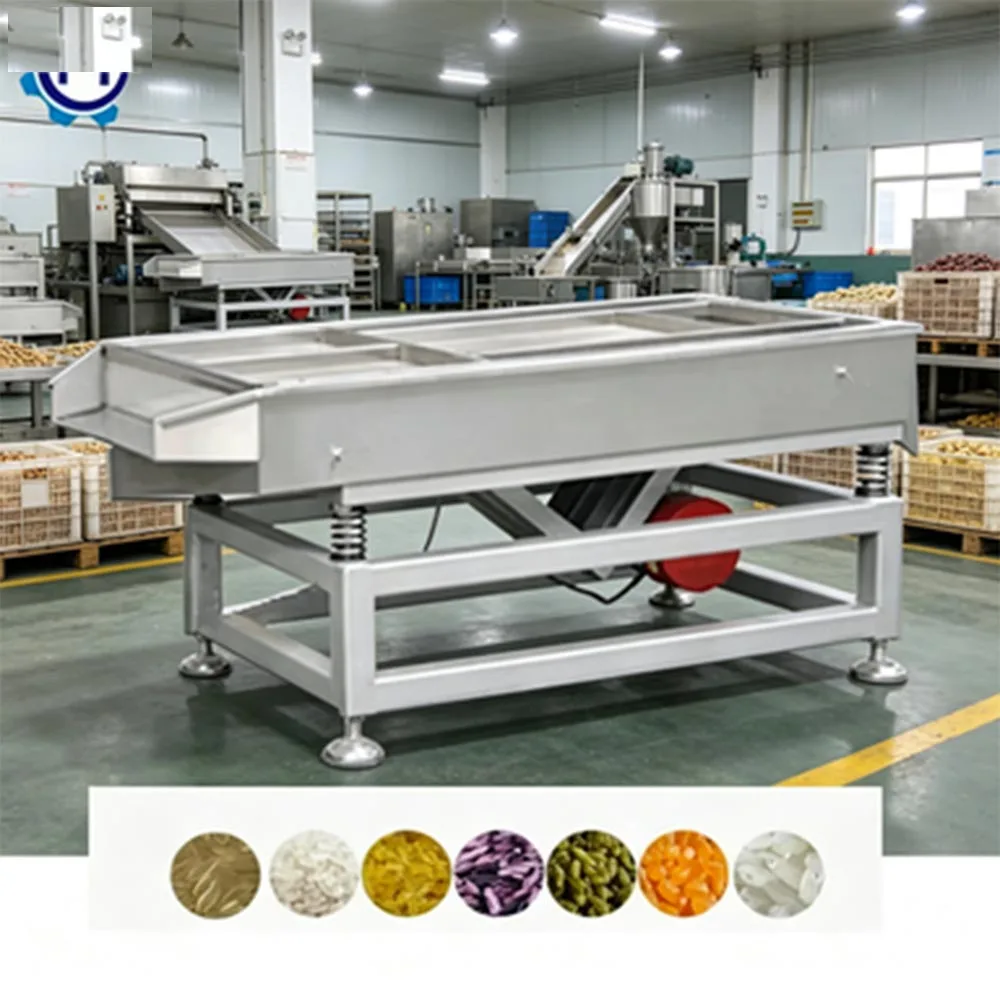
- Full continuous line from mixing through extrusion, drying, seasoning, and screening with throughput balanced station to station
- Food-grade 304 stainless steel contact parts across all material-handling stages
- Layout design, utility planning, and capacity calculation provided as one turnkey project scope
In-house trial runs on your actual raw material are completed before shipment, so product development begins early rather than after installation.
Description
Matched Throughput Design — Every station from the batching mixer to the coating drum is sized against the extruder’s actual output on your specific fish meal formulation, preventing the bottleneck that stalls a line built from separate vendors.
Technical Specifications
| Parameter | Value |
|---|---|
| Product Type | Twin Screw Aquatic Fish Feed Production Line |
| Extruder Type | Twin-screw, wet extrusion configuration |
| Control System | Intelligent PLC automatic control |
| Contact Material | Food-grade 304 stainless steel (all product-contact surfaces) |
| Pellet Buoyancy | Adjustable for floating and sinking formats |
| Pellet Size | Interchangeable die plates for multiple diameter options |
| Line Stations | Raw material mixer, extruder, dryer, seasoning/coating machine, vibrating sieve, conveyors |
| Production Mode | Full continuous automatic operation |
| Processing Capacity | Large stable throughput for industrial scale (basis material, pellet size, and moisture content to be confirmed) |
| Automation Scope | Fully automatic from mixing through finished product discharging |
| Standards Compliance | Meets international food hygiene standards (CE and ISO documentation available upon confirmation) |
Application Suitability
| Application | Material or Output |
|---|---|
| Floating pellets for koi and ornamental fish | Fish meal, corn powder, soybean meal, compound additives |
| Sinking pellets for bottom-feeding freshwater species | Soybean meal, starch binders, mineral premix |
| Tropical fish feed in varied pellet diameters | Mixed protein and carbohydrate formulations |
| Medium to large scale commercial aquaculture feed | Continuous mass production from bulk raw material input |
Why Floating Pellets Sink After the Die Plate
Buoyancy is determined by screw configuration and die geometry, not by the extruder model alone.
I spent two weeks on a job site in Vietnam where an entire line sat idle because the pellets sank in the test pond. The machine was rated for floating feed on a standard corn-based recipe, but the buyer’s formulation carried a high fish meal ratio for tilapia growers. The density shifted past the buoyancy threshold and every pellet dropped to the bottom. The screw profile and die land length had been copied from a generic build rather than specified to that raw material [NEED_CITE: twin-screw extrusion parameters for varying protein-to-starch ratios in aquatic feed]. An aquatic fish feed production line turnkey should account for your exact formulation before the machine leaves the factory floor, not after it arrives at your facility.
Screw Configuration Dictates Pellet Density
The twin-screw wet extrusion process generates shear and pressure that gelatinise starch and trap steam inside the pellet matrix. For floating pellets, the screw profile must create enough expansion so the pellet density stays below water. For sinking formats, a tighter compression zone and longer die land reduce expansion and push density above the buoyancy threshold. When an aquatic fish feed production line turnkey is configured with interchangeable screw elements, the same extruder can produce both formats without hardware replacement — only element rearrangement and die plate changes are required between production runs.
Continuous PLC Control Across the Full Line
A floating or sinking pellet specification means nothing if the dryer cannot remove moisture at the rate the extruder produces it, or if the coating drum cannot apply fats evenly before the pellets cool and seal. The intelligent PLC control ties every station into one coordinated sequence, managing feed rate, barrel temperature zones, dryer retention time, and coating drum speed from a single interface [NEED_CITE: PLC integration standards for continuous food and feed processing lines]. This eliminates the manual handoff points where batch inconsistencies emerge. Operators monitor the full run from the control panel and adjust parameters in real time without stopping the line.
Interpreting the Specifications That Matter
The food-grade 304 stainless steel contact surfaces across all material-handling stations address the corrosive nature of fish meal and the oil-rich coatings applied to aquaculture pellets. Mild steel contact parts degrade quickly under these conditions and contaminate the product. The wet extrusion design introduces steam conditioning before the barrel, which improves starch gelatinisation and produces a more uniform pellet structure compared to dry extrusion. For a buyer comparing options, the intelligent PLC system with configurable language settings matters most when the line will be operated by local staff who need parameter labels in their working language. The interchangeable die plates allow a single line to serve multiple market segments — small-diameter pellets for hatcheries and larger sizes for grow-out ponds — without purchasing a second extruder.
The Hidden Cost of Unmatched Line Stations
When an extruder is sourced from one vendor and a dryer from another, the dryer’s moisture removal rate rarely aligns with the extruder’s output on the buyer’s actual recipe. Pellets exit the die at high moisture and must be dried to a specific threshold for storage stability. If the dryer cannot keep pace, wet pellets accumulate and the entire aquatic feed line stalls. If the dryer is oversized, energy costs climb without throughput benefit [NEED_CITE: throughput balancing between extruder and dryer in feed pellet manufacturing]. The coating drum faces the same mismatch risk — too slow and pellets queue up and fracture, too fast and fat absorption is uneven across the batch. These are not problems you discover in the quotation stage; they appear during commissioning, when the line is already installed and the buyer is paying for idle labor.
Why Source This Line Here
The screw configuration and die design are specified to your raw material formulation and target pellet density before production begins, rather than copied from a standard build. An in-house testing workshop runs trial production on your actual fish meal, soybean meal, and additive blend before the line ships, generating a trial report that confirms buoyancy, pellet size, and surface texture against your specification. Every station — mixer, extruder, dryer, coating drum, vibrating sieve, and conveyors — is supplied under one responsibility, so throughput matching is calculated at the design stage rather than negotiated between separate vendors after installation fails. Pre-sales engineering consultation through on-site installation, commissioning, and operator training is handled by the same team that configured the line.
Documentation & Verification
- Line layout drawing with throughput calculation for each station matched to your target pellet output
- Screw element arrangement and die plate specification record for your raw material and buoyancy target
- Electrical schematic with voltage, frequency, and PLC language confirmation matched to your facility
- Trial run report on your raw material confirming pellet density, size, and surface quality before dispatch
- Factory test record documenting continuous run performance under simulated production conditions
Installation, Commissioning & Support
- Foundation and utility layout provided in advance, mapping PLC cabinet placement and extruder footprint to your workshop floor plan
- Dedicated power circuit specification for the twin-screw extruder drive, confirmed against your local voltage and frequency before production
- Modular station assembly sequence planned so mixer, extruder, dryer, and coating drum are positioned for matched material flow
- First-run commissioning with screw profile adjustment and die selection verified on your raw material at your facility
- Operator training covering PLC parameter adjustment, screw element changeover, and die plate replacement procedures
- Wear parts list with screw elements, die plates, and barrel liner specifications for reorder planning
Preparing Your Inquiry
To configure an aquatic fish feed production line turnkey that matches your operation, share your target pellet specification — floating or sinking, diameter range, and protein-to-starch ratio of your raw material blend. Confirm your local voltage, frequency, and preferred PLC interface language so the electrical design is finalized before manufacturing. If you have existing upstream mixers or downstream packing equipment, note the interface points so the new line stations connect without throughput gaps.
Frequently Asked Questions
Q: How is the quoted line capacity verified against our actual raw material?
A: Capacity is confirmed through a trial run on your specific fish meal and additive blend in our in-house testing workshop. The trial report documents actual throughput, pellet density, and buoyancy under controlled conditions, forming the basis for the line configuration rather than a nominal extruder rating.
Q: How does the same line produce both floating and sinking pellets?
A: Screw element arrangement and die plate geometry are adjusted between formats. For floating pellets, the profile promotes starch expansion and lower density. For sinking pellets, tighter compression and longer die land length reduce expansion. The PLC stores parameter sets for each format.
Q: What does the turnkey project scope include?
A: The scope covers line layout design, throughput calculation between every station, utility planning, equipment manufacturing, factory testing, shipment, on-site installation, commissioning on your raw material, and operator training covering PLC operation and maintenance procedures.
Q: Can a trial run be performed on our own raw material before shipment?
A: Yes. Send your raw material blend to the testing workshop before production. The trial run replicates your target pellet specification and generates a report covering pellet size, density, buoyancy, surface texture, and continuous run stability — all verified before the line leaves the factory.
Q: How is throughput balanced between the extruder, dryer, and coating drum?
A: Each station is sized during the layout design stage based on the extruder’s verified output on your raw material. The dryer’s moisture removal capacity and the coating drum’s residence time are calculated to match, preventing accumulation or idle gaps that stall continuous production.
Related products
-
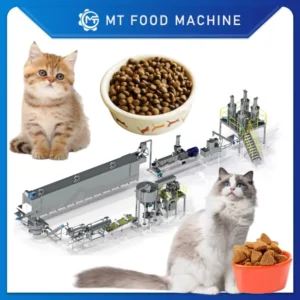
MT Brand 450-550kg/h PLC Controlled Multi-Species Pet Food Processing Line
¥40,000.00 Select options This product has multiple variants. The options may be chosen on the product page -
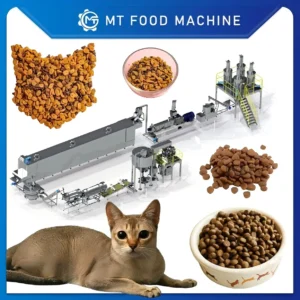
100-200kg/h Capacity PLC Controlled Multi-Species Cat Food Processing Line
¥34,000.00 Select options This product has multiple variants. The options may be chosen on the product page -
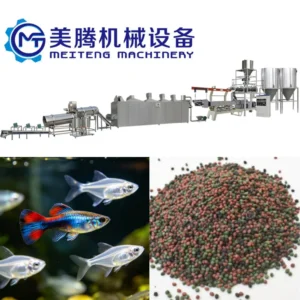
200-300kg/h Capacity Multi-Species Fish Feed Processing Line to Produce Fish Food
¥34,000.00 Select options This product has multiple variants. The options may be chosen on the product page -
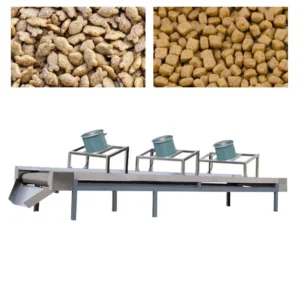
Full Automatic Pet Feed Production Line Large Twin Screw Grain Extrusion Machine
¥9,500.00 Select options This product has multiple variants. The options may be chosen on the product page