

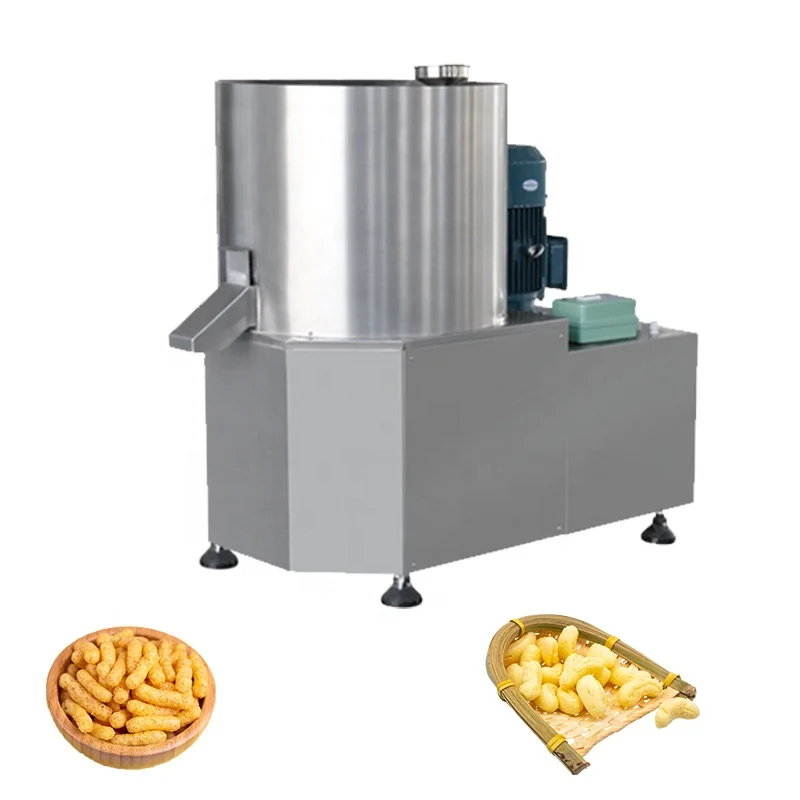
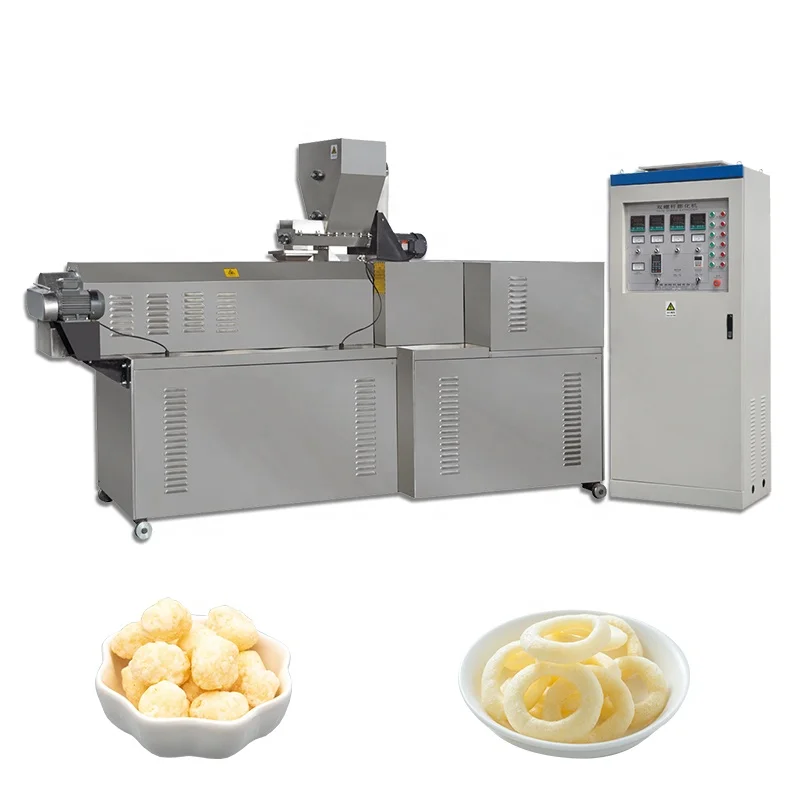
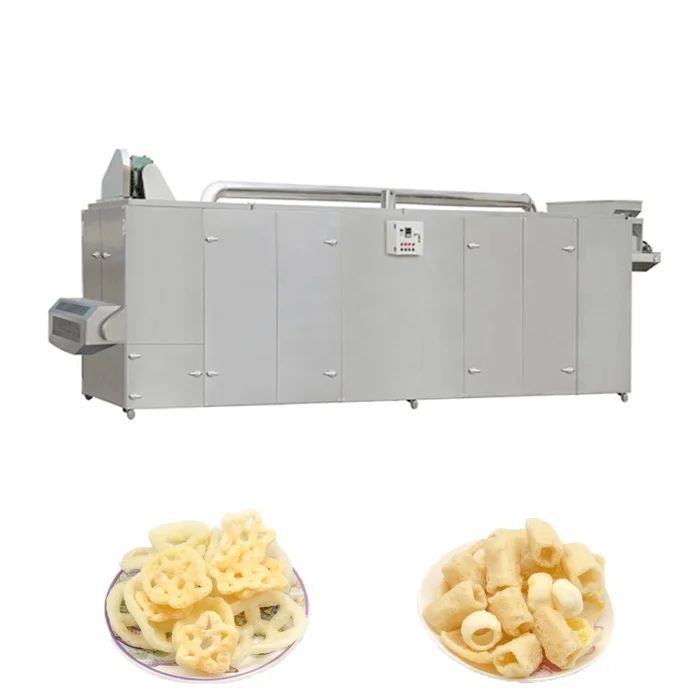
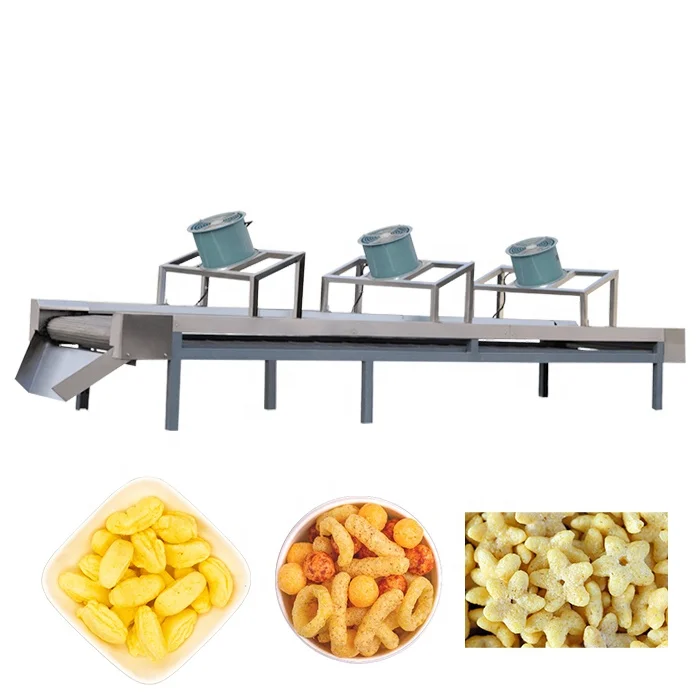
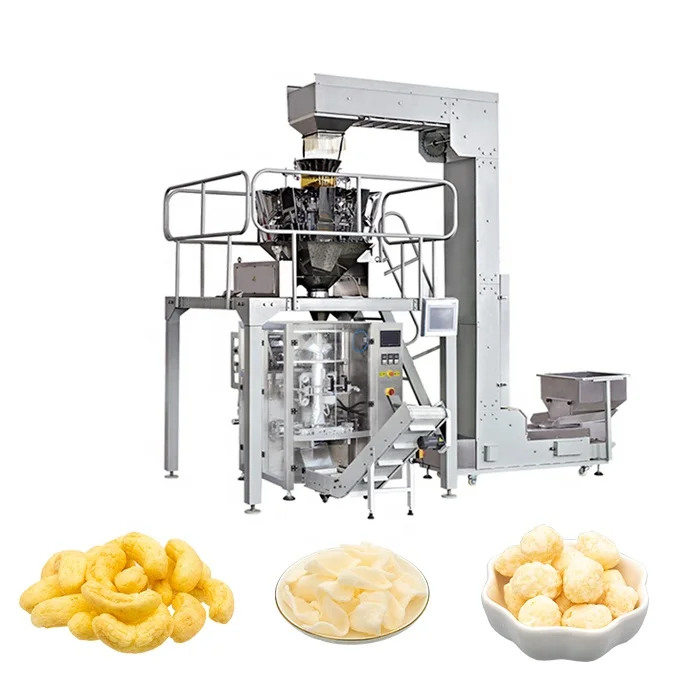
Twin Screw Puffed Snack Extrusion Line, 380V/50Hz, Food-Grade SS 201/304 — designed for puffed maize, corn puffs and rice snack production, with energy options spanning electricity, gas, diesel and steam to suit your local utility structure.
- Twin-screw extrusion with screw configuration and die design matched to your specific cereal formulation, targeting the expansion and density your market requires
- Full line throughput matching from mixer through extruder, vibratory cooler, roasting and packing — eliminating the bottleneck risk of separate-vendor assembly
In-house trial runs on your exact raw material verify capacity before shipment, with a complete screw and die configuration record delivered as project documentation.
Description
Throughput-matched line engineering — every station from batching to packing is calculated as one continuous flow, preventing the extruder from outpacing the dryer or the flavouring drum choking the line.
Technical Specifications
| Parameter | Value |
|---|---|
| Product Type | Twin Screw Puffed Snack Extrusion Line |
| Extruder Type | Double screw extruder (twin-screw) |
| Contact Material | Food grade stainless steel 201/304 |
| Voltage & Frequency | Three phases 380V/50Hz; Single phase 220V/50Hz (customizable to local voltage) |
| Rated Power | ~100 kW (electricity heating); ~50–60 kW (gas or diesel heating) (basis to be confirmed) |
| Energy Options | Electricity / gas / diesel / steam |
| Motor Brand | Siemens (made in China) or China top brand |
| Inverter | Delixi or Delta |
| Control System | Available with PLC or MCC control (configuration to be confirmed) |
| Line Stations | Mixer → Extruder → Vibrate cooler machine → Roasting machine → Packing machine |
| Output Capacity | (basis to be confirmed based on raw material and product format) |
| Screw Configuration | (diameter, L:D ratio, and die configuration to be confirmed per product) |
| Certification | CE, ISO |
Application Suitability
| Application | Material or Output |
|---|---|
| Puffed maize and corn puff snacks | Maize grits, corn flour, rice flour blends |
| Puffed rice and cereal snacks | Rice, millet, brown rice, buckwheat |
| Fortified extruded cereal snacks | Cereal blends enriched with vitamins, proteins, and minerals |
| Artificial rice and specialty extruded products | Starch-based formulations, mixed grain flours |
| Popcorn-style extruded puffs | Whole grain and refined cereal formulations |
Why Nominal Capacity Figures Mislead Snack Line Buyers
A capacity number means nothing unless it was measured on your actual recipe running through every station in sequence.
I have watched a buyer in Riyadh receive a twin-screw extruder rated at a certain throughput, only to discover the roasting drum downstream could not keep up. Moisture-laden puffed maize sat on the conveyor, softened, and the whole puffed snack extrusion production line turnkey stalled for two days while they jury-rigged additional drying [NEED_CITE: throughput mismatch between extruder and dryer stations in snack processing]. When a supplier quotes capacity without naming the raw material, the moisture content, and the product format, that number belongs to a machine that does not exist in your factory. The honest approach is running your formulation in a testing workshop and recording the throughput at every station before the quotation is finalized.
Line Station Matching from Mixing Through Packing
A puffed snack extrusion production line turnkey succeeds or fails on whether each station can handle what the previous one delivers. The mixer must batch at intervals that feed the extruder without starvation or overflow. The vibratory cooler must spread and cool extrudate fast enough to prevent clumping before it reaches the roasting machine. Every conveyor width, every hopper volume, and every drying zone length must be calculated against the same throughput target — not borrowed from a catalogue built around a different product.
Screw and Die Design Specified to Your Formulation
The twin-screw extruder sits at the centre of the line, but its screw elements and die plate determine whether your maize puffs expand to the right density or collapse into hard pellets. Different cereal blends demand different screw profiles: a high-rice formulation needs a configuration that manages starch gelatinisation differently than a pure maize grit recipe [NEED_CITE: twin screw configuration effects on cereal starch gelatinisation]. The die opening, combined with barrel temperature zones and moisture input, governs the expansion ratio and the final texture the market expects.
What the Power and Heating Specifications Mean on the Floor
The rated power split between electricity heating at roughly 100 kW and gas or diesel heating at 50–60 kW is not just a utility detail — it shapes your operating cost for years. In regions where industrial electricity tariffs are high, specifying gas-fired barrel heaters and a steam-injected dryer can shift the line’s running cost substantially. The choice of Siemens or equivalent motors and Delixi or Delta inverters means replacement components are available through regional distributors rather than requiring international freight every time a drive fails. Voltage customisation to your local grid — whether 380V three-phase or another standard — must be locked in before production begins, because rewiring a control panel on site delays commissioning by days [NEED_CITE: voltage and frequency standards by export market].
What Happens When One Station Is Undersized
The consequence of an undersized dryer or an undersized flavouring drum is not a small inefficiency — it is a line that cannot run at its extruder’s output. Puffed snacks exiting the extruder carry significant moisture. If the roasting stage cannot remove that moisture at the rate the extruder produces it, product accumulates, texture degrades, and operators begin throttling the extruder down to match the weakest station. The buyer pays for capacity they never see, and the supplier blames the recipe.
Why Source the Full Line from One Supplier
- Complete throughput calculation across mixer, extruder, cooler, roaster, and packing under one engineering team eliminates finger-pointing when a station underperforms.
- Screw configuration and die design are documented against your specific raw material, not copied from a generic build for a different snack format.
- In-house testing workshop runs your formulation before shipment, producing a trial report that confirms capacity on your recipe rather than a catalogue claim.
- Food-grade stainless steel 201/304 contact materials throughout the product zone meet hygiene standards required by international food safety audits.
- Pre-sales engineering through on-site installation, commissioning, and operator training keeps one project team accountable from layout to first production run.
Documentation & Verification
- Line layout showing throughput at every station matched to your raw material and recipe
- Trial run report from in-house testing on your cereal formulation before shipment
- Screw and die configuration record written for your product density target
- Electrical schematic with confirmed voltage, frequency, and control language for your facility
- CE declaration of conformity and ISO certificate for customs and regulatory clearance
Installation, Commissioning & Support
- Foundation and floor space planning based on the full station sequence from mixer to packing machine
- Dedicated electrical circuits sized to the line’s rated power draw, whether electric or gas-heated configuration
- Phased assembly starting with the extruder and extending through cooler, roaster, and packing stations
- First-run parameter setting covering barrel temperatures, screw speed, moisture input, and die selection
- Operator training on control system navigation, recipe changeover, and daily cleaning of food-grade contact surfaces
- Wear parts inventory covering screws, dies, and seals recommended for the first production cycle
What We Need from You to Start Engineering
To configure a line that holds its throughput on your actual product, share your target snack format, the cereal or grain blend you intend to run, and the moisture range of your incoming material. Confirm your facility voltage, frequency, and whether gas or electric heating fits your utility structure. Let us know your available floor area and ceiling height so the layout team can sequence every station without spatial conflict.
Frequently Asked Questions
Q: How is line capacity verified against my specific raw material and recipe before shipment?
A: Your raw material is run through the extruder and supporting stations in our in-house testing workshop. We record throughput, expansion ratio, and moisture at each stage. The trial report documents the verified output on your exact formulation, so the capacity figure in the quotation is measured data, not a catalogue estimate.
Q: How do you match throughput between the extruder, dryer and flavouring stations to prevent bottlenecks?
A: Each station is sized using the same throughput target calculated from your recipe. The mixer batch cycle, extruder screw speed, vibratory cooler conveying rate, roasting drum residence time, and packing speed are all engineered as one continuous flow. No station is selected from a standalone catalogue without checking the upstream and downstream duty.
Q: What utility planning is needed at the factory before installation begins?
A: You need confirmed three-phase power at the agreed voltage and frequency, gas or diesel supply if those heating options are selected, water supply for the mixer and any steam injection, and compressed air for pneumatic controls. We provide a utility requirement sheet listing consumption at each station so your electrical and mechanical contractors can prepare before the line arrives.
Q: What does the phased installation and commissioning schedule look like for a complete line?
A: Installation begins with the extruder and main conveyor frame, followed by the mixer and vibratory cooler, then the roasting machine and packing station. Commissioning proceeds station by station — dry run, then wet run with your raw material — until the full puffed snack extrusion production line turnkey runs continuously at the verified throughput before handover.
Q: How is operator training structured, and what wear parts should we plan for the first year?
A: Training covers control system operation, recipe parameter entry, screw speed and temperature adjustment, daily cleaning of food-grade stainless steel surfaces, and safety lockout procedures. We provide a wear parts list specifying screws, dies, barrel liners, and seals, with recommended stock quantities based on your planned annual operating hours and the abrasiveness of your cereal blend.
Related products
-

New Stainless Steel Automatic Puffed Rice Flour Snacks Making Machine High Productivity Multi-function
¥11,050.00 Select options This product has multiple variants. The options may be chosen on the product page -

Twin Screw Extruder for Cheese Puffs Food Stainless Steel Simple Puffed Rice Snack Machine
¥8,500.00 Select options This product has multiple variants. The options may be chosen on the product page -

Puffed Snack Food Machine Snack Food Machine Puffed Snack Machine
¥11,050.00 Select options This product has multiple variants. The options may be chosen on the product page -

Puffed Snacks Seasoning Flavor Machine Twin Screw Corn Puffing Food Making Extruder Equipment
¥8,355.00 Select options This product has multiple variants. The options may be chosen on the product page


