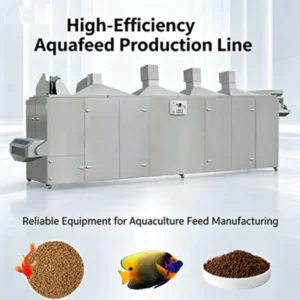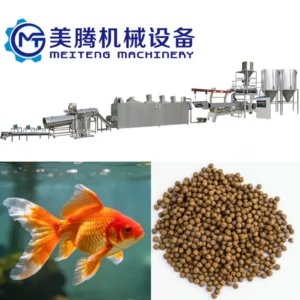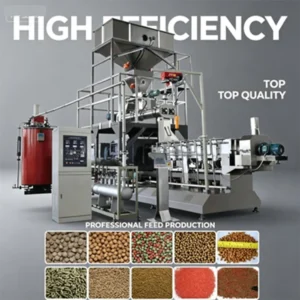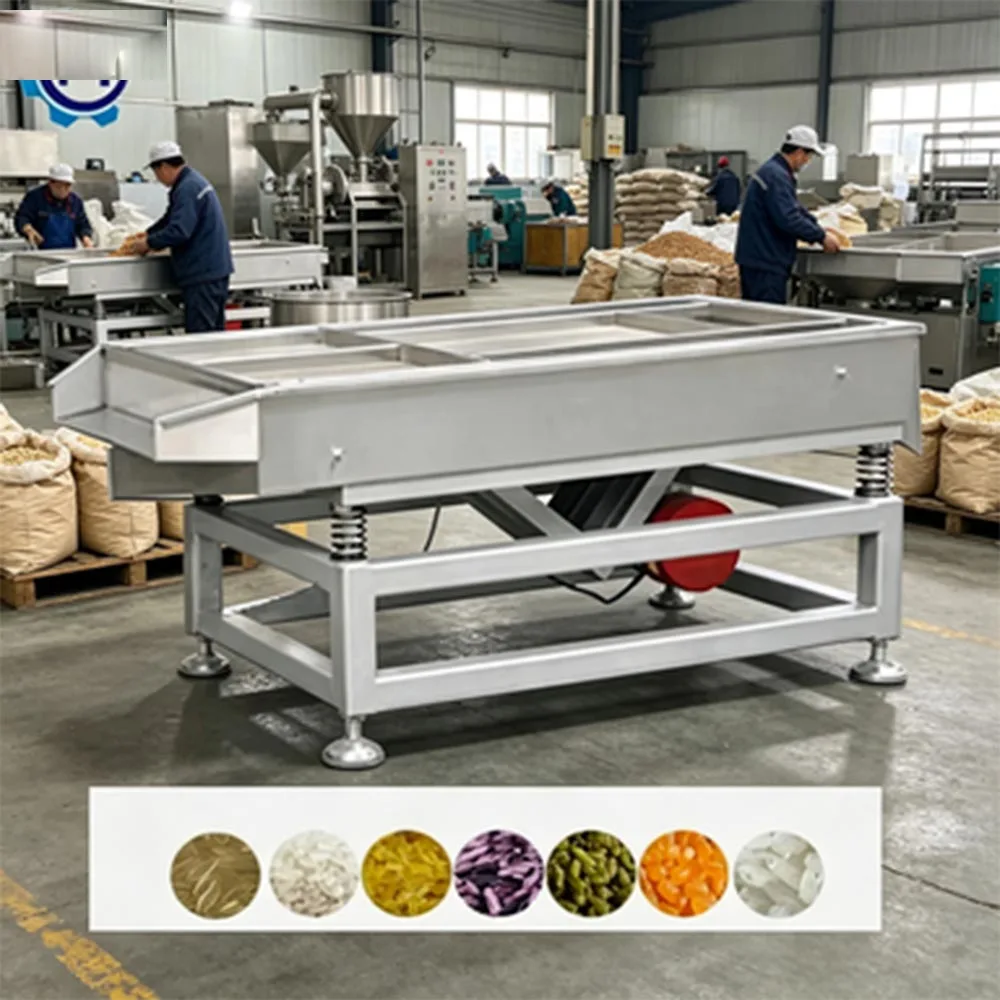

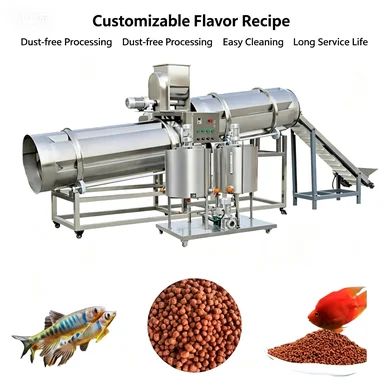


Twin Screw Extrusion Production Line for Aquatic and Pet Feed, PLC Automatic Control, Food-Grade 304 Stainless Steel — engineered from raw material mixing through extrusion, drying, seasoning, and packing as one integrated system.
- Screw configuration and die design matched to your specific formulation, controlling pellet buoyancy, size, and density for floating or sinking aquatic feed and pet kibble
- Throughput balanced across every station to prevent bottlenecks, verified by in-house trial runs on your raw material before shipment
- Complete layout, electrical schematics, and commissioning schedule delivered under a single supplier scope for turnkey project certainty
Description
Turnkey throughput matching — Every station from mixing through packing is sized to your raw material formulation, so the line runs at its rated output without one machine holding back the rest.
Technical Specifications
| Parameter | Value |
|---|---|
| Product Type | Twin Screw Extrusion Production Line for Aquatic and Pet Feed |
| Extruder Type | Twin screw |
| Control System | PLC automatic control |
| Contact Material | Food-grade 304 stainless steel |
| Pellet Adjustability | Size, hardness, buoyancy (floating and sinking) |
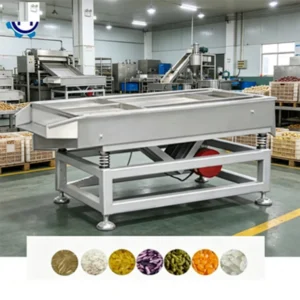
| Line Stations | Raw material mixer, extruder, dryer, seasoning/coating machine, vibrating sieve, conveyor equipment |
| Operation | Full continuous automatic production (mixing → extrusion → drying → seasoning → screening → discharging) |
| Output Capacity | Large-scale continuous production (basis to be confirmed based on raw material formulation, moisture content, and pellet size) |
Application Suitability
| Application | Material or Output |
|---|---|
| Floating and sinking aquatic pellets | Fish meal, soybean meal, corn powder, compound additives for koi, goldfish, tropical fish, catfish, tilapia, shrimp |
| Dry pet kibble and specialty feed | Meat meal, grain blends, and nutritional additives for dogs, cats, and other companion animals |
| Medium to large-scale feed production | Continuous mass output for commercial aquaculture operations and pet food manufacturers |
Why "Nominal Capacity" Misses the Point on a Twin Screw Extruder Production Line
A line only runs as fast as its slowest station on your actual raw material.
The problem starts when a twin screw extruder production line turnkey package is quoted on a headline number, but the dryer or coating drum is sized smaller to keep the total package cost down. The extruder pushes material out at full volume, the dryer falls behind, moisture levels stay too high, and pellets that should float end up sinking. You end up running the whole line slower just to keep the downstream stations from choking. [NEED_CITE: throughput matching across extrusion line stations]
Matching Every Station to Your Formulation
A twin screw extruder production line turnkey project succeeds or fails in the layout phase, long before steel is cut. Each station — the mixer, the extruder, the dryer, the seasoning drum, the vibrating sieve, the conveyor network — has to be sized against the specific recipe you intend to run. Corn-heavy formulations behave differently from fish-meal-dominant mixes in terms of moisture release and expansion, which changes what the dryer must handle.
PLC Control Across the Full Line
The PLC automatic control system ties every station into one coordinated sequence, so the mixer discharges at the rate the extruder demands, and the extruder feeds the dryer at a pace it can handle. When a formulation change requires a different moisture profile or a shift from floating to sinking pellets, the control system adjusts barrel zone temperatures, screw speed, and dryer residence time together rather than forcing operators to recalibrate each machine by hand. [NEED_CITE: PLC integration in twin screw food extrusion lines]
Reading the Specs That Actually Matter
The twin screw design allows a wider range of raw materials compared to single screw extruders, because the intermeshing screws create positive conveying and self-cleaning action that handles high-fat and high-moisture formulations without stalling. Food-grade 304 stainless steel on all contact surfaces meets hygiene expectations for both aquatic feed and pet food production and withstands the acidic residues that some fish meal blends leave behind. Pellet buoyancy, size, and hardness are controlled through screw configuration and die design matched to your target product, not through a generic setup copied from a different application. The continuous production sequence from mixing through screening means the line is designed for industrial-scale output rather than batch-style laboratory work.
The Cost of Undersizing One Station
When the dryer cannot keep pace with the extruder, operators turn down the screw speed to match — which means the whole line produces less than its nameplate suggests. Wet pellets clump on the vibrating sieve, coating adhesion drops because the surface moisture is wrong, and the final product fails the buoyancy test that the market requires. These are not defects in any single machine; they are the consequence of stations that were never matched to each other on the buyer’s formulation. [NEED_CITE: pellet buoyancy failure from dryer undersizing]
Why a Single Supplier Matters Here
Because every station comes from one source, the throughput calculation is done once across the entire line rather than negotiated between separate vendors who each optimize for their own machine. The screw configuration and die design are specified against your raw material before production begins, not borrowed from a generic template. An in-house testing workshop runs your actual formulation on the extruder before the line ships, so product development happens before installation rather than after. Twin screw expertise spans aquatic feed, pet food, and related extrusion categories, which means the line layout reflects real production experience. Pre-sales engineering, on-site installation, commissioning, and ongoing maintenance all come from the same team that designed the line.
Documentation & Verification
- Line layout and capacity calculation matching every station to your target output
- Screw and die configuration record specified to your raw material and pellet type
- Trial run report on your formulation from the in-house testing workshop
- Electrical schematic with voltage and control language confirmed before production
- Factory test record documenting continuous run performance before dispatch
- Operation and maintenance manual with wear parts list for the full line
Installation, Commissioning & Support
- Foundation and utility layout sized to the PLC-controlled line footprint and power draw
- Electrical connections verified against local voltage and frequency before energizing
- Station-by-station commissioning sequence from mixer through conveyor to confirm throughput matching
- First-run parameter setting on your raw material with screw speed, barrel temperature, and dryer time recorded
- Operator training covering formulation changes, die swaps, and buoyancy adjustment procedures
- Wear parts list for screws, dies, and dryer belts with recommended replacement intervals
What to Include in Your Inquiry
To configure a line that matches your production target, share the raw material formulation you plan to run, the pellet size and buoyancy specification your market requires, and the daily output volume you need. Include your workshop dimensions, ceiling height, and local voltage and frequency so the layout and electrical package can be prepared correctly from the start.
Frequently Asked Questions
Q: How is line capacity verified against my specific raw material formulation?
A: Before the quotation is finalized, your formulation is run in the in-house testing workshop on the twin screw extruder. The trial confirms achievable output, pellet density, buoyancy, and surface quality on your actual ingredients. A trial run report is provided with the results, and the downstream stations are then sized to match what the extruder produces on that specific recipe.
Q: What does the turnkey project scope include beyond the machines?
A: The scope covers line layout, throughput matching across every station, utility planning for power and water, a phased installation schedule, and on-site commissioning. Electrical schematics, voltage confirmation, and control language are agreed before production starts. Operator training and a documented maintenance plan are part of the handover.
Q: How are the extruder, dryer, and coating stations matched to prevent bottlenecks?
A: Each station is sized based on the moisture profile and throughput that the extruder delivers on your formulation. The dryer is selected for the required evaporation rate, and the coating drum is matched to the seasoning volume and residence time your product needs. The PLC control system coordinates discharge rates across all stations to maintain continuous flow.
Q: Is a trial run performed before shipment, and what documentation comes with it?
A: Yes, your raw material is run on the extruder in the testing workshop before the line ships. You receive a trial run report covering output rate, pellet appearance, buoyancy, and recommended screw and die settings. This gives you a starting recipe so production development begins immediately after commissioning rather than from scratch.
Q: What support is provided after installation?
A: On-site commissioning includes running the full line on your formulation and recording all operating parameters. Operators are trained on formulation changes, die replacement, and daily maintenance. A wear parts list with recommended replacement intervals is provided, and ongoing technical support is available for process questions as you scale production.
Related products
-
MT70 100-200kg/h Dog & Cat Pet Food Processing Line with 380V 50Hz Three Phase Power
¥35,000.00 Select options This product has multiple variants. The options may be chosen on the product page -
1.0-1.2t/h High Capacity Multi-Species Fish Feed Processing Line to Produce Fish Food
¥45,000.00 Select options This product has multiple variants. The options may be chosen on the product page -
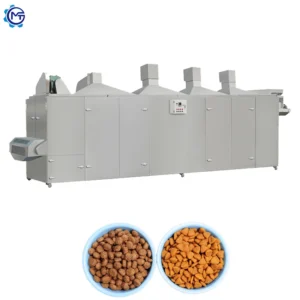
Premium Pet Food Processing Equipment Dog Cat Feed Making Machine
¥9,500.00 Select options This product has multiple variants. The options may be chosen on the product page -
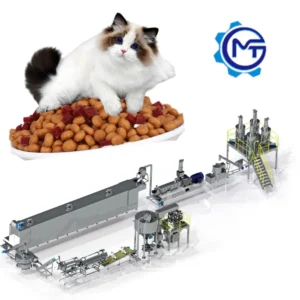
MT70 200-250kg/h Dog Cat Pet Food Processing Line 380V 50HZ Three Phase 45KW
¥35,000.00 Select options This product has multiple variants. The options may be chosen on the product page