

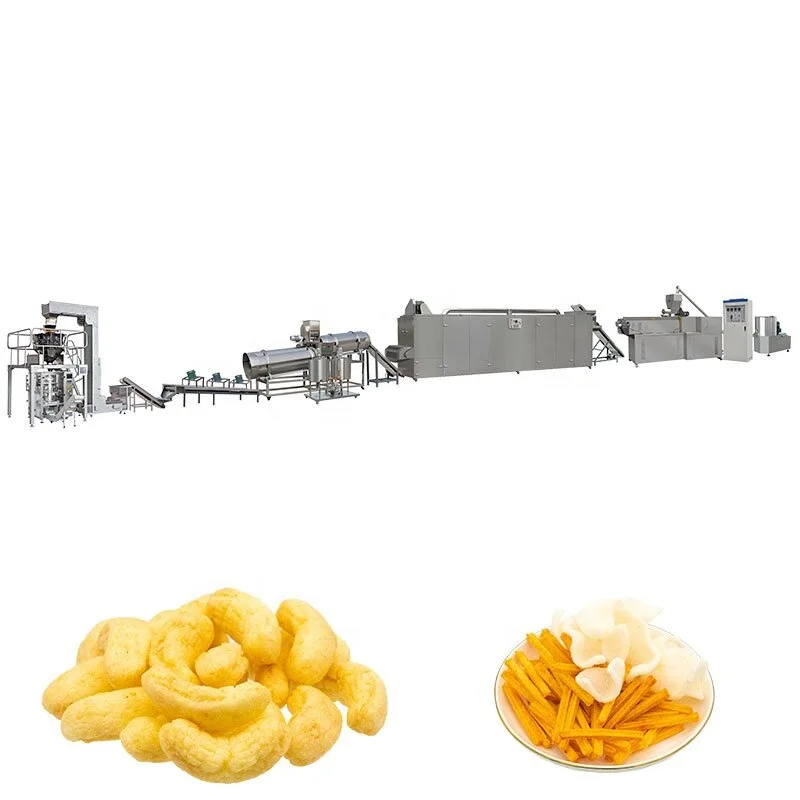

Twin Screw Puffed Core Filled Snack Food Extrusion Line, CE/ISO Certified, PLC Control — engineered as a complete turnkey project with throughput matched across mixing, extruding, drying, and flavoring stations. Screw configuration and die design are specified to your raw material and target product, whether puffed corn, core-filled, or rice-based snacks. Layout, utility planning, and phased commissioning are delivered as one integrated project. Trial runs on your actual raw material are completed in our in-house testing workshop before shipment, with full documentation and on-site operator training included.
Twin Screw Puffed Snack Extrusion Line, CE/ISO Certified, Multi-Layer Dryer, Automatic PLC/MCC Control — configured as a turnkey project with throughput matched across mixing, extruding, drying, and flavoring stations to eliminate bottlenecks. Screw configuration and die design are specified to your raw material and target snack format, from puffed corn to core-filled products. Complete line layout, utility planning, and phased commissioning delivered as one integrated project. Factory trial runs on your raw material validate output before shipment, with full documentation and on-site operator training provided.
Description
Throughput-Matched Turnkey Lines — Every station from mixing to packing is calculated against the same raw material and target output, so no single machine bottlenecks the twin screw puffed snack production line turnkey project.
Technical Specifications
| Parameter | Value |
|---|---|
| Product Type | Twin Screw Puffed Core Filled Snack Food Extrusion Line |
| Screw Type | Twin screw (double screw) |
| Line Stations | Mixing, extruding, shaping, cutting, drying, flavoring |
| Control System | Automatic (PLC/MCC configuration to be confirmed per buyer specification) |
| Output Capacity | Full automatic one-pass operation (basis not stated in source — confirm raw material, moisture content, and target product) |
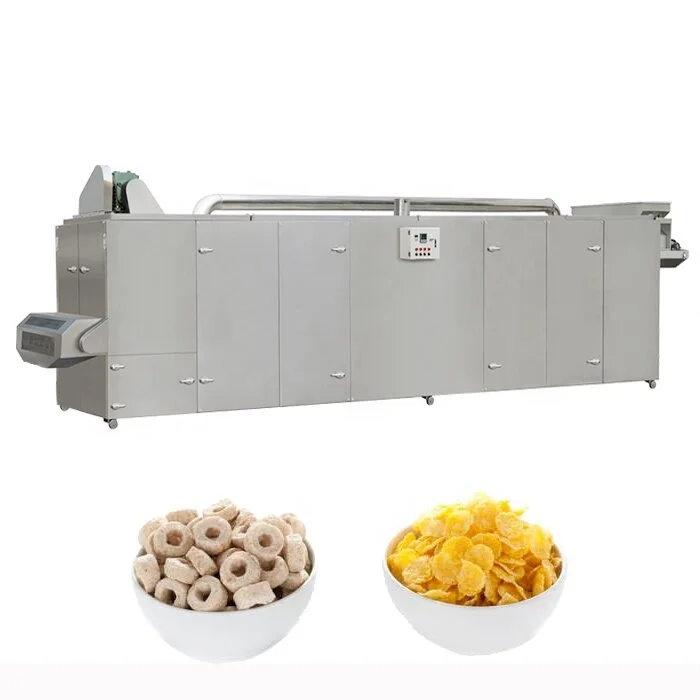
| Dryer Type | Multi-layer dryer (length and layer count customized to product — dimensions to be confirmed) |
| Flavoring System | Semi-automatic and automatic options available (sugar, oil, and powder seasoning supported) |
| Voltage & Frequency | Configurable to target market electrical standard (to be confirmed) |
| Certification | CE, ISO |
| Warranty | 24 months, lifetime service |
| Assembly State | Complete line, factory assembled with pre-shipment inspection |
Application Suitability
| Application | Material or Output |
|---|---|
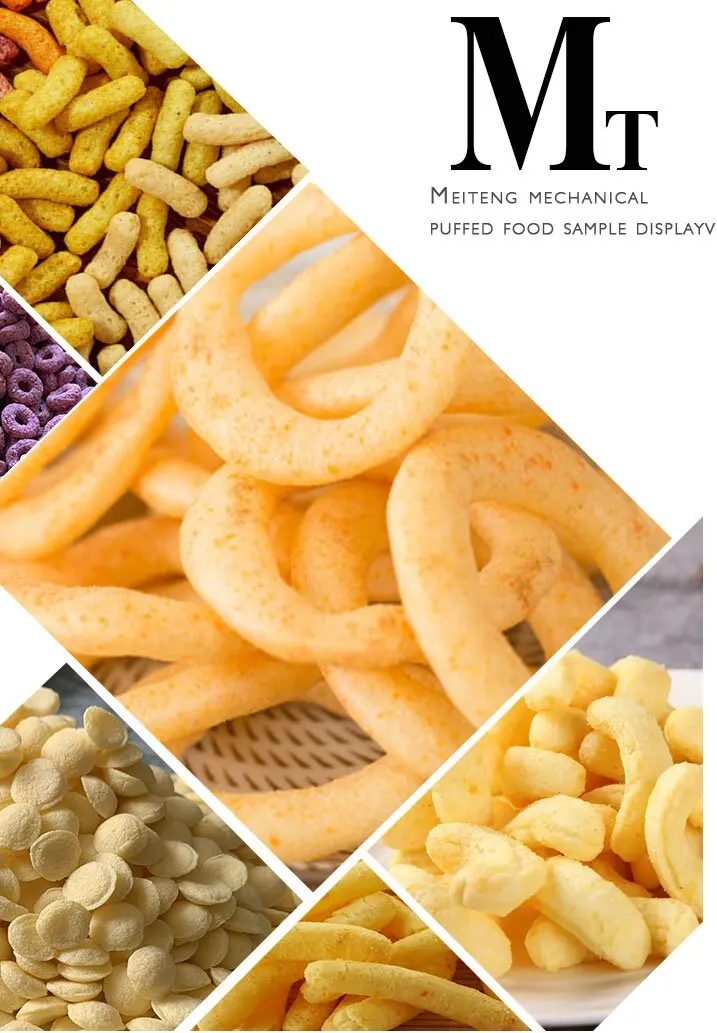
| Puffed corn snacks | Maize grits, corn flour, and cereal-based formulations |
| Core-filled snacks | Outer shell from corn or rice flour; inner filling from chocolate, cream, or fruit paste |
| Puffed rice snacks | Rice flour and rice grits with varying amylose content |
| Extruded and fried snack products | Cereal-based dough formulations shaped before frying |
Why "Nominal Capacity" Misses the Real Picture on a Snack Line
A line rated at a single number rarely holds that output once your specific raw material hits the barrel.
I have watched snack producers sign off on a twin screw puffed snack production line turnkey based on a headline capacity figure, only to find the extruder runs fine while the dryer falls behind because moisture evaporation takes longer on their high-amylose corn blend. The extruder pushes product faster than the downstream dryer can handle, and half the batch leaves the line still tacky. That mismatch is not an equipment defect — it is a calculation gap [NEED_CITE: throughput matching between extrusion and drying stages in snack production].
Layout Drives Every Downstream Decision
A turnkey project starts with the floor plan, not the extruder nameplate. Barrel length, die face area, and cutter speed set the mass flow rate that the dryer, cooler, and flavoring drum must absorb. When I lay out a twin screw puffed snack production line turnkey, I calculate each station’s residence time against the actual moisture curve of the buyer’s recipe, so the conveyor speeds and dryer zone temperatures line up before steel is cut.
Throughput Matching Across Every Station
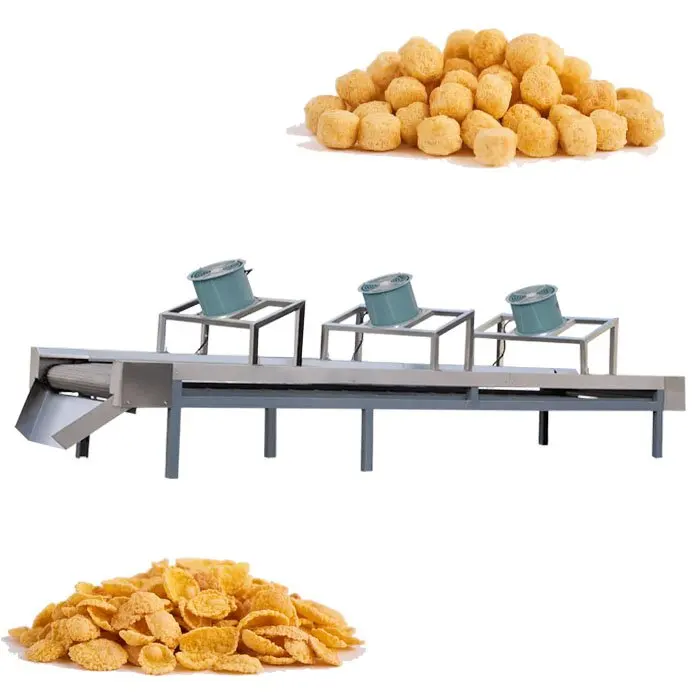
The dryer is usually where the math breaks. A multi-layer mesh dryer needs enough belt length and layer count to hold product for the full evaporation window. If the line runs core-filled snacks, the cream center adds thermal mass that extends drying time beyond what a standard puffed-corn configuration allows. Flavoring drum volume and rotation speed must then match the dried output rate so seasoning coverage stays even without product pile-up [NEED_CITE: residence time calculation for multi-layer dryers in extruded snack lines].
What the Screw Configuration Actually Controls
Twin screw geometry — pitch, flight depth, and kneading block arrangement — determines shear intensity and residence time inside the barrel. A high-shear setup gelatinises starch quickly for a light, open-cell puff suited to corn snacks, while a gentler profile preserves dough integrity for core-filled shells that must hold cream without cracking. Die land length and orifice diameter then control expansion ratio at the face. Swapping screw elements is routine, but only when the original configuration was specified against the buyer’s actual formulation rather than a generic build sheet.
The Hidden Cost of Skipping a Trial Run
Commissioning a snack line without a prior test on the buyer’s raw material is a gamble I have seen go wrong more than once. The extruder may reach target output, but expansion ratio can drift outside the density the buyer’s packaging was designed for, forcing a full run of off-spec product before anyone catches it. Core filling adds another variable — shell wall thickness and cream viscosity must be balanced live, not on paper [NEED_CITE: pre-shipment trial run protocols for extruded food lines].
Why Buyers Spec Their Lines Here
Complete lines from batching to packing arrive under one supplier, so throughput calculations are reconciled across every station before the layout is finalized. Screw configuration and die design are documented against the buyer’s raw material sample, not pulled from a generic catalogue. An in-house testing workshop runs the buyer’s actual formulation before shipment, catching expansion and density issues at the factory instead of on the production floor. Twin screw expertise spans puffed snacks, core-filled formats, and cereal-based products, so the same engineering team follows the project from consultation through on-site commissioning.
Documentation & Verification
- Line layout drawing with throughput matched across mixing, extrusion, drying, and flavoring stations
- Trial run report on buyer’s raw material documenting expansion ratio and moisture exit values
- Screw element arrangement and die orifice record specific to buyer’s snack formulation
- Electrical schematic with voltage and frequency locked to target market grid standard
- CE declaration of conformity covering the full assembled line
Installation, Commissioning & Support
- Foundation load drawing provided for multi-layer dryer and extruder footprint before civil work begins
- Dedicated power circuit sizing confirmed against total connected load and local voltage standard
- Line arrives in modular sections for staged assembly inside the buyer’s workshop
- First production run supervised on-site with screw speed and barrel temperature profile dialed to product
- Operator training covers screw element swap procedures and die change for format switches
- Wear parts list identifies screws, dies, and cutter blades with recommended replacement intervals
What to Include in Your Inquiry
Send your raw material formulation, including moisture content and particle size, along with the target snack format — puffed, core-filled, or fried — and the hourly output you plan to sustain. Confirm your workshop’s available floor area and ceiling height, local voltage and frequency, and preferred control language for the HMI. If you have existing upstream mixers or downstream packing equipment, include their throughput so we can match the line to your current flow.
Frequently Asked Questions
Q: How is line capacity verified, and what conditions does it depend on?
A: Capacity is calculated against your specific raw material, moisture content, and target product density. A trial run in the testing workshop confirms expansion ratio and mass flow rate before the line ships, so the quoted output reflects actual conditions rather than a generic benchmark.
Q: How is throughput matched between the extruder, dryer, and flavoring stations?
A: Each station’s residence time and belt speed are calculated from the extruder’s mass flow rate and the product’s moisture evaporation curve. The multi-layer dryer length and layer count are then sized so product exits at the required moisture before entering the flavoring drum.
Q: What does the pre-shipment trial run cover?
A: The trial uses your raw material to verify screw configuration, die expansion, product density, and moisture levels at the dryer exit. A written report documents all parameters so you can reproduce them on your floor during commissioning.
Q: How are screw configuration and die design selected for different snack types?
A: Screw element arrangement and die land length are chosen based on whether the target is an open-cell puffed snack or a thin-wall core-filled shell. The configuration is recorded and shipped with the line so replacements match the original setup.
Q: What is included in on-site installation and commissioning?
A: The package covers staged assembly, utility connection verification, first-run parameter tuning, and operator training on screw changes, die swaps, and daily maintenance routines specific to your line configuration.
Related products
-

Fully automatic puff snack processing line
¥8,500.00 Select options This product has multiple variants. The options may be chosen on the product page -

Twin Screw Extruder for Cheese Puffs Food Stainless Steel Simple Puffed Rice Snack Machine
¥8,500.00 Select options This product has multiple variants. The options may be chosen on the product page -

Sweet Puffed Rice Making Machine Stainless Steel Extruded Puff Snacks Ball Food Produce Machinery
¥7,580.00 Select options This product has multiple variants. The options may be chosen on the product page -

Automatic Puff Corn Snack Stick Production Line Equipment New Condition Machines
¥100.00 Select options This product has multiple variants. The options may be chosen on the product page


