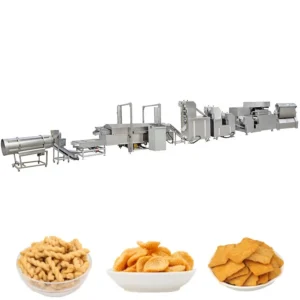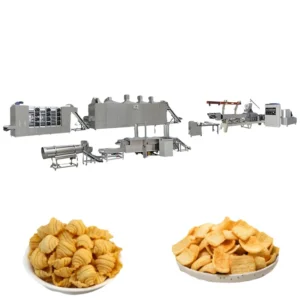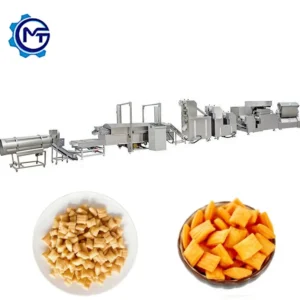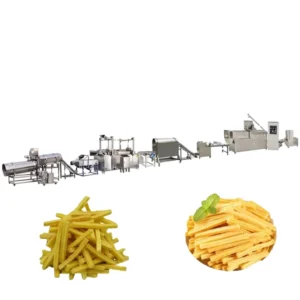


Continuous Frying Machine, 380V, PLC Control, 320L Oil Capacity — designed as a throughput-matched module within complete puffed snack production lines.
- Double-layer mesh belt with stepless frequency-controlled speed keeps product submerged for uniform frying of bugles, corn chips and extruded maize snacks
- Continuous oil circulation filtration reduces acid value and extends oil service life, while the automatic lifting hood enables rapid cleaning between product changeovers
We deliver the full line from batching through extrusion, frying, flavouring to packing under one supplier, with throughput verified across every station and an in-house trial run on your raw material before shipment.
Description
Throughput-Matched Frying Stations — Every continuous frying machine we integrate into a puffed snack line is sized against the extruder’s actual output and the cooler’s dwell time, so the line runs at its quoted rate without bottlenecking at the oil bath.
Technical Specifications
| Parameter | Value |
|---|---|
| Product Type | Continuous Frying Machine |
| Power Source | Electric or Gas Heating (configurable) |
| Voltage & Frequency | 380V / 50Hz (other voltages available on confirmation) |
| Drive Power | 2.6 kW |
| Heating Tube Power | 60 kW |
| Oil Capacity | 320 L |
| Control System | PLC |
| Overall Dimensions (L×W×H) | 6700 × 2200 × 1200 mm |
| Net Weight | 2000 kg |
| Capacity Range | 100–1000 kg/h (basis not stated in source — confirm product type, moisture and oil uptake) |
| Material | Food-grade 304 Stainless Steel |
| Mesh Belt | Upper and lower double-layer belt with frequency conversion stepless speed regulation |
| Oil Filtration | Continuous oil circulation filtration system |
| Lifting System | Automatic lifting of upper hood and mesh belt |
| Slag Discharge | Bottom-mounted residue discharge system |
| Warranty | 1 Year (Core Components: 1 Year) |
| Assembly State | Fully assembled line module |
Application Suitability
| Application | Material or Output |
|---|---|
| Fried bugles and corn chips | Extruded corn dough pellets fried to target moisture and color |
| Maize snack formats | Puffed maize pieces requiring uniform oil uptake and crisp texture |
| Snack food production lines | Integrated frying station between extrusion/drying and flavouring/cooling |
| Food & beverage factory expansion | Standalone fryer replacement matched to existing upstream throughput |
Why the Capacity Claim on Your Fryer May Not Hold on Your Snack Format
A rated throughput means nothing when the product entering the oil bath carries more moisture than the fryer was designed to remove.
I spent years on snack lines in Latin America where the extruder ran fine on paper, but the local corn flour held higher moisture than the European test batches. By the time those pellets reached the fryer, the oil temperature dropped, the belt had to slow down, and the entire continuous frying machine turnkey snack production line crawled at half its nameplate output. The bottleneck was never the extruder — it was the oil bath that couldn’t keep up with the water load [NEED_CITE: moisture content impact on frying throughput in extruded snack lines].
This is why we never quote a fryer in isolation. The continuous frying machine turnkey snack production line must be calculated from the actual raw material report, the extruder discharge moisture, and the target final moisture after frying.
How the Double-Layer Belt Controls Fry Time and Oil Uptake
The upper and lower mesh belts clamp the product underwater, preventing floating pieces from rising to the surface where they would fry unevenly. The frequency-controlled drive lets operators adjust conveying speed steplessly, so a denser corn chip stays submerged longer than a thin bugle shell. This is the single most important variable for achieving the correct oil uptake and final crispness across different snack geometries within the continuous frying machine turnkey snack production line.
Oil Filtration That Extends Service Life Without Manual Intervention
Continuous circulation filtration pulls sediment and fine carbonised particles out of the oil before they can accumulate on the heating tubes or embed in the snack surface. In a high-volume puffed snack operation, unfiltered oil develops free fatty acids rapidly, forcing operators to drain and refill the tank mid-shift. The bottom-mounted slag discharge works with the filtration loop to remove residue continuously, keeping acid value within acceptable limits throughout the production run [NEED_CITE: oil degradation rates in continuous industrial frying operations].
What 60 kW of Heating and 320 L of Oil Actually Mean for Your Line
The 60 kW heating element bank must recover the temperature drop that occurs every time cold, moist product enters the 320-litre oil bath. If the upstream extruder discharges product at a higher moisture level than planned, the thermal load exceeds what 60 kW can recover within the belt dwell time, and oil temperature falls. The PLC monitors this temperature continuously and can trigger belt slowdown to prevent under-fried product from reaching the flavouring drum. Understanding this thermal balance is essential when sizing the continuous frying machine turnkey snack production line against your specific corn or maize formulation.
The Hidden Cost of a Standalone Fryer in a Turnkey Line
When a fryer is bought as an independent unit and dropped into a line assembled from multiple vendors, the interface points fail. The extruder pushes product faster than the fryer can handle, or the downstream cooler cannot accept the fryer’s discharge rate, forcing the whole line to throttle back. I have watched contractors in Mexico spend weeks rewiring and reprogramming mismatched stations because nobody confirmed the throughput chain before shipment [NEED_CITE: throughput mismatch consequences in multi-vendor snack production lines]. The downtime and commissioning delays routinely exceed the cost difference of specifying a matched line from one supplier.
Why Procurement Here Differs from Catalogue Shopping
The fryer is never quoted alone — it arrives as part of a layout where every station from batching to packing is throughput-balanced against your raw material and target product. Screw and die configurations on the upstream extruder are matched to the same formulation that will enter this fryer, so moisture and density arrive within the range the oil bath can handle. An in-house testing workshop runs trial batches on your actual corn flour before the line ships, revealing moisture and frying behaviour issues while corrections still cost days instead of months. The PLC on this fryer speaks the same control language as every other station on the line, so one operator panel manages the full sequence. Electrical schematics are confirmed to your local voltage and frequency before production starts, eliminating the commissioning surprises that arise when a 380V machine lands in a 440V market.
Documentation & Verification
- Line layout showing fryer positioned between extruder discharge and flavouring drum with matched throughput
- Trial run report from in-house testing workshop on your specific corn or maize raw material
- Electrical schematic confirming voltage, frequency and PLC language for your target market
- Screw and die configuration record linking upstream extrusion settings to fryer input moisture
- Operation and maintenance manual covering mesh belt tensioning, heating element replacement and filtration service
- CE declaration of conformity and ISO certificate for customs and regulatory clearance
Installation, Commissioning & Support
- Floor must support 2000 kg static load plus dynamic vibration across the 6700 mm footprint
- Dedicated 380V / 50Hz circuit with 60 kW heating load plus 2.6 kW drive, confirmed before shipment
- Fully assembled module arrives ready for utility hookup — no on-site welding required
- First-run commissioning includes oil temperature profiling and belt speed calibration against your snack format
- Operator training covers PLC parameter adjustment for different product geometries and moisture levels
- Wear parts list covers mesh belt sections, heating elements and filtration cartridges for the first replacement cycle
What to Prepare Before Requesting a Quote
To size the continuous frying machine turnkey snack production line correctly, we need your raw material specification including corn or maize variety and typical moisture content, the target product format with dimensions and desired oil uptake, and the daily production volume your market demands. Share your local voltage and frequency along with the preferred PLC language, and tell us whether the fryer will integrate into an existing line or form part of a new installation from batching through packing. If you can send a sample of your raw material, we will run it through the testing workshop before proposing the final layout.
Frequently Asked Questions
Q: How is fryer capacity verified against the actual product format and oil uptake rate?
A: We run your raw material through the in-house testing workshop, extrude it into the target format, and fry sample batches at different belt speeds and oil temperatures. The trial run report documents the throughput achieved at your specific moisture and oil uptake, so the quoted capacity reflects your actual product rather than a generic benchmark.
Q: How is the fryer throughput matched to the upstream extruder and downstream stations?
A: The line layout calculation starts from the extruder’s verified output on your raw material, then sizes the fryer belt speed, oil volume and heating power to accept that discharge rate. Downstream cooling and flavouring drums are specified to the same throughput, preventing any single station from throttling the continuous frying machine turnkey snack production line.
Q: What voltage, frequency and PLC language options are confirmed before commissioning?
A: During the specification phase we confirm your facility voltage, frequency and preferred control language. The electrical schematic is reviewed and approved before production begins, ensuring the PLC panel, heating contactors and drive inverters arrive configured for your local power grid and operator team.
Q: What installation conditions does the fryer station require on site?
A: The floor must support the 2000 kg unit across its 6700 × 2200 mm footprint with level tolerance for proper oil drainage. Adequate ventilation and exhaust extraction are needed above the oil bath, and floor drainage must be positioned near the bottom-mounted slag discharge for routine cleaning.
Q: How are spare wear parts supplied for the first replacement cycle?
A: The wear parts list included with your documentation identifies mesh belt sections, heating elements and filtration cartridges by part number. A recommended first-order spare kit is quoted alongside the line so replacements arrive before the original components reach end of service.
Related products
-
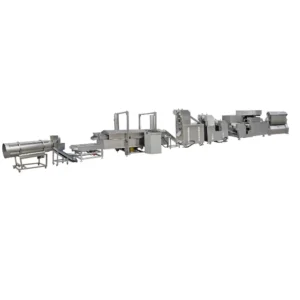
Frying Crispy 3D Corn Bugles Pellets Fried Chips Snacks Food Machine Production Line Bugles Making Extruder
¥100.00 Select options This product has multiple variants. The options may be chosen on the product page -
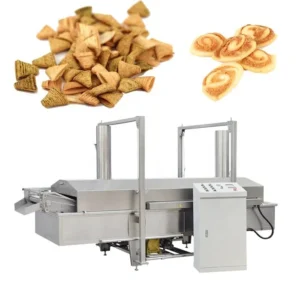
Double Screw Extruder Corn Flour Puffs Snack Nacho Chips Tortilla Doritos Making Machine Savory Snack Production Line
¥50.00 Select options This product has multiple variants. The options may be chosen on the product page -
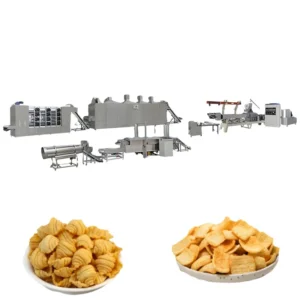
Automatic Fried Crispy Bugles Snacks Food Making Machines Wheat Flour Sala Food Extruder
¥100.00 Select options This product has multiple variants. The options may be chosen on the product page -
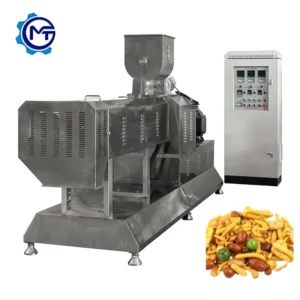
New Automatic Traditional Fried Nimko Making Machine High Productivity Large Capacity Stainless Steel Production Line
¥8,575.00 Select options This product has multiple variants. The options may be chosen on the product page