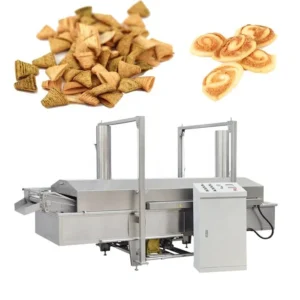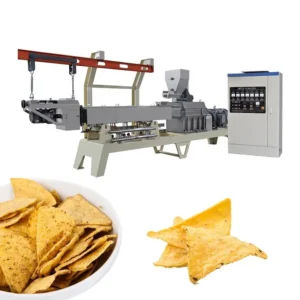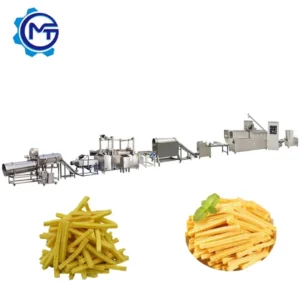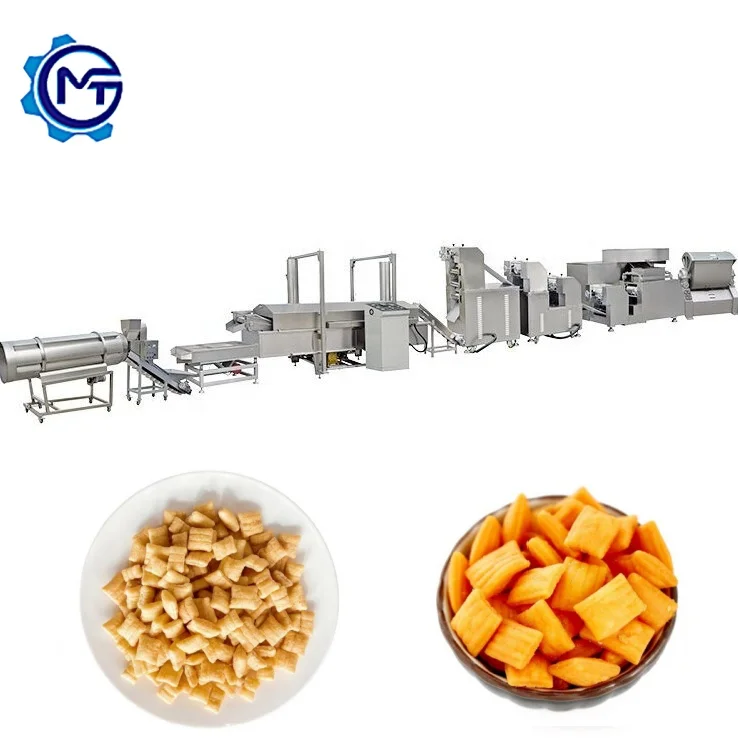


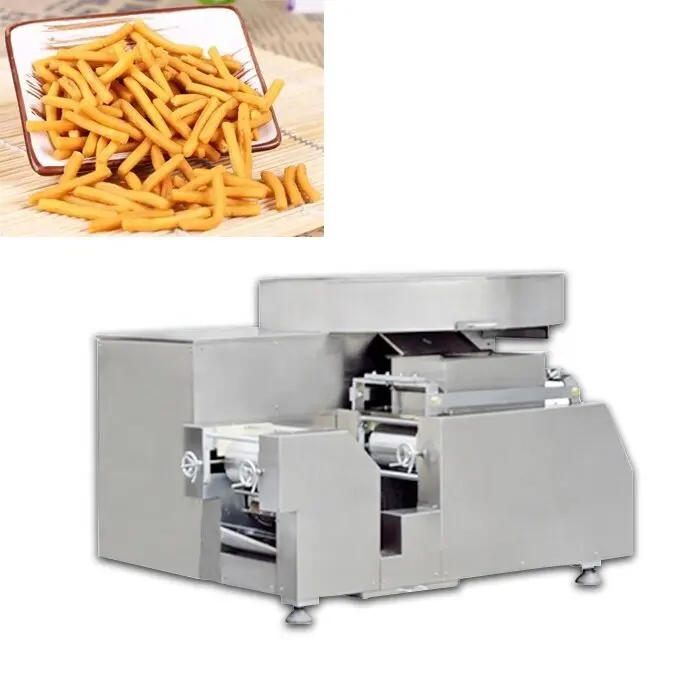
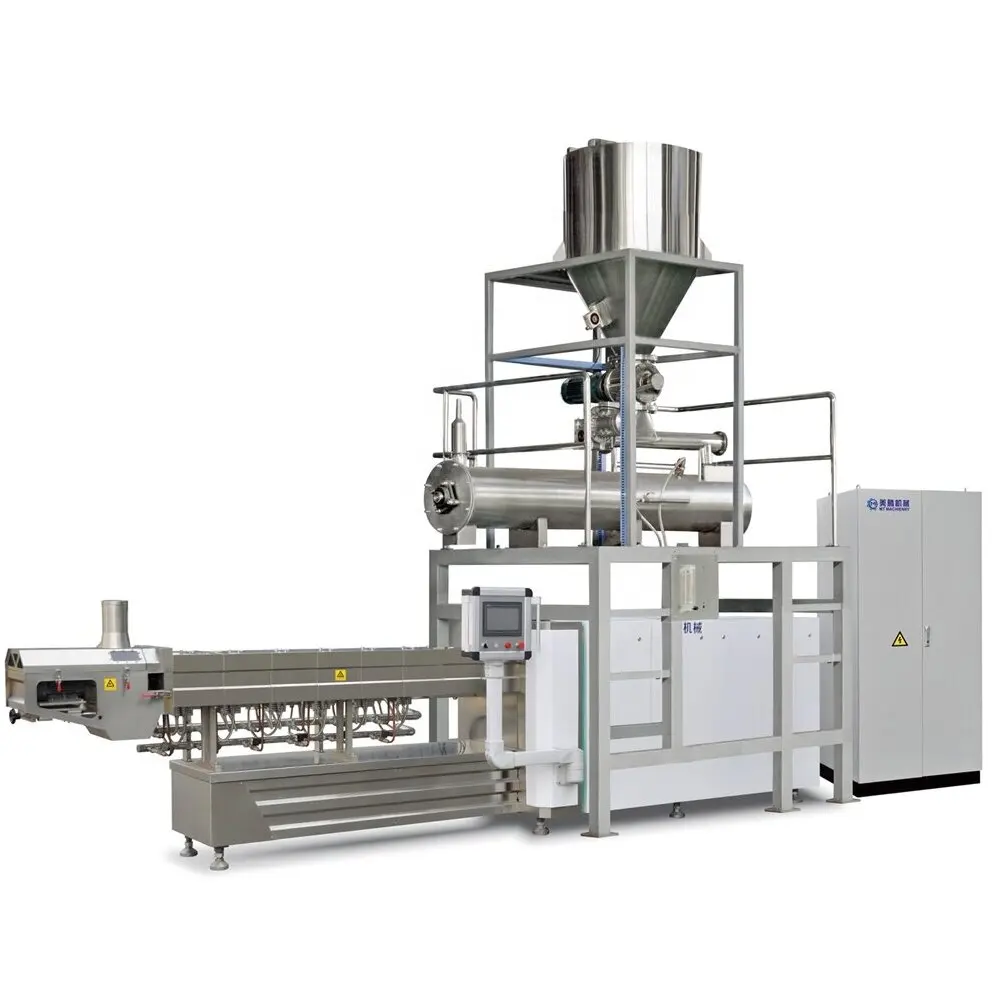

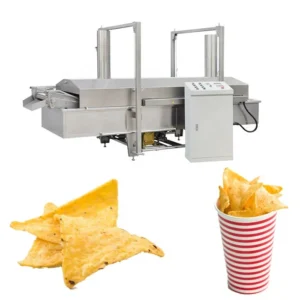
Continuous Deep Frying Machine for Snack Production Line, 380V, 320L Oil Capacity, PLC Control — engineered as part of a complete fried snack line with matched throughput between extruder, fryer, and downstream stations.
- Double-layer mesh belt prevents product floating for even frying
- Continuous oil filtration extends oil service life
- Frequency-controlled conveyor adjusts frying time per product
One integrated project from layout design through on-site commissioning and operator training by MT extrusion specialists.
Description
Integrated line design — throughput across extruder, fryer, de-oiling, and packing is calculated from one supplier so no station chokes the output of another.
Technical Specifications
| Parameter | Value |
|---|---|
| Product Type | Continuous Deep Frying Machine for Snack Production Line |
| Heating Method | Electric / Gas / Coal (selectable) |
| Rated Power (Drive & Control) | 2.6 kW |
| Heating Tube Power | 60 kW |
| Voltage & Frequency | 380V / 50Hz |
| Oil Capacity | 320 L |
| Overall Dimensions (L×W×H) | 6700 × 2200 × 1200 mm |
| Net Weight | 2000 kg |
| Output Capacity | 100–1000 kg/h (basis not stated in source — confirm product type, moisture, frying time) |
| Conveyor System | Automatic belt with frequency conversion stepless speed regulation |
| Mesh Belt | Upper and lower double-layer |
| Lifting System | Automatic lifting of upper hood and mesh belt |
| Slag Discharge | Bottom continuous residue removal |
| Oil Filtration | Circulating oil filtration during production |
| Contact Material | Food-grade 304 stainless steel |
| Control System | PLC |
| Certification | CE, ISO |
Application Suitability
| Application | Material or Output |
|---|---|
| Bugles and horn-shaped fried snacks | Corn grits extruded into triangular or conical pellets, then deep fried |
| Fried dough snacks and corn chips | Wheat or corn-based sheeted dough cut into chips before frying |
| Pellet chips (2D and 3D formats) | Starch-based pellets expanded through continuous deep frying |
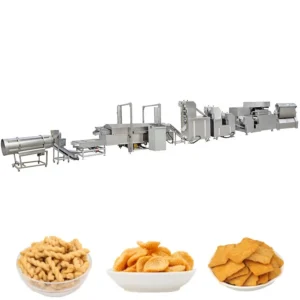
| Downstream station in extruded snack lines | Integrated after extruder, dryer, and forming stations for complete fried snack production |
Why "Rated Capacity" Without Context Breaks a Frying Line
A fried snack production line turnkey project fails the moment the fryer is sized on a nominal figure that ignores the product format, moisture content, and oil temperature profile required by your actual recipe. The fryer must be matched to the extruder output and the specific snack geometry, not to a catalog headline.
I once watched a line stall because the continuous fryer was specified on a dry corn chip basis, while the customer’s formula included whey protein and soy flour. The oil temperature dropped every time the belt loaded, the product came out dark on the outside and raw inside, and we spent four days re-tuning the entire thermal balance [NEED_CITE: oil temperature recovery rate and product thermal load in continuous frying]. When throughput numbers are quoted without the raw material context, the buyer carries all the risk.
How Turnkey Line Engineering Eliminates Bottleneck Risk
A fried snack production line turnkey project designed under a single engineering scope forces every station — mixing, extrusion, forming, frying, de-oiling, flavouring, packing — to share the same throughput calculation. When the fryer is specified in isolation, the upstream extruder may produce more wet product than the fryer can handle per meter of belt, or the downstream de-oiling drum may not keep pace. This station-by-station matching is the core discipline of complete line design, and it prevents the scenario where one machine runs at partial load while another overflows.
The Oil Filtration Loop and Shift-Length Consistency
Continuous oil circulation filtration removes carbonized particles and free fatty acids generated during production, which directly slows the rise of acid value across a full shift. In snack formats with high surface-area-to-mass ratios — such as thin corn chips or expanded pellet chips — residue generation is concentrated, and a circulating filter keeps the oil within acceptable colour and flavour thresholds longer [NEED_CITE: acid value limits for edible oil in snack food frying operations]. Without this loop, oil changeover frequency rises, and per-shift operating cost follows.
Reading the Frying Specs That Matter on the Floor
The 60 kW heating element bank paired with a 320-litre oil bath sets the thermal recovery rate — the speed at which oil returns to set-point temperature after cold product enters. For high-moisture extruded pellets, recovery rate determines whether the snack expands properly or absorbs excess oil. The double-layer mesh belt clamps the product below the oil surface, which is essential for low-density formats like Bugles that would otherwise float and fry unevenly. Stepless frequency control on the conveyor lets operators adjust residence time from a few seconds to over a minute, matching the frying curve to each snack geometry. Food-grade 304 stainless steel contact surfaces meet sanitary requirements and resist corrosion from salted or seasoned product carry-over. The PLC interface stores recipes for different products, so changeover between a corn chip run and a pellet chip run does not require manual re-tuning of temperature and speed.
The Hidden Cost of a Mismatched Fryer in the Line
When a fryer is purchased as a standalone unit without confirming upstream output and downstream de-oiling capacity, the line typically develops a choke point within the first week of production. Operators compensate by slowing the extruder, which drops overall line yield and raises energy cost per kilogram of packed product [NEED_CITE: energy cost per kilogram in snack food extrusion and frying lines]. Residue builds faster when throughput fluctuates, degrading oil quality and shortening intervals between full oil changes. Over a production year, these small inefficiencies compound into noticeable margin erosion.
Why Source the Entire Line From One Supplier
A single engineering scope means the fried snack production line turnkey project ships with a capacity calculation that links every station, not a stack of independent quotations. The screw and die configuration on the extruder is matched to the same raw material that the fryer is tuned for, preventing the texture mismatches I have seen when those two machines come from different vendors. The in-house testing workshop runs your actual recipe before shipment, so oil temperature, belt speed, and frying time are validated on your formula — not on a generic corn flour standard. Electrical schematics are confirmed to your local voltage and frequency before the panel is wired. Spare parts such as replacement mesh belts, heating tubes, and filter elements are catalogued against the same bill of materials that built your line.
Documentation & Verification
- Line layout showing matched throughput across extruder, fryer, de-oiling, and packing stations
- Trial run report on your actual raw material conducted before dispatch
- Electrical schematic with confirmed voltage, frequency, and control language for your market
- Machine specification sheet with fryer oil capacity and heating method recorded
- CE declaration of conformity and ISO certificate included in shipment documentation
- Wear parts list cross-referenced to mesh belt, heating tubes, and filter elements
Installation, Commissioning & Support
- Foundation must support 2000 kg static load plus dynamic vibration from the conveyor drive
- Dedicated 380V / 50Hz circuit required for the 60 kW heating bank and 2.6 kW drive system
- Unit ships with upper hood lowered; on-site reassembly of lifting mechanism needed before first run
- PLC recipe programming for your snack format completed during commissioning week
- Operator training covers stepless speed adjustment, oil filtration maintenance, and slag discharge
- First replacement set of mesh belt segments and heating tubes stocked at factory for fast dispatch
What to Include in Your Inquiry
To size the frying station within your complete line, share the raw material formulation including any protein or fibre additions, the target snack format and dimensions, and your intended hourly output on a finished-weight basis. Specify your facility voltage, frequency, and preferred control language. If you have existing upstream extrusion or downstream packing equipment, list the make and model so throughput can be matched at the integration points.
Frequently Asked Questions
Q: How is line throughput matched between the extruder, continuous fryer, and downstream stations?
A: Every station is calculated on the same finished-product weight basis using your raw material formula. Belt speed on the fryer, drum cycle time on the de-oiling station, and bag count on the packing end are all set so that no single machine runs faster or slower than the rest.
Q: What voltage, frequency, and control language options are confirmed before shipment?
A: The electrical schematic is prepared after you confirm local supply voltage, frequency, and the language your operators will use on the PLC screen. The panel is wired and labelled to match before factory testing begins.
Q: Can a trial run be performed on our raw material before the line ships?
A: Yes. Your actual formula — including any soy flour, whey protein, or specialty starch — is run through the extruder and fryer in the testing workshop. Oil temperature, belt speed, and frying time are recorded and shipped with the line as the baseline recipe.
Q: What is the phased installation and commissioning schedule for a complete fried snack line?
A: Mechanical placement and utility connection come first, followed by individual station dry runs. Then the full line runs wet product under supervision, with PLC recipes fine-tuned over several shifts. Operator training runs in parallel through each phase.
Q: How are spare wear parts stocked and supplied after commissioning?
A: Mesh belt segments, heating tubes, and oil filter elements are listed on the wear parts sheet shipped with your documentation. The factory holds stock matched to your line’s bill of materials and can dispatch replacements on short notice after initial setup.
Related products
-
Automatic Fried Crispy Bugles Snacks Food Making Machines Wheat Flour Sala Food Extruder
¥100.00 Select options This product has multiple variants. The options may be chosen on the product page -
New Doritos Chips Frying Equipment Machine Automatic Tortilla Corn Chips Making Line Portable High Productivity
¥100.00 Select options This product has multiple variants. The options may be chosen on the product page -
New Fully Automatic Large Capacity 304 Stainless Steel Savory Frying Snack Production Line Crisp Bugles Chips Processing Machine
¥30.00 Select options This product has multiple variants. The options may be chosen on the product page -
Frying Crispy 3D Corn Bugles Pellets Fried Chips Snacks Food Machine Production Line Bugles Making Extruder
¥100.00 Select options This product has multiple variants. The options may be chosen on the product page