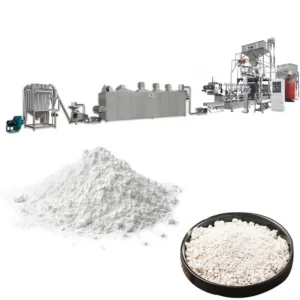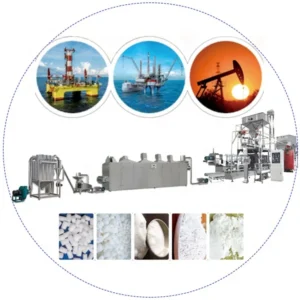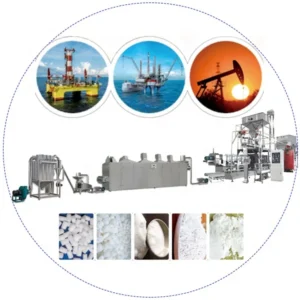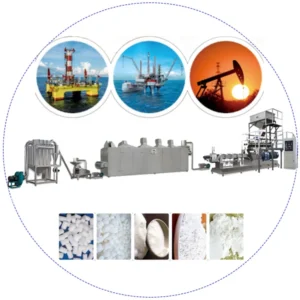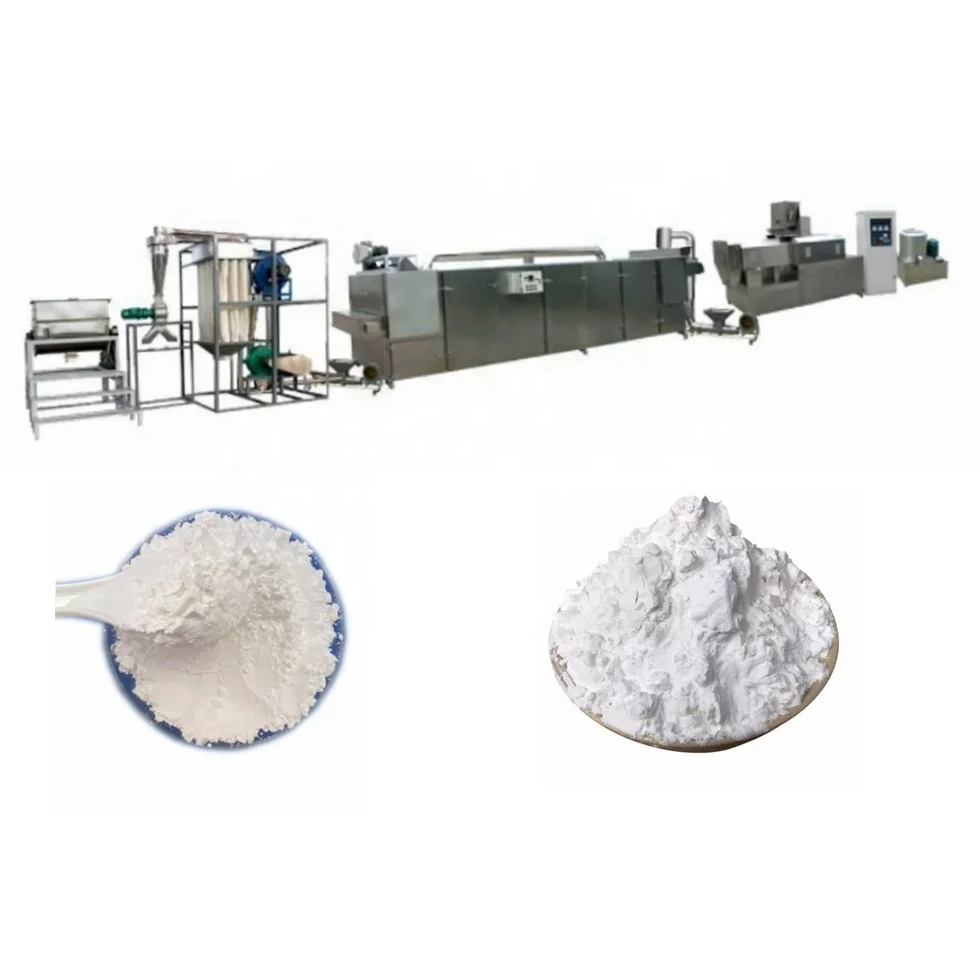


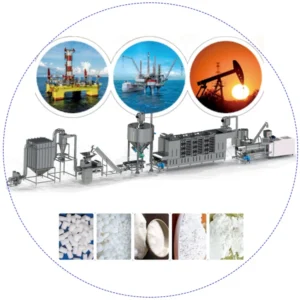
Modified Starch Twin-Screw Extrusion Line, 45–200 kW, 220–440V Three-Phase — engineered for tapioca, cassava and corn starch modification with screw configuration and die design matched to your raw material and target gelatinisation degree. The line integrates extrusion, cooling conveyor and pulse grinder with throughput balanced across every station to prevent bottlenecks common in multi-vendor setups. Pre-shipment trial runs on your actual starch verify capacity and product specification before installation.
- Food-grade stainless steel contact surfaces throughout
- CE and ISO certified production
- Fuel options: gas, diesel, electricity or steam heating
Description
Throughput-Matched Extrusion Lines — Every station from batching to packing is configured as one integrated project, so a 100–1500 kg/h twin-screw extruder is never starved by an undersized dryer or overwhelmed by a bottleneck grinder.
Technical Specifications
| Parameter | Value |
|---|---|
| Product Type | Modified Starch Twin-Screw Extrusion Line |
| Screw Configuration | Twin-screw, geometry matched to raw starch source |
| Installed Power | 45–200 kW (exact rating depends on line capacity and configuration) |
| Output Capacity | 100–1500 kg/h (basis not stated in source — confirm raw material, moisture content and target starch type) |
| Voltage & Frequency | 220–440 V, three-phase (exact frequency to be confirmed per market) |
| Equipment Weight | 1000–5000 kg (source value — verify against final line configuration) |
| Product-Contact Materials | Food-grade stainless steel; PVC on select conveyor sections |
| Heating / Drying Options | Gas, diesel, electricity, or steam (to be confirmed at quotation) |
| Core Line Stations | Twin-screw extruder, cooling and air-drying conveyor, pulse grinder |
| Control System | PLC and MCC control (configuration confirmed per project) |
| Certifications | CE (since 2014), ISO |
Application Suitability
| Application | Material or Output |
|---|---|
| Pregelatinised starch for instant food mixes | Tapioca, cassava, and corn starch |
| Modified starch for paper coating and sizing | Corn and potato starch |
| Modified starch for oil drilling fluids | Tapioca and cassava starch |
| Pre-cooked nutrition and infant formula powders | Rice flour, corn flour, soybean flour blends |
| Modified starch for textile and adhesive industries | Corn and potato starch |
What "Nominal Capacity" Means When Your Starch Is Tapioca, Not Corn
A modified starch processing line turnkey rated at 1500 kg/h on corn starch may deliver half that on tapioca — unless the screw profile and barrel zones are specified for your exact raw material.
I learned this the hard way on a project in Southeast Asia. The line was quoted on a standard capacity figure, but the buyer ran cassava starch, which gelatinises at a different temperature window and demands a different shear profile inside the barrel. Output dropped sharply, and we spent three days on-site adjusting moisture feed, screw speed, and die clearance before the line stabilised. That gap between a brochure number and a real production number is where most starch processors lose margin [NEED_CITE: gelatinisation temperature differences between tapioca and corn starch in twin-screw extrusion]. A modified starch processing line turnkey should always be validated against your specific feedstock before the purchase order is signed.
Screw Geometry and Barrel Zones Tuned to Your Starch Source
Tapioca, corn, potato, and cassava starches each carry distinct amylose-to-amylopectin ratios, granule sizes, and gelatinisation onsets. A screw configuration that generates the correct shear and residence time for corn starch will over-shear tapioca, breaking polymer chains and reducing the functional viscosity your downstream customer expects. The twin-screw extruder on this line is configured with segment-by-segment screw elements and a barrel temperature profile mapped to your raw material data sheet, ensuring the degree of modification — whether cross-linking, esterification, or simple pregelatinisation — stays within your product specification.
Balancing Extruder Output Against Dryer and Grinder Capacity
A line is only as productive as its slowest station. If the twin-screw extruder pushes modified starch at a rate the cooling conveyor cannot handle, material piles up, moisture remains trapped, and the pulse grinder receives feed that is too wet for a consistent particle size. This modified starch processing line turnkey is designed as a single project: extruder throughput, conveyor belt length and air-flow rate, and grinder screen aperture are all calculated together so that no station chokes the next. That calculation starts with your target moisture at the extruder die and your required final particle size distribution [NEED_CITE: throughput balancing methodology in multi-station food extrusion lines].
Reading the Specification Sheet Like a Process Engineer
The 45–200 kW power range reflects the span from laboratory-scale development runs to full industrial production — a 45 kW drive suits batch trials on new starch formulations, while 200 kW supports continuous high-volume output. The twin-screw design provides self-wiping action, which matters for starch because residual gelatinised material hardens rapidly and causes start-up blockages in single-screw machines. Food-grade stainless steel on all contact surfaces is not just a hygiene requirement; it prevents iron-catalysed oxidation that discolours white starches during extended runs. Voltage configurability from 220 V to 440 V three-phase means the motor and heating elements are wound or selected for your facility’s supply before the line leaves the factory, avoiding costly rewiring or transformer rental at commissioning.
The Hidden Cost of a Mismatched Die and Screw Build
When screw elements and die geometry are copied from a generic starch template rather than engineered for your raw material, the symptoms appear gradually. You may notice wider particle-size distribution after grinding, inconsistent viscosity in the finished modified starch, or higher-than-expected energy consumption per kilogram of output. Over weeks these deviations compound into customer complaints about functional performance — a paper mill reporting poor coating hold-out, or a food manufacturer finding the starch does not thicken at the promised temperature. Rectifying the problem after installation means halting production, shipping replacement screw segments internationally, and repeating the entire parameter-tuning cycle [NEED_CITE: impact of screw and die mismatch on extruded starch functionality].
Why Procurement Teams Specify This Line as One Project
Every station — extruder, cooling conveyor, pulse grinder — is engineered under a single line layout, so throughput calculations and utility loads are consistent across the project file. The screw configuration and die design are documented against your raw material sample before production begins, not borrowed from a previous customer’s build. An in-house testing workshop runs your actual starch through the extruder before shipment, producing a trial run report that confirms output, moisture, and particle size on your feedstock. Electrical schematics, voltage, and control language are locked in during the specification phase, so commissioning on your floor is a matter of connection and calibration rather than troubleshooting. Pre-sales engineering consultation carries through to on-site installation, operator training, and a wear parts programme that ensures replacement screws and dies are available when your first scheduled changeover arrives.
Documentation & Verification
- Line layout drawing with capacity calculation matched to your starch type and target output
- Screw and die configuration record tied to your raw material sample
- Trial run report from in-house testing workshop on your actual starch before shipment
- Electrical schematic with confirmed voltage, frequency, and control language for your market
- CE declaration of conformity and ISO certificate for customs and regulatory filing
- Operation and maintenance manual with wear parts list and replacement intervals
Installation, Commissioning & Support
- Foundation and floor-space plan provided based on the 45–200 kW drive configuration and line length
- Dedicated electrical circuit sizing confirmed for your selected voltage between 220 V and 440 V three-phase
- Line arrives in modular sections with labelled connection points for rapid assembly on your floor
- First-start commissioning includes screw speed, barrel temperature, and die clearance tuning on your starch
- Operator training covers moisture adjustment, screw element inspection, and pulse grinder screen changes
- Wear parts list specifies replacement intervals for screws, dies, and grinder screens with stocking guidance
Preparing Your Inquiry
Share your starch source — tapioca, corn, potato, or a blend — along with the target modification type and your required daily output. Confirm your facility’s voltage, frequency, and the control language your operators need. If you have upstream batching or downstream packing equipment already in place, note the interface points so the modified starch processing line turnkey can be designed to connect without gaps.
Frequently Asked Questions
Q: How is line capacity verified against my specific starch and moisture level?
A: Before the line is built, your raw starch sample is run through the twin-screw extruder in the in-house testing workshop. The trial records output rate, moisture at the die, and particle size after grinding, producing a report that confirms what the line delivers on your actual material rather than a generic benchmark.
Q: How are screw configuration and die design chosen for modified vs. pregelatinised starch?
A: Modified starch requiring chemical functional groups needs precise temperature and residence-time control, so screw elements are arranged for longer dwell with moderate shear. Pregelatinised starch prioritises complete gelatinisation and rapid expansion, calling for higher shear and a die geometry that controls exit pressure. Each build is documented before production.
Q: How is throughput balanced between the extruder, dryer, and grinder so no station bottlenecks the line?
A: The line layout is calculated as one project. Extruder output, conveyor belt length and air-drying rate, and pulse grinder capacity are matched using your target moisture and particle size, ensuring continuous material flow without accumulation or starvation at any station.
Q: Can the line run on my local voltage and frequency, and is control language configurable?
A: Voltage is configurable from 220 V to 440 V three-phase, and frequency is confirmed for your market during the specification phase. Control panel language is set before shipment so operators can navigate the interface in their working language from day one.
Q: What trial runs are done on my raw material before the line ships?
A: Your starch sample is processed through the configured extruder in the testing workshop. The trial covers screw speed, barrel temperature zones, moisture addition, and die clearance, generating a full run report that validates output, product quality, and line stability before the equipment is packed for dispatch.
Related products
-
New Automatic Modified Starch Puffing Production Line – Long Service Life Pregelatinized Starch Equipment
¥65.00 Select options This product has multiple variants. The options may be chosen on the product page -
Pre-gelatinized Starch Production Line – Modified Starch Integrated Puffing Equipment
¥65.00 Select options This product has multiple variants. The options may be chosen on the product page -
Cassava Corn Potato Flour Starch Production Line – Industrial Pregelatinized & Modified Extrusion Machinery
¥65.00 Select options This product has multiple variants. The options may be chosen on the product page -
Automatic 304 Stainless Steel Modified Corn Starch Making Machine TWIN SCREW 500kg/h Capacity Starch Processing Production Line
¥50.00 Select options This product has multiple variants. The options may be chosen on the product page