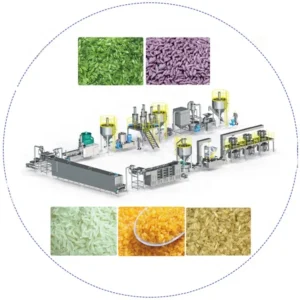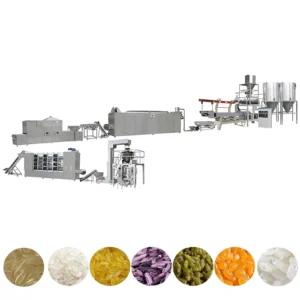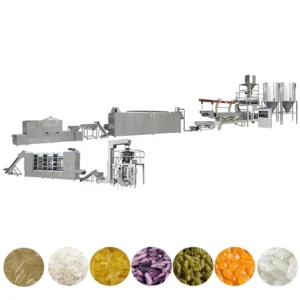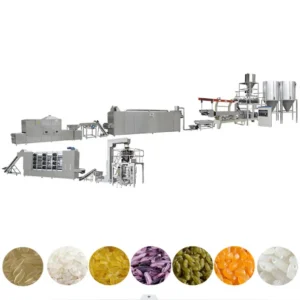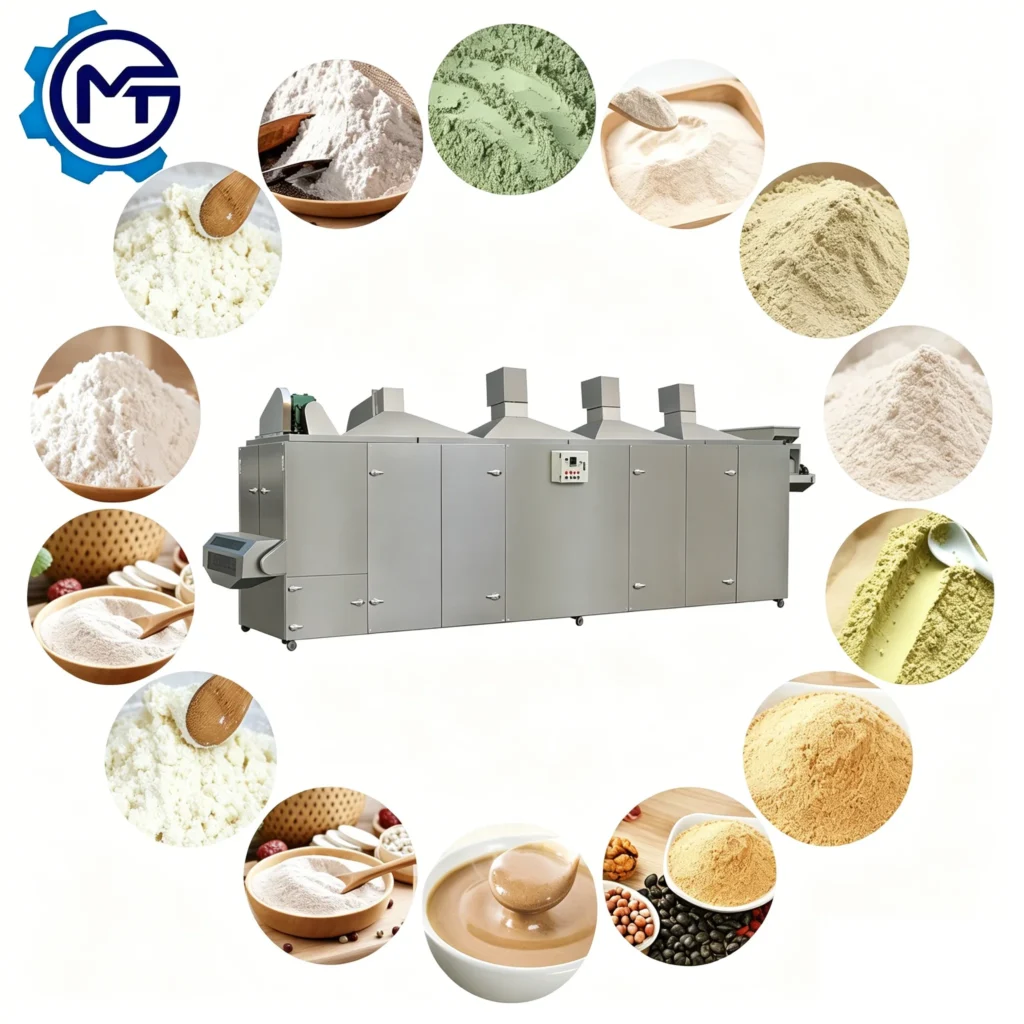


Nutrition Powder Processing Line, 200-500 kg/h capacity, Food-Grade 304 Stainless Steel, Full Automatic PLC Control — engineered for infant food and fortified nutrition production with twin-screw extrusion technology.
Twin-screw configuration and die design are matched to your specific grain formulation (rice, corn, beans) to achieve target powder particle size and nutritional consistency. Flexible heat source options (electric/gas/steam) integrate with your existing factory utilities.
Complete turnkey delivery includes in-house trial runs on your raw material before shipment, ensuring verified performance from day one.
Description
Throughput-Matched Turnkey Engineering — every station from batching to packing is configured as one coordinated system, eliminating the bottleneck risk of assembling a nutrition powder line from separate vendors.
Technical Specifications
| Parameter | Value |
|---|---|
| Product Type | Nutrition Powder Processing Line |
| Output Capacity | 200-500 kg/h (basis not stated in source — confirm raw material blend, moisture content, and target particle size) |
| Construction Material | Food-Grade 304 Stainless Steel |
| Control System | Touch control panel with digital system |
| Heat Source Options | Electric / Gas / Steam |
| Screw Type | Twin-screw |
| Automation Level | Full automatic |
| Line Stations | Baking ovens, mixers (complete station list to be confirmed) |
| Warranty | 1 year |
| After-Sales | Overseas engineer service available |
| Assembly State | Complete line (batching to packing scope to be confirmed) |
| Voltage & Frequency | Configurable to buyer market (to be confirmed) |
| Energy Profile | Low energy consumption design |
| Standards | CE certified, ISO certified |
Application Suitability
| Application | Material or Output |
|---|---|
| Infant nutrition powder and porridge production | Rice, corn, beans, and blended grain formulations |
| Fortified nutritional powder manufacturing | Multi-grain blends with vitamin and mineral premixes |
| Baby food formulation diversification | Various grain bases with protein and micronutrient additions |
| Nutrition programme supply | Standardized porridge and powder formats for institutional distribution |
Why "Rated Capacity" Means Nothing Without Your Raw Material
A nutrition powder processing line turnkey proposal must be validated on your actual grain formulation, not a generic benchmark.
I once watched a line run perfectly on plain rice flour during the factory test, then stall within hours when the client switched to a blend containing whey protein isolate. The extruder barrel temperature profile was calibrated for pure starch gelatinisation, but the added protein altered the melt viscosity entirely. Expansion collapsed, bulk density spiked, and the drying section could not keep pace with the wetter output. Two weeks of overnight parameter adjustments followed before the line held a stable run [NEED_CITE: starch gelatinisation behaviour in high-protein grain blends]. A turnkey project that skips formulation-specific trial runs transfers all that development cost to your factory floor.
Phase Planning from Batching Through Packing
A complete nutrition powder processing line turnkey project requires sequencing that respects utility availability, floor loading, and commissioning dependencies. The batching and mixing section goes in first because downstream stations cannot be calibrated without a consistent feed stock. Extrusion follows, with barrel heating zones and screw configuration locked to the validated formulation. Drying and milling stations are then matched to the moisture profile exiting the extruder, and packing is timed to the cooled product flow. Each phase has a hold point where throughput is measured against the line design calculation before the next station is energized.
Utility Mapping Before the First Bolt Hits the Floor
Electric, gas, and steam heat source options are available, but the choice affects far more than the dryer [NEED_CITE: industrial utility planning for food processing facilities]. Steam demand from the extruder preconditioner, the multi-pass dryer, and any sterilisation step must be summed and compared against the site boiler capacity. Electrical load from the main drive motors, barrel heaters, and control cabinets requires a dedicated transformer circuit with voltage and frequency confirmed to the local grid standard. Gas-fired dryers need combustion air intake and flue routing planned before the slab is poured. Missing any of these items before installation begins means weeks of idle equipment on your floor.
Reading the Specs That Actually Matter
Twin-screw extrusion is specified here because single-screw designs struggle with the variable fat and protein content typical of infant nutrition formulations. The intermeshing screw geometry provides self-wiping action that prevents material hang-up and cross-contamination between batches. Food-grade 304 stainless steel across all contact surfaces is not optional when producing for the infant food market — it is a baseline hygiene requirement enforced by most import regulations. The touch control panel with digital system centralises setpoints for barrel temperature zones, screw speed, and feed rate, giving operators a single interface to monitor rather than walking each station. Full automatic operation means the line sequences startup and shutdown across stations, reducing the operator error window during shift changes.
The Hidden Cost of an Unmatched Dryer
When the dryer capacity is sized to a nominal extruder output rather than the actual moisture load of your specific formulation, the consequences compound quietly. Product exits the extruder at a moisture level that the dryer cannot reduce to target within the available residence time. Downstream milling then receives material that is too wet, producing uneven particle size and clumping in the packing station. The line appears to run, but the packing weight drifts outside tolerance and rejection rates climb [NEED_CITE: moisture content control in extruded food powder production]. This mismatch is invisible in a quotation that lists each machine independently without a throughput balance calculation.
What Makes This Procurement Different
Every station on this nutrition powder processing line turnkey project is sourced and configured under one supplier, so the extruder output rate, dryer residence time, and packing speed are calculated against each other rather than specified in isolation. Screw configuration and die design are matched to your raw material blend, not copied from a generic build that assumes a standard rice-corn ratio. The in-house testing workshop runs your actual formulation before shipment, producing a trial run report that documents the barrel temperature profile, screw speed, and moisture curve your operators will start with on day one. Electrical schematics are drawn with your site voltage and frequency confirmed, so the control cabinet arrives wired correctly rather than needing a local electrician to reconfigure on arrival. Pre-sales consultation continues through on-site installation, commissioning, and ongoing maintenance support from the same engineering team.
Documentation & Verification
- Line layout and capacity calculation confirming throughput balance across all stations
- Trial run report on your grain blend conducted in the testing workshop before dispatch
- Screw and die configuration record specific to your formulation, not a generic template
- Electrical schematic with voltage and frequency matched to your facility grid standard
- CE declaration of conformity and ISO certificate for export clearance
- Operation and maintenance manual with wear parts list for long-term planning
Installation, Commissioning & Support
- Floor loading plan accounts for full line weight distribution across all stations
- Dedicated power circuit sized for combined main drive and barrel heater load
- Modular station assembly allows phased positioning in facilities with limited access
- First-run parameter set loaded from the pre-shipment trial report for faster ramp-up
- Operator training covers formulation changeover procedures on the digital control panel
- Wear parts inventory for screws, dies, and seals sized to first replacement interval
Before You Request a Quotation
Send the raw material specification you intend to run — including grain types, protein additions, and target particle size — along with your daily production target. Confirm your facility voltage, frequency, and available heat source so the electrical and thermal design matches your site from the start. If you have existing upstream or downstream equipment that must integrate with the new line, share the interface dimensions and throughput rates so the layout accounts for those connection points.
Frequently Asked Questions
Q: How is line capacity verified on my specific raw material blend before shipment?
A: Your grain formulation is run in our in-house testing workshop using the same screw configuration and die design specified for your line. We document barrel temperatures, screw speed, moisture curve, and output rate in a trial run report. That report becomes the baseline parameter set your operators load on day one, so capacity is proven on your material before any equipment leaves the factory.
Q: What is the phased installation and commissioning schedule for a complete turnkey line?
A: Installation proceeds station by station, starting with batching and mixing, then extrusion, drying, and packing. Each phase has a throughput hold point before the next station is connected. Commissioning follows the same sequence, with formulation-specific parameters loaded and verified at each stage. The schedule is confirmed during the layout proposal phase so your facility preparation stays aligned.
Q: How do you ensure throughput matching between the extruder, dryer, and packing stations?
A: Every station is specified under a single line design calculation rather than quoted independently. The extruder output rate at your formulation moisture level sets the dryer residence time requirement, which in turn determines the packing station speed. This balance is documented in the capacity calculation and verified during the pre-shipment trial run.
Q: What utility planning is required at the factory before installation begins?
A: We provide a utility requirement document covering electrical load, steam demand, gas supply, and compressed air based on your confirmed heat source option. Your facility must have a dedicated transformer circuit at the agreed voltage and frequency, boiler capacity for the calculated steam load, and floor drainage positioned per the line layout. These items are reviewed during the proposal stage.
Q: How is operator training structured during on-site commissioning for infant food production?
A: Training runs alongside commissioning, starting with safe startup and shutdown sequences on the digital control panel. Operators then practice formulation changeover, screw speed adjustment, and moisture monitoring using your actual raw material. Hygiene protocols specific to infant food contact surfaces are covered, and a maintenance schedule for wear parts is reviewed before the engineering team departs.
Related products
-

Hygienic Stainless Steel Infant Rice Powder Processing Line Automatic 500kg/h Capacity PLC Controlled
¥9,500.00 Add to cart -
Full Automatic Complete Baby Food Nutrition Powder Porridge Processing Production Line for Infant Nutrition Factory
¥9,500.00 Add to cart -
150-500kg/h Twin Screw Extruder Baby Rice Flour Making Machine
¥9,500.00 Select options This product has multiple variants. The options may be chosen on the product page -

Automatic Instant Powder Production Line Nutritional Powder Extruder Machine
¥10,000.00 Select options This product has multiple variants. The options may be chosen on the product page