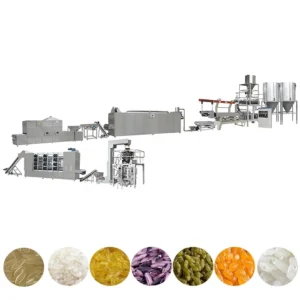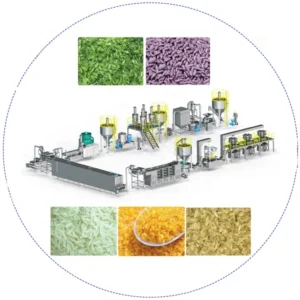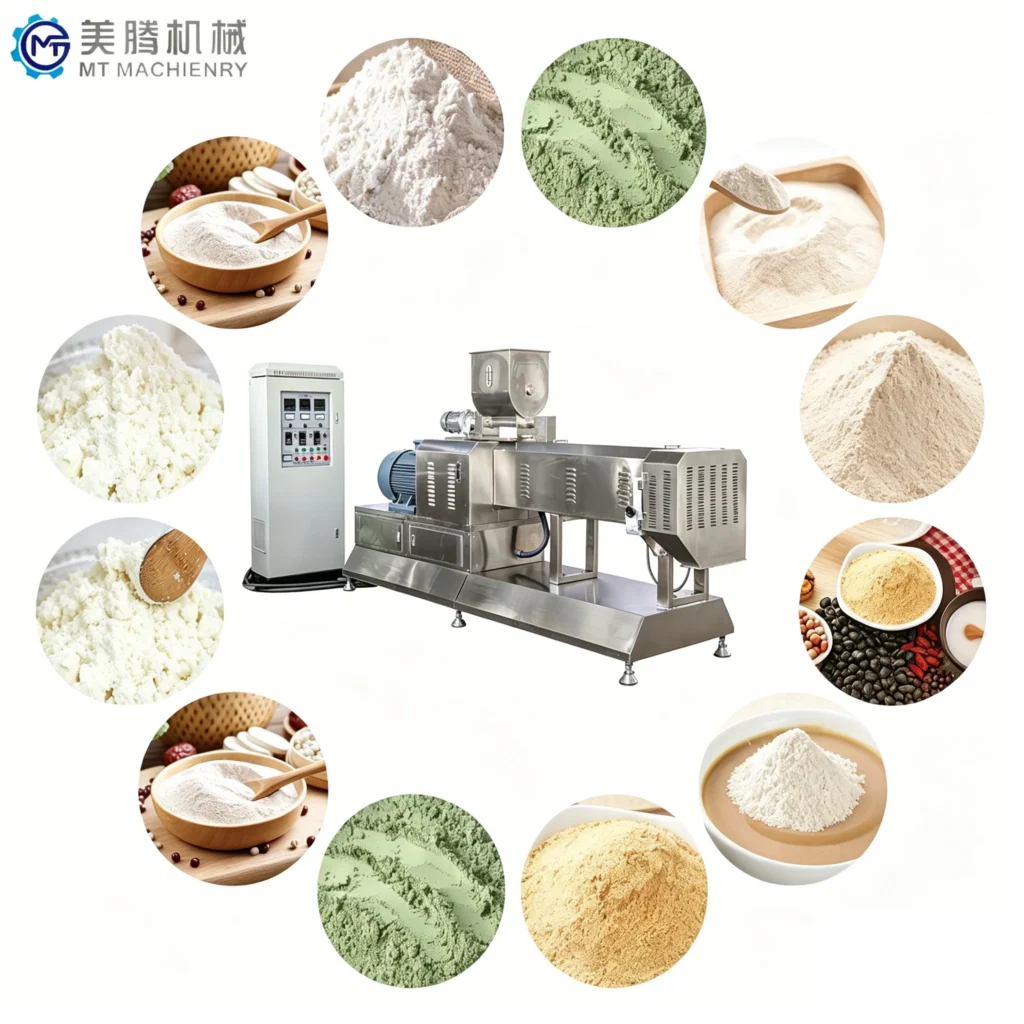


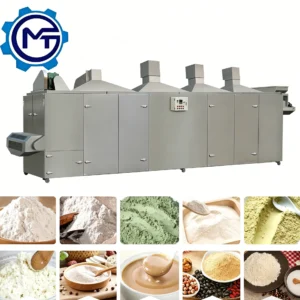
MT65 / MT70 / MT75 / MT85 Twin Screw Extruder Nutrition Powder Processing Line, PLC & MCC Control, Food-Grade Stainless Steel — engineered as a complete turnkey project from batching through extrusion, drying and pulse grinding, with every station’s throughput matched to eliminate bottlenecks. Screw configuration and die design are specified to your raw material and target particle size, verified by trial runs in our in-house testing workshop before shipment.
- Single-supplier layout with capacity calculation documented per your formulation
- Voltage, frequency and control language confirmed before production begins
- CE and ISO certified line with full electrical schematic and wear parts list provided
Description
Throughput-Matched Turnkey Line Engineering — station capacities calculated against your specific grain formulation and target mesh size, not a generic catalog benchmark.
Technical Specifications
| Parameter | Value |
|---|---|
| Product Type | Twin Screw Extruder Nutrition Powder Processing Line |
| Available Models | MT65 / MT70 / MT75 / MT85 |
| Installed Power | 84 kW (MT65) / 160 kW (MT70) / 190 kW (MT75) / 210 kW (MT85) |
| Power Consumption | 59 kW (MT65) / 120 kW (MT70) / 140 kW (MT75) / 150 kW (MT85) |
| Output Capacity | 120–150 kg/h (MT65, basis to be confirmed) / 150–200 kg/h (MT70, basis to be confirmed) / 200–250 kg/h (MT75, basis to be confirmed) / 300–400 kg/h (MT85, basis to be confirmed) |
| Overall Dimensions | 20000×1500×2200 mm (MT65) to 25000×1500×3500 mm (MT85) |
| Screw Type | Twin-screw |
| Mixer Batch Capacity | 20–30 kg / 70–80 kg / 170–180 kg per batch (matching line model) |
| Mixer Power | 4 kW / 7.5 kW / 15 kW (matching line model) |
| Dryer Type | Multi-layer mesh belt, adjustable temperature and residence time |
| Dryer Heat Source Options | Fuel / Gas / Electric |
| Pulse Grinder Power | 11 kW |
| Pulse Grinder Capacity | ~200 kg/h (target mesh to be confirmed) |
| Control System | PLC and MCC automated control |
| Voltage & Frequency | 380V 50Hz, Three Phase (other voltages configurable per buyer market) |
| Contact Material | Food-grade stainless steel (304 S.S.) |
| Warranty | One year |
Application Suitability
| Application | Material or Output |
|---|---|
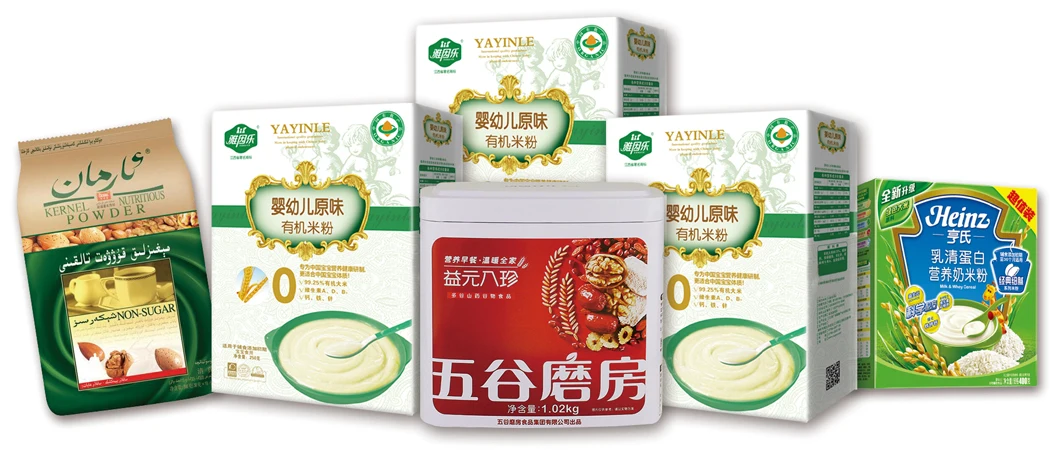
| Infant formula and baby food powder | Rice flour, corn starch, oat flour with vitamin and mineral premix |
| Fortified nutritional staple powder | Wheat, maize and sorghum flour blended with micronutrient additives |
| Modified and pregelatinised starch | Native corn, cassava and potato starch converted to functional food-grade powder |
| Therapeutic and functional food powder | Starch-based grain blends with protein isolate and dietary fibre additives |
What "150–500 kg/h" Leaves Out About Nutritional Powder Lines
Line capacity only means something when measured against your actual raw material formulation and target particle size.
A few years back in the Yangtze Delta region, I watched a nutritional powder extrusion line stall because the buyer’s rice flour particle size was noticeably coarser than the material used during the supplier’s test run. The extruder couldn’t gelatinise the starch evenly, bulk density swung outside specification, and the line spent most of its first month sitting idle while the buyer and supplier argued over whose fault it was [NEED_CITE: common causes of extrusion line commissioning delays]. When sourcing a nutritional powder processing line turnkey, the capacity figure on the quotation must be tied to a documented trial on your specific formulation — not a generic benchmark run on material the supplier happened to have in the workshop. Without that verification step, the number on the spec sheet is essentially a guess.
Matching Every Station From Batching to Grinding
A nutritional powder processing line turnkey project involves at least eight distinct stations: raw material batching, mixing, screw conveying, twin-screw extrusion, air conveying, multi-layer drying, a second air conveying stage, and pulse grinding. If the mixer completes a batch faster than the extruder can consume it, material sits and absorbs moisture. If the dryer cannot remove enough water within the residence time available, the pulse grinder chokes on damp agglomerates. Each station’s capacity is calculated so the line runs as a continuous flow rather than a series of bottlenecks.
Why Screw Configuration Matters for Nutrient-Retention Targets
In twin-screw extrusion of nutritional and infant formula powders, the screw profile and die geometry determine shear intensity, barrel residence time and peak temperature — all of which directly affect starch gelatinisation degree and heat-sensitive vitamin survival. A configuration designed for puffed snack pellets will generate excessive expansion and destroy added micronutrients. A configuration engineered for a baby rice flour target will use a moderate shear profile with controlled barrel temperature zones, preserving the vitamin premix while still achieving the gelatinisation level required for digestibility [NEED_CITE: twin screw extrusion parameters and nutrient retention in infant food powder]. Screw and die records are retained on file so repeat orders and spare part replacements match the original formulation.
Reading the Specification Table With a Critical Eye
The installed power figures across the model range — from 84 kW on the MT65 up to 210 kW on the MT85 — reflect the drive torque available for pushing viscous, nutrient-fortified dough through the barrel. Higher installed power allows a longer screw length-to-diameter ratio, which extends residence time and improves starch conversion uniformity. The mixer batch capacities (20–30 kg up to 170–180 kg) are paired to each extruder model so that one batch feeds a continuous extrusion run without starving the screw or overflowing the conditioner. The pulse grinder’s 11 kW motor drives impact milling to the target mesh size; the actual throughput depends on the particle size specification required by your market, which is why that figure carries a confirmation note. The multi-layer mesh belt dryer offers adjustable temperature and residence time, with heat source selection — electric, gas or fuel — matched to the utility infrastructure at your installation site. Food-grade 304 stainless steel contact surfaces throughout the line prevent iron contamination that would compromise both product safety and colour.
The Hidden Cost of Unmatched Station Capacity
When a buyer assembles a nutritional powder line from separate vendors, the extruder supplier quotes a capacity, the dryer supplier quotes a different basis, and the grinder supplier quotes yet another. The result is a line where one station inevitably governs maximum throughput, and the buyer pays for capacity that never materialises. Worse, if the dryer is undersized relative to the extruder output, partially dried powder reaches the grinder and causes screen blockage that forces unplanned downtime every few hours [NEED_CITE: consequences of throughput mismatch in multi-vendor food processing lines]. These problems rarely appear during the supplier’s factory test because each machine is tested in isolation, not as a connected system running continuously on the buyer’s material.
Why This Turnkey Approach Works for Powder Lines
The line is engineered under a single supplier, so throughput calculations across the mixer, extruder, dryer and grinder are performed against the same raw material specification rather than separate vendor assumptions. The in-house testing workshop runs your actual formulation before the line ships, producing a documented trial run report that verifies output against your recipe. Screw configuration and die design are specified to your target powder particle size and nutrient profile, not copied from a generic snack build. Electrical schematics confirm voltage, frequency and PLC language to your site requirements before production begins, avoiding the commissioning delays that happen when a 380V machine arrives at a 415V facility. Post-installation support covers operator training, a documented wear parts list and ongoing maintenance guidance specific to the nutritional powder application.
Documentation & Verification
- Line layout and capacity calculation matched to your grain formulation and target mesh
- Factory trial run report on your raw material with verified output before dispatch
- Screw and die configuration record retained on file for repeat orders
- Electrical schematic with voltage, frequency and PLC language confirmed to your site
- CE declaration of conformity and ISO certificate included with shipping documentation
- Operation and maintenance manual with wear parts list specific to nutritional powder production
Installation, Commissioning & Support
- Foundation and floor space planning based on the selected model’s footprint, up to 25000×1500×3500 mm
- Dedicated electrical circuit sized to the model’s installed power, up to 210 kW at confirmed site voltage
- Equipment arrives in sectional modules for phased assembly and utility connection on site
- First-run commissioning with screw speed, barrel temperature and dryer settings calibrated to your formulation
- Operator training covering PLC interface navigation, batch changeover and daily cleaning procedures
- Initial spare parts package including replacement screws, dies and grinder screens for your production schedule
What to Share When Requesting a Line Proposal
To configure a nutritional powder processing line turnkey proposal, share your raw material type and particle size specification, the nutrient premix composition if applicable, your target daily output and the mesh size required for the finished powder. Include your site voltage and frequency, preferred PLC display language and the heat source available for the dryer. If you have existing upstream batching or downstream packing equipment, note the interface points so the line layout accounts for them.
Frequently Asked Questions
Q: How is line capacity verified against my specific raw material and nutrient formulation?
A: Before shipment, your raw material and premix are run through the extruder in the in-house testing workshop. Output rate, bulk density and particle size distribution are measured and recorded in a trial run report. The documented figures — not a generic catalog value — form the capacity basis for your line.
Q: How do you ensure throughput is balanced across mixer, extruder, dryer and grinder?
A: Each station is sized against the same formulation data. Mixer batch cycle time is matched to extruder consumption rate, dryer belt speed and temperature are set to achieve the required moisture reduction within the available residence time, and grinder capacity is confirmed against your target mesh specification.
Q: What voltage, frequency and control language options are confirmed before production?
A: During the specification phase, your site electrical supply and preferred PLC display language are documented. The electrical schematic is built to those requirements and confirmed with you before the control cabinets are wired, preventing commissioning delays at installation.
Q: What does the phased installation and commissioning schedule look like?
A: The line arrives in modules matching the station sequence. Foundation and utility connections are completed first, followed by mechanical assembly, electrical termination and individual station testing. Final commissioning runs your formulation end-to-end with operator training conducted on your material.
Q: Which wear parts are included initially, and what is the lead time for replacements?
A: The initial spare package includes replacement screws, dies and pulse grinder screens matched to your configuration. Screw and die specifications are retained on file, and replacement orders are manufactured against the original configuration record to ensure consistent product quality.
Related products
-

High Quality Automatic PLC Controlled 500kg/h Twin Screw Extruder Machine for Baby Rice Nutrition Powder
¥8,238.27 Add to cart -
CE Approved MT Brand Organic Baby Rice Nutrition Powder Extrusion Production Line with 500kg/h Capacity and Automatic Grade
¥9,500.00 Add to cart -

Fully Automatic 500kg/h Baby Cereal Nutrition Powder Extrusion Drying Line with PLC Control
¥9,500.00 Add to cart -
Compact Automatic Baby Cereal Nutrition Powder Production Line with 500kg/h Capacity and PLC Control
¥9,500.00 Add to cart