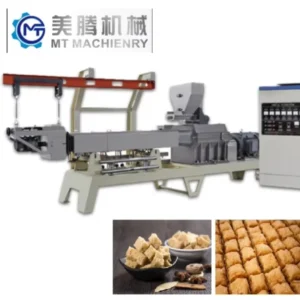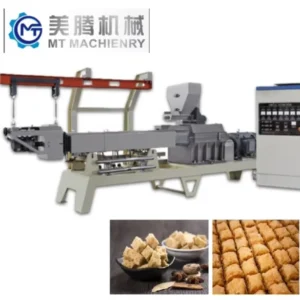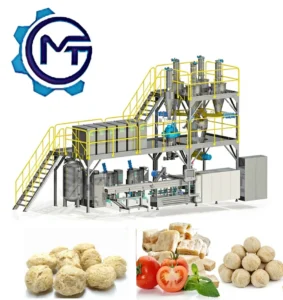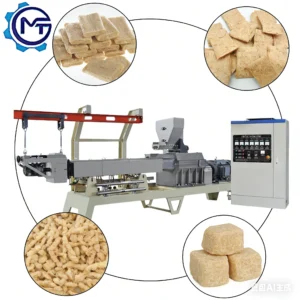
- Trial run on your exact raw material in our testing workshop before shipment confirms fiber structure, density and absorption properties upfront.
Description
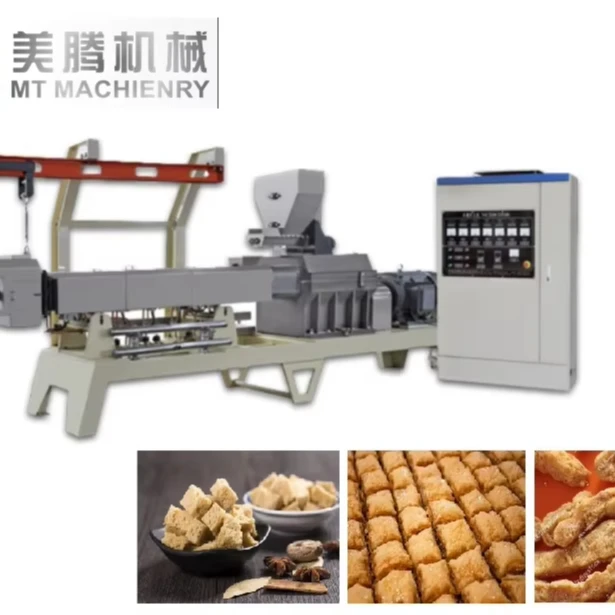
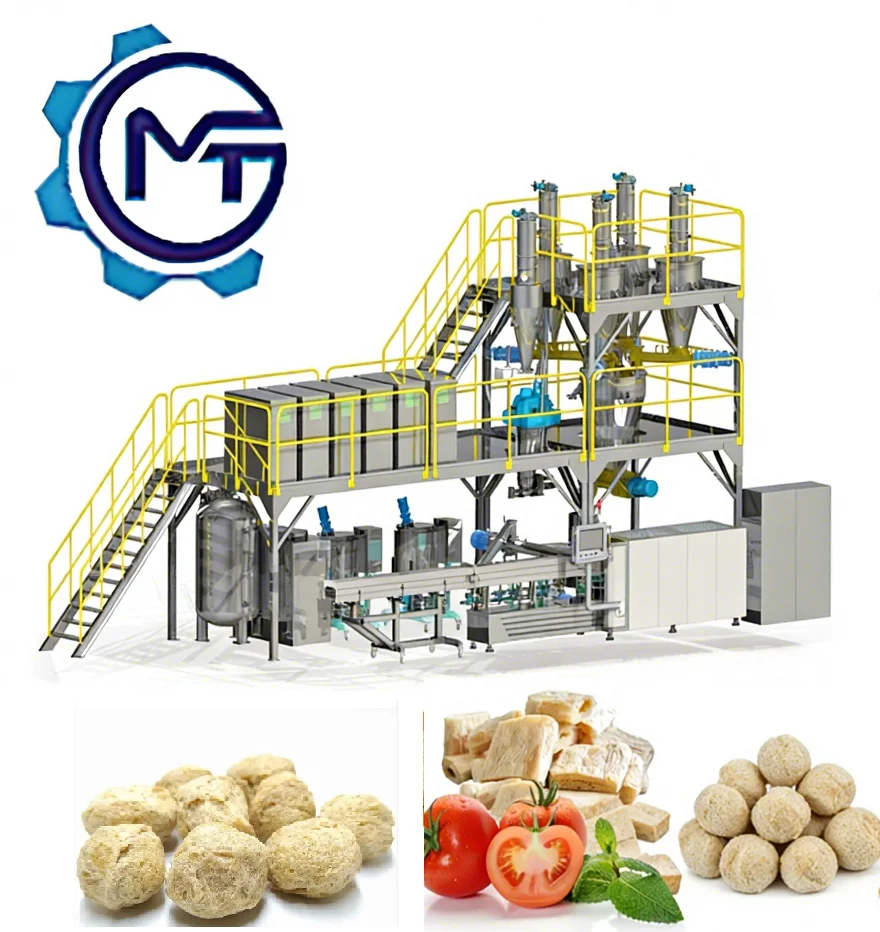
Throughput-Matched Integration — Every station from the vertical mixer through the multi-layer dryer is sized against the extruder’s actual output on your specific soya formulation, preventing the bottleneck that typically appears when line components are sourced separately.
Technical Specifications
| Parameter | Value |
|---|---|
| Product Type | Twin Screw Extruder for High Moisture Vegetarian Meat |
| Model | MT65 / MT70 / MT75 / MT85 |
| Installed Power | 84 kW (MT65) / 160 kW (MT70) / 190 kW (MT75) / 210 kW (MT85) |
| Power Consumption | 59 kW (MT65) / 120 kW (MT70) / 140 kW (MT75) / 140 kW (MT85) |
| Output Capacity | 100–150 kg/h (MT65) / 150–200 kg/h (MT70) / 150–200 kg/h (MT75) / 250–300 kg/h (MT85) (basis to be confirmed — dependent on raw material formulation, moisture content, and target product format) |
| Screw Type | Twin Screw |
| Screw Length | 1050 mm / 1520 mm |
| Main Motor Power | 22 kW / 30 kW / 45 kW |
| Rotary Cutting Motor Power | 0.75 kW |
| Feeding Motor Power | 0.75 kW |
| Pump Motor Power | 0.37 kW |
| Heating Power | 10 kW / 14 kW |
| Control System | PLC / MCC configuration (confirm target specification) |
| Voltage & Frequency | Configurable to target market standard |
| Mixer Type | Vertical mixing machine with stainless steel 304 mixing ruler; carbon steel shelf |
| Mixer Capacity | 20–30 kg / 70–80 kg / 170–180 kg |
| Mixer Power | 4 kW / 7.5 kW / 15 kW |
| Dryer Heating Options | Fuel / Gas / Electricity (configurable) |
| Dryer Drive | Double pitch roller chain drive, round-trip drying |
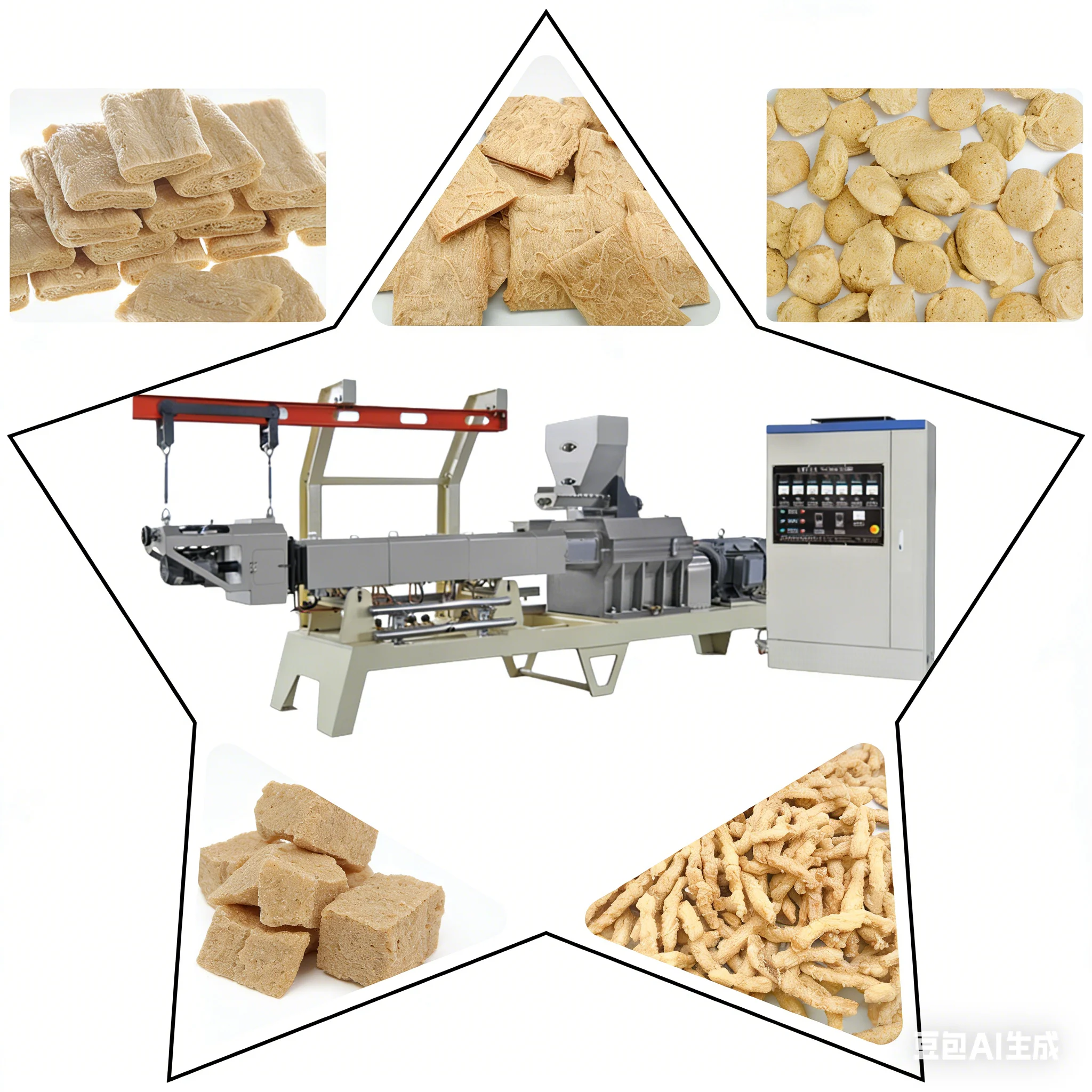
| Die Configuration | Adjustable moulds for soya nuggets, TVP/TSP, soya chunks |
| Assembly State | Complete production line |
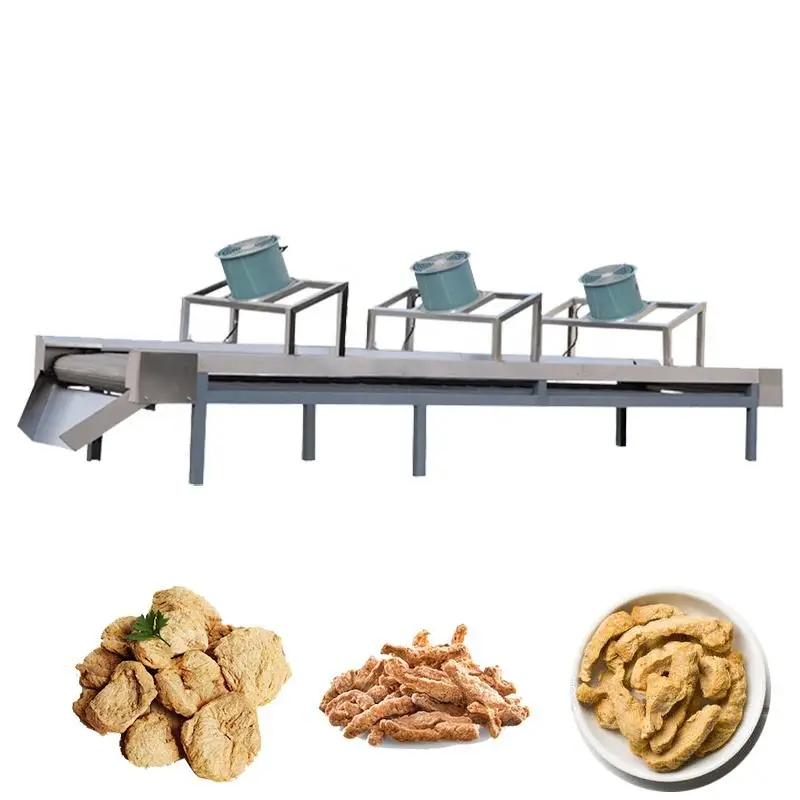
| Line Stations | Mixer → Screw Conveyor → Twin Screw Extruder → Air Conveyor → Multi-layer Dryer → Cooling Machine |
| Raw Material Compatibility | Defatted soya flour, low-temperature soya flakes, soybean dregs, peanut dregs |
| Standards | CE certified; ISO certified |
Application Suitability
| Application | Material or Output |
|---|---|
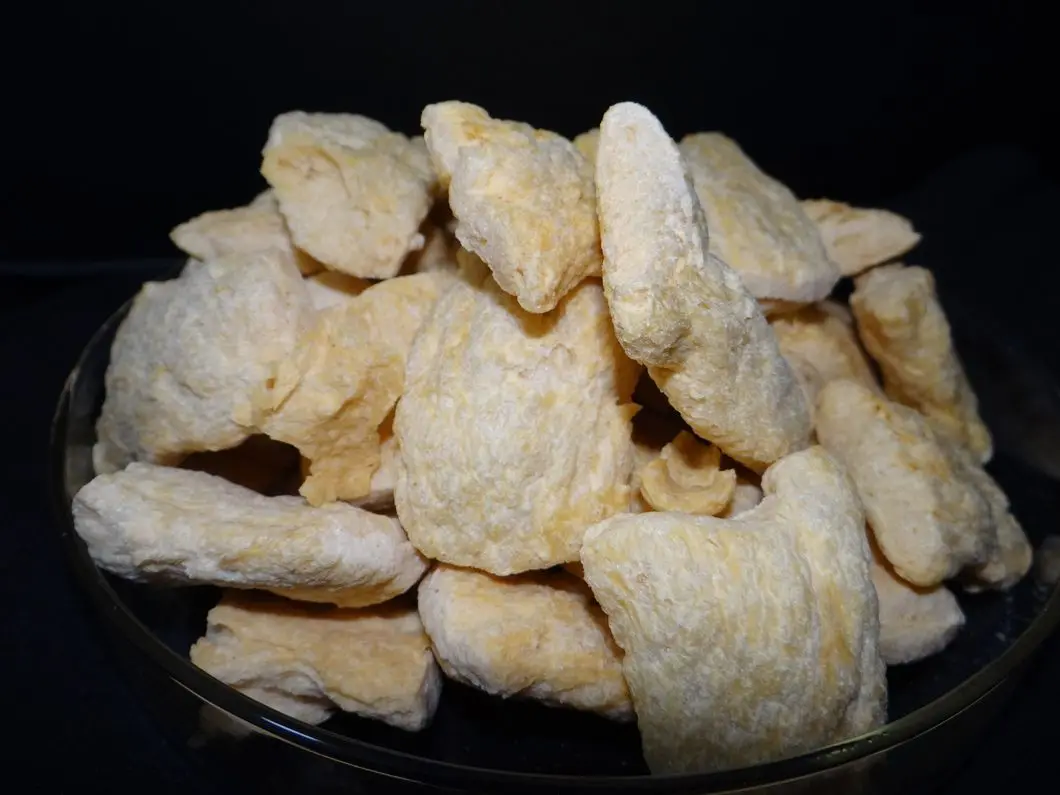
| High-moisture plant-based meat analogues | Defatted soya flour and low-temperature soya flakes processed into fibrous protein blocks with layered structure |
| Textured soy protein (TVP/TSP) for institutional food service | Soya chunks and nuggets with consistent water and oil absorption characteristics |
| Frozen and convenience food protein ingredients | Soybean protein blocks sized for deep-freeze production lines and fast food preparation |
| Vegetarian snack formats | Soya nuggets and extruded protein pieces for lean snack applications |
Why the Capacity Number on the Quotation Is Not the Whole Story
A rated output figure only means something when the raw material, moisture level, and die geometry behind it are specified.
I worked with a plant-based meat producer who ordered a high-moisture protein line based on a brochure capacity number. Their formulation relied on pea protein rather than the soy flour used during the manufacturer’s benchmark test. The extruder ran, but output fell well below the quoted figure, and the fiber structure never formed correctly. The screw combination and barrel temperature profile had to be rebuilt from scratch, and it took weeks of adjustment before the line stabilized [NEED_CITE: effects of protein source substitution on extrusion throughput and texture]. That experience changed how I approach every plant based meat processing line project — the first step is always a trial run on the buyer’s actual raw material, not a assumption based on a generic formulation.
How Screw Configuration Defines the Fiber Structure You Can Sell
The twin screw configuration on this extruder platform is selected around the specific protein source and the fiber architecture your market expects. Longer screw assemblies extend residence time inside the barrel, which matters when you are working with low-temperature soya flakes that need more mechanical shear to align into layered fibers. The adjustable die moulds let you shift between soya chunks, nuggets, and larger fibrous blocks without replacing the entire screw set, which keeps the plant based meat processing line flexible across product formats.
Balancing Every Station So the Extruder Never Waits
A common failure in extruded protein lines is an undersized dryer that forces the extruder to idle while the previous batch finishes its cycle. On this line, the multi-layer dryer uses a double pitch roller chain drive with round-trip drying and configurable heating sources — fuel, gas, or electricity — matched to the extruder’s output volume at your target moisture level. The cooling machine downstream is sized to handle the full throughput before packing, so no single station creates a bottleneck [NEED_CITE: throughput balancing methodology in multi-station extrusion lines]. This matched-capacity approach applies whether you are running MT65 volumes for a pilot operation or MT85 volumes for commercial-scale production.
Reading the Power and Dimension Figures Against Your Facility
The main motor power ranges from 22 kW to 45 kW across the model range, which directly determines the torque available for shearing dense protein doughs at high moisture levels. Heating power at 10 kW to 14 kW governs how quickly the barrel zones reach and maintain the temperatures required for starch gelatinisation and protein texturization — a factor that changes significantly when you switch from soya flour to a blend that includes peanut dregs or soybean dregs. Overall line dimensions span up to 45,000 mm in length across the full station layout, so confirming your workshop footprint and ceiling height before production begins avoids installation conflicts that delay commissioning. The mixer power options at 4 kW, 7.5 kW, and 15 kW correspond to batch sizes from 20 kg up to 180 kg, and choosing the right mixer capacity prevents both underfeeding the extruder and letting mixed material sit too long before extrusion.
The Cost of Skipping the Trial Run Before Shipment
When a line ships without a documented trial on the buyer’s actual defatted soya flour or soya flakes, all product development happens after installation — on your factory floor, with your utility costs running. Screw combinations that worked on the manufacturer’s test material may not generate the correct fiber layering on yours, and die geometry optimized for one chunk size may produce excessive fines on another [NEED_CITE: post-installation reconfiguration costs in food extrusion projects]. Downtime during this learning period is not just lost output; it is raw material waste, operator frustration, and delayed market entry.
Why Sourcing the Full Line from One Supplier Changes the Equation
Every station on this plant based meat processing line — mixer, screw conveyor, twin screw extruder, air conveyor, multi-layer dryer, cooling machine — is specified and supplied under one responsibility, which means throughput calculations are cross-checked between stations rather than assumed from separate vendor datasheets. The screw configuration and die design are documented against your raw material and target product format before production starts, not copied from a generic build. Food-grade contact materials are used throughout the product path, with stainless steel 304 in the mixer and product-contact surfaces maintained through the extruder barrel and die. An in-house testing workshop allows trial runs on your specific formulation before the equipment leaves the factory, generating a verified trial report rather than a promise. Pre-sales engineering consultation covers line layout, utility planning, and capacity calculation, and support continues through on-site installation, commissioning, operator training, and ongoing wear parts supply.
Documentation & Verification
- Line layout and capacity calculation showing throughput matching across all six stations for your formulation
- Screw and die configuration record specific to your target fiber structure and chunk size
- Trial run report on your defatted soya flour or soya flakes conducted before shipment
- Electrical schematic with confirmed voltage, frequency, and control language for your facility
- CE declaration of conformity and ISO certificate for customs and regulatory clearance
- Operation and maintenance manual with wear parts list and replacement intervals
Installation, Commissioning & Support
- Full line footprint up to 45,000 mm requires confirmed floor plan and ceiling clearance before foundation work begins
- Total installed power up to 210 kW demands dedicated electrical circuits sized to your local voltage and frequency standard
- Line ships in modular station groups and is assembled on-site with alignment verified across conveyor connections
- First production run includes parameter setting for barrel temperature zones, screw speed, and dryer cycle time on your material
- Operator training covers screw combination changes, die swap procedures, and daily cleaning protocols
- Wear parts list identifies screws, dies, and cutting blades with recommended replacement intervals
What We Need to Configure Your Line Correctly
To size the extruder, dryer, and mixer for your actual production conditions, share your primary protein source and its grade, the target product format such as fibrous blocks or dry chunks, and your expected daily output volume. Include your facility’s voltage and frequency standard along with the preferred control language for the PLC interface. If you have existing upstream batching or downstream packing equipment, provide the connection specifications so the plant based meat processing line integrates without interface gaps.
Frequently Asked Questions
Q: How is the output capacity verified against my specific soya flour formulation and moisture level?
A: Before shipment, we run a trial production using your exact defatted soya flour or soya flakes in our testing workshop. The trial report documents actual throughput, fiber structure, density, and absorption properties at your formulation’s moisture content, so the capacity figure you receive is tied to your material rather than a generic benchmark.
Q: What screw configuration and die design will be specified for my target fiber structure?
A: The screw combination and adjustable die moulds are selected based on your target product format — whether layered fibrous blocks, soya chunks, or nuggets. A configuration record is generated before production, documenting the screw element arrangement, barrel zone temperatures, and die geometry matched to your protein source and expected texture.
Q: How is throughput balanced between the extruder, dryer, and cooling stations?
A: Each station is sized against the extruder’s verified output on your formulation. The multi-layer dryer’s heating capacity and cycle time, along with the cooling machine’s belt speed, are calculated so that neither station forces the extruder to idle or accumulate product between cycles.
Q: Can the same extruder produce both high-moisture fibrous blocks and dry TVP chunks?
A: The adjustable die moulds and reconfigurable screw combination allow switching between high-moisture fibrous protein blocks and dry textured soy protein chunks on the same extruder platform. Changeover involves swapping die inserts and adjusting barrel temperature zones and moisture input levels.
Q: What documentation ships with the line for commissioning and regulatory compliance?
A: You receive a trial run report on your raw material, screw and die configuration record, electrical schematic with confirmed voltage and control language, CE declaration of conformity, ISO certificate, operation and maintenance manual, wear parts list, and packing photographs for customs documentation support.
Related products
-
CE Certified Vegetarian Meat Processing Machine
¥9,500.00 Select options This product has multiple variants. The options may be chosen on the product page -
Twin Screw Extruder for High Moisture Vegetarian Meat
¥9,500.00 Select options This product has multiple variants. The options may be chosen on the product page -

Vegetarian Meat Floss Production Line with Twin Screw
¥9,500.00 Select options This product has multiple variants. The options may be chosen on the product page -
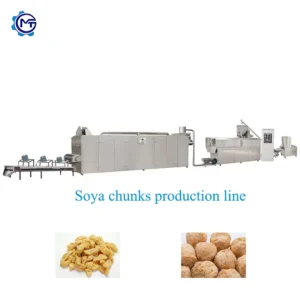
Soybean Protein Making Machine Automatic Soy Chunk Production Line
¥30.00 Select options This product has multiple variants. The options may be chosen on the product page