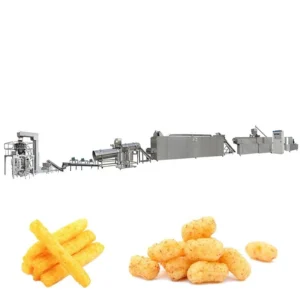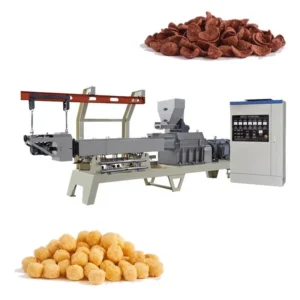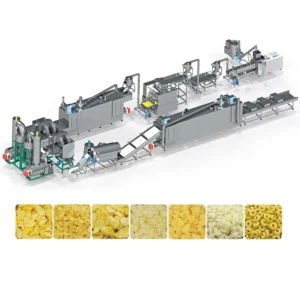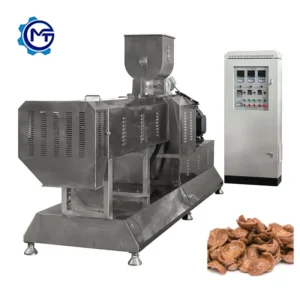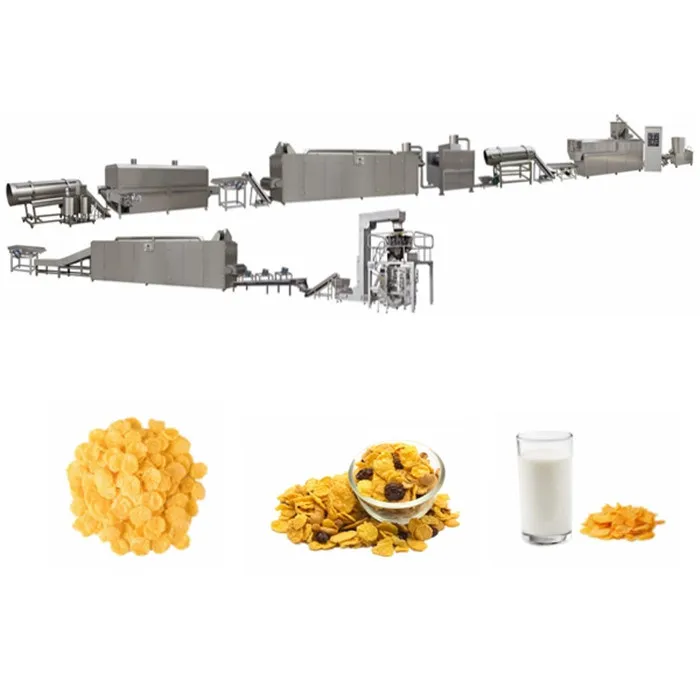



MT70 / MT85 / MT75 Corn Flakes Breakfast Cereal Production Line, twin-screw extrusion, PLC + MCC control, gas/electric dryer — complete turnkey layout from mixing to packing.
- Screw configuration and die design matched to your raw material formulation and target flake density, ensuring proper gelatinisation and expansion across barrel zones.
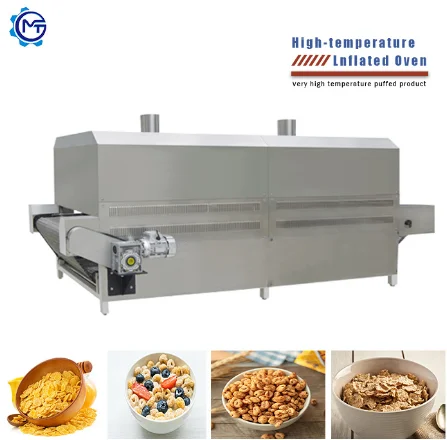
- Flaking station with hydraulic double-roller drive and infrared temperature control; roasting oven with dual circulating fans for consistent blister and crispness.
- Throughput stations engineered as one system, so extruder, dryer and coating drum stay in sync — no bottleneck from mismatched vendors.
- In-house trial run on your actual corn or grain blend before shipment, with full test report and screw configuration record included.
Description
Turnkey Line Integration — Every station from batching to packing is throughput-matched under one supplier, eliminating the bottleneck gaps that form when extruders, dryers, and flakers are sourced separately.
Technical Specifications
| Parameter | Value |
|---|---|
| Product Type | Corn Flakes Breakfast Cereal Production Line |
| Models Available | MT70 / MT85 / MT75 |
| Extruder Type | Twin Screw |
| Installed Power | 160 kW (MT70) / 190 kW (MT85) / 210 kW (MT75) |
| Power Consumption | 120 kW (MT70) / 140 kW (MT85) / 150 kW (MT75) |
| Output Capacity | 150–200 kg/h (MT70) / 300–400 kg/h (MT85) / 300–500 kg/h (MT75) (basis not stated in source — confirm raw material formulation, moisture content, and product format) |
| Overall Dimensions | 41 × 1.5 × 2.2 m (MT70) / 43 × 1.5 × 3.2 m (MT85) / 45 × 1.5 × 3.5 m (MT75) |
| Control System | PLC and MCC control across line |
| Heating Source (Dryer) | Gas / Electric (configurable) |
| Flaking Machine Drive | Double motors for separate roller driving; hydraulic system |
| Flaking Temperature Control | Infrared sensor for even pipe temperature |
| Roasting Oven | Hot air roasting with vibrating pan, high-temperature spraying tubes, two separate circulating fans, cyclone dust removal |
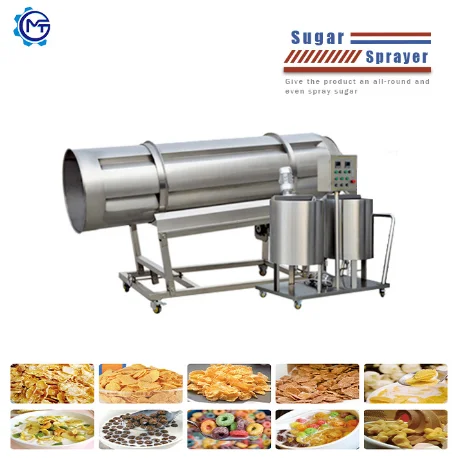
| Coating System | Double tumble for sugar melting, elevator, coating drum, spraying nozzle |
| Raw Materials | Corn, rice, wheat, oat, barley powder |
| Final Product Shapes | Ball, tube, stick, ring, fruit loop, star, wheel, flower, heart |
| Assembly State | Complete turnkey line |
| Standards | CE, ISO |
Application Suitability
| Application | Material or Output |
|---|---|
| Natural corn flakes manufacturing | Corn grits, maize flour |
| Sugar-coated breakfast cereals | Corn, rice, wheat base with sugar or honey glaze |
| Shaped cereal production | Oat, barley, and multi-grain blends formed into rings, stars, wheels |
| Snack food crossover line | Puffed cereal snacks using alternative die plates |
| Fortified breakfast cereal | Grain blends with added vitamin and mineral premix |
| Multi-grain flake production | Rice-wheat or corn-oat composite formulations |
Why "Nominal Line Capacity" Rarely Survives Contact With Your Actual Formula
A production rate printed on a brochure only holds when every station — extruder, flaker, dryer, roaster — can sustain that same throughput on your specific grain formulation.
When a buyer assembles a corn flakes breakfast cereal production line turnkey from separate vendors, the extruder may push material faster than the flaking rolls can press it, or the dryer cannot remove moisture quickly enough before the roasting stage. The result is a line that technically runs but constantly backs up at one station, forcing the operator to throttle everything down. I have walked into facilities where the dryer was the obvious constraint, sitting there half-loaded while the extruder idled. [NEED_CITE: throughput matching across extrusion line stations] The question to ask is never just what the extruder outputs, but whether the flaking pressure, drying residence time, and roasting airflow are all calculated against the same raw material moisture and target flake thickness.
Matching Station Throughput From Mixing Through Packing
A corn flakes breakfast cereal production line turnkey project succeeds or fails based on whether each station was sized against the same set of assumptions about your raw material and target product. The mixing and batching system must deliver a consistent feed rate to the extruder; if batch cycles are too long, the extruder starves intermittently and gelatinisation becomes uneven. Downstream, the flaking machine uses a hydraulic double-roller system with independent motor drives to maintain uniform pressure across the roll width, which directly determines whether the flakes emerge at a consistent thickness or fracture at thin spots during roasting.
How Grain Formulation Changes Every Downstream Parameter
Oat-heavy blends behave completely differently from pure corn grits inside the extruder barrel. Higher fiber content reduces expansion, which means the dough sheet entering the flaking rolls is denser and requires adjusted hydraulic pressure to achieve the same target thickness. The drying stage then needs longer residence time because the denser flake retains moisture differently. When I worked on a line for a Middle Eastern buyer whose formula was heavy in oat, the standard drying profile left the flakes too moist going into the roaster — they shattered instead of blistering. Only after re-running the thermal calculations against the actual oat-ratio formula did the line produce intact, properly textured flakes. [NEED_CITE: effect of fiber content on extrusion expansion and drying behavior] This is why the screw configuration, die design, and every thermal station must be specified together against your actual recipe rather than pulled from a generic catalogue build.
Reading the Specs That Actually Determine Output Quality
The twin-screw extruder is the core of this line, and its value lies in screw configuration flexibility — the arrangement of conveying, kneading, and reverse-screw elements inside the barrel determines shear intensity, residence time, and ultimately the degree of starch gelatinisation your grain blend achieves. The installed power ratings across the MT70, MT85, and MT75 models reflect different barrel volumes and screw diameters, which map to different formulation handling ranges rather than simply being larger or smaller versions of the same machine. The flaking machine’s infrared sensor temperature control matters because roller surface temperature directly affects how the extruded dough sheet releases from the rolls — too cold and it sticks, too hot and it tears. The roasting oven’s dual circulating fans and cyclone dust removal serve a practical purpose: even hot-air distribution prevents localized over-browning while the cyclone captures fine particulate before it can scorch and contaminate subsequent batches.
What Happens When Stations Are Specified Independently
When a flaker is chosen based on price rather than matched to the extruder output, the rollers cannot keep pace and partially extruded material piles up in the transition chute, cooling and hardening before it reaches the nip point. Flakes produced from this cooled material will not blister correctly in the roaster and emerge with an inconsistent texture that the market rejects. Similarly, if the coating drum is undersized relative to the roaster discharge rate, sugar-coated product backs up, the syrup cools and crystallises prematurely, and you get a sticky, clumped mass rather than individually glazed flakes. [NEED_CITE: consequences of mismatched station capacity in cereal lines] These are not equipment failures — every machine is doing what it was built to do. The failure is in the line design, and it is expensive to fix after installation.
Why Procurement Through a Single Line Integrator Changes the Outcome
Every station on this corn flakes breakfast cereal production line turnkey is calculated and supplied by one engineering team, so the flaking pressure, drying curve, and roasting airflow are all derived from the same raw material data sheet rather than negotiated across three separate purchase orders. Screw configuration and die design are specified against your actual grain blend and target flake geometry before production begins. The in-house testing workshop allows a full trial run using your raw material before the line ships, which means product development issues surface in Shandong rather than on your factory floor during commissioning week. PLC and MCC control across every station means one integrated control architecture rather than three separate panels with incompatible communication protocols. Pre-sales engineering covers line layout and utility planning, so floor space, electrical load, and gas supply requirements are confirmed before the foundation is poured.
Documentation & Verification
- Line layout and capacity calculation showing throughput at every station against your grain formulation
- Trial run report generated on your raw material before shipment from the testing workshop
- Screw and die configuration record matched to your target flake shape and density
- Electrical schematic with voltage and frequency confirmed for your local supply standard
- CE declaration of conformity and ISO certificate for customs and regulatory clearance
- Factory test record documenting run parameters and output samples before crating
Installation, Commissioning & Support
- Foundation plan accounts for the full 41–45 m line length and 1.5 m width footprint with utility trench locations
- Electrical supply must match the confirmed voltage and frequency across the 120–150 kW operating load range
- Line arrives in modular sections requiring sequential assembly from mixing through packing stations
- Commissioning includes parameter tuning of screw speed, barrel temperature, and flaking pressure on your material
- Operator training covers PLC interface navigation, recipe changeover, and hydraulic flaker adjustment procedures
- Wear parts list specifies screw elements, die plates, and flaker roller surfaces with recommended replacement intervals
What We Need to Build Your Line Proposal
To move from inquiry to a configuration that actually fits your production target, we need your grain formulation including the percentage breakdown of corn, oat, rice, or other base materials, along with the target flake dimensions and whether the final product is natural or sugar-coated. Your local voltage and frequency standard determines motor and heater specifications, so confirm that early. If you have an existing packing system or upstream storage silo, share its throughput rate so the line discharge can be matched to it.
Frequently Asked Questions
Q: How is the line capacity verified, and what conditions must be met for the stated output to hold?
A: Output figures depend on the raw material formulation, moisture content at each stage, and the target flake thickness and density. The capacity values listed for each model assume specific conditions that must be confirmed against your actual recipe. A trial run in the testing workshop using your material is the reliable way to verify what throughput your line will sustain in continuous production.
Q: How are screw configuration and die design chosen for my specific grain blend?
A: The screw element arrangement — conveying, kneading, and reverse sections — is configured based on your grain blend’s starch content, fiber ratio, and target gelatinisation degree. Die geometry is then selected to produce the correct dough sheet thickness entering the flaker. Both are recorded in your configuration document so replacements match the original specification.
Q: How do you ensure the flaker, dryer, and roaster do not become bottlenecks?
A: Each station is sized against the same throughput calculation derived from your extruder output and material characteristics. The flaker’s hydraulic pressure and roll speed, the dryer’s residence time and airflow, and the roaster’s fan capacity are all matched to prevent material accumulation or idle time at any transition point along the line.
Q: Can you run a trial with my actual raw material before the line ships?
A: Yes. The testing workshop runs your grain formulation through the extruder and downstream stations before dispatch. The trial run report documents screw speed, barrel temperatures, flake thickness, moisture levels at each stage, and final product texture, giving you verified production data before installation begins.
Q: What control system languages and electrical standards are supported?
A: The PLC and MCC control system interface language is configured to your operator requirements during the specification confirmation stage. Voltage and frequency are set based on your local electrical supply standard and documented in the electrical schematic before production, preventing commissioning delays caused by mismatched power specifications.
Related products
-
Corn Flakes Production Line Breakfast Cereal Production Machine Line Corn Flake Making Machinery
¥59,800.00 Select options This product has multiple variants. The options may be chosen on the product page -
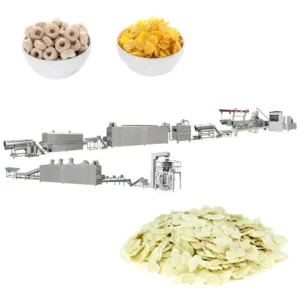
200kg/h Breakfast Cereal Extruder Making Machine Hot Sale Corn Flake Production Line
¥30,000.00 Select options This product has multiple variants. The options may be chosen on the product page -
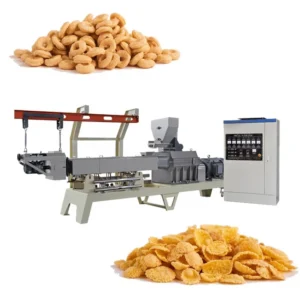
Corn Flakes Machine Breakfast Cereal Corn Flakes Production Line Cornflakes Making Machine
¥85,800.00 Select options This product has multiple variants. The options may be chosen on the product page -
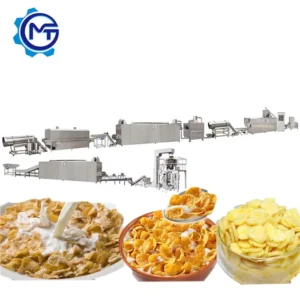
Sweet Corn Flakes Maize Breakfast Cereal Full-automatic Food Grade Stainless Steel Heat Exchanger Mixer Fryer Processing Line
¥8,000.00 Add to cart