

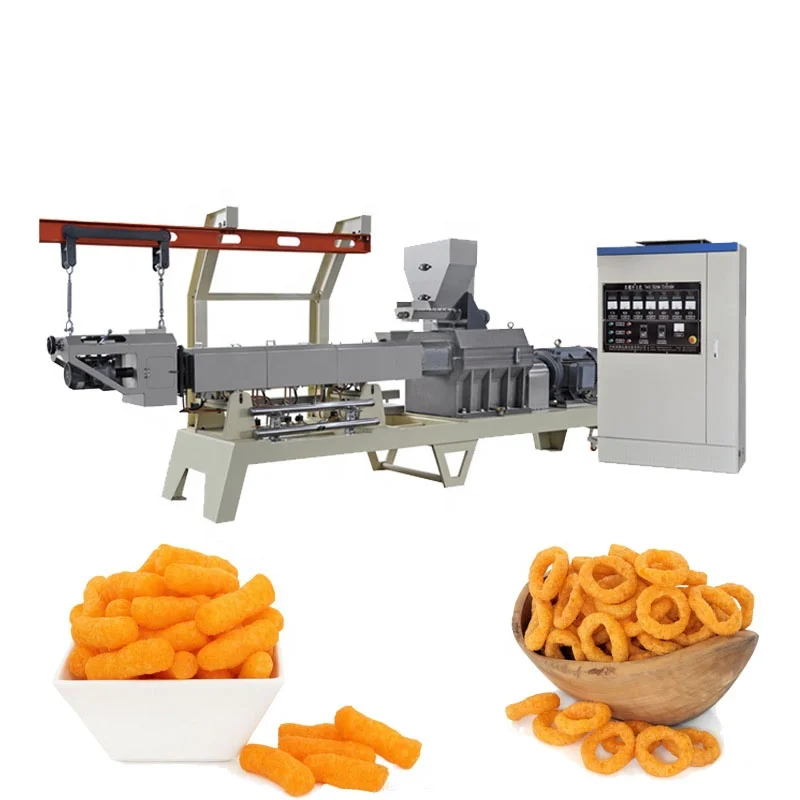
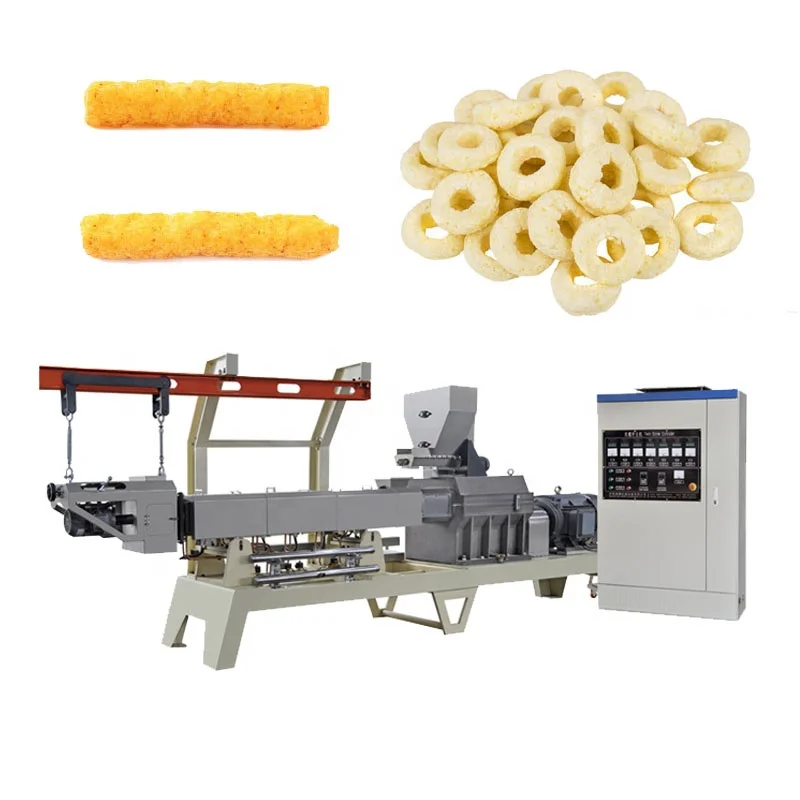
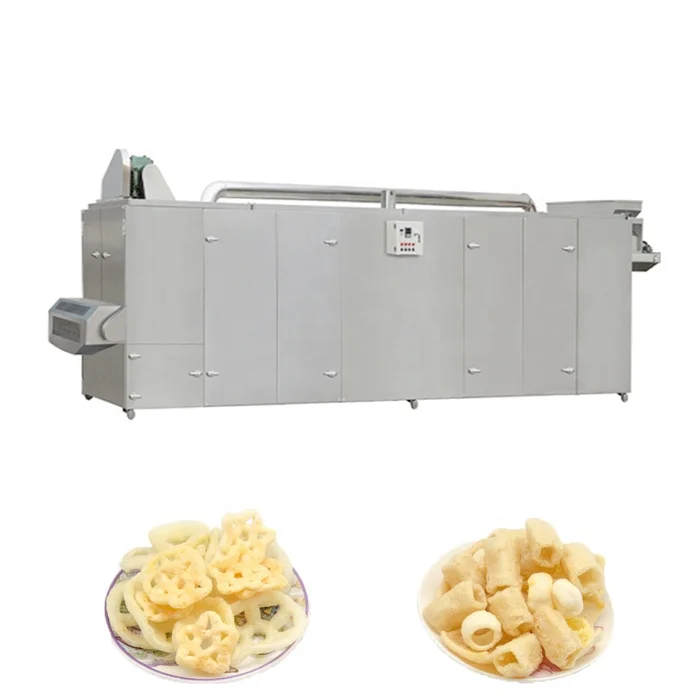
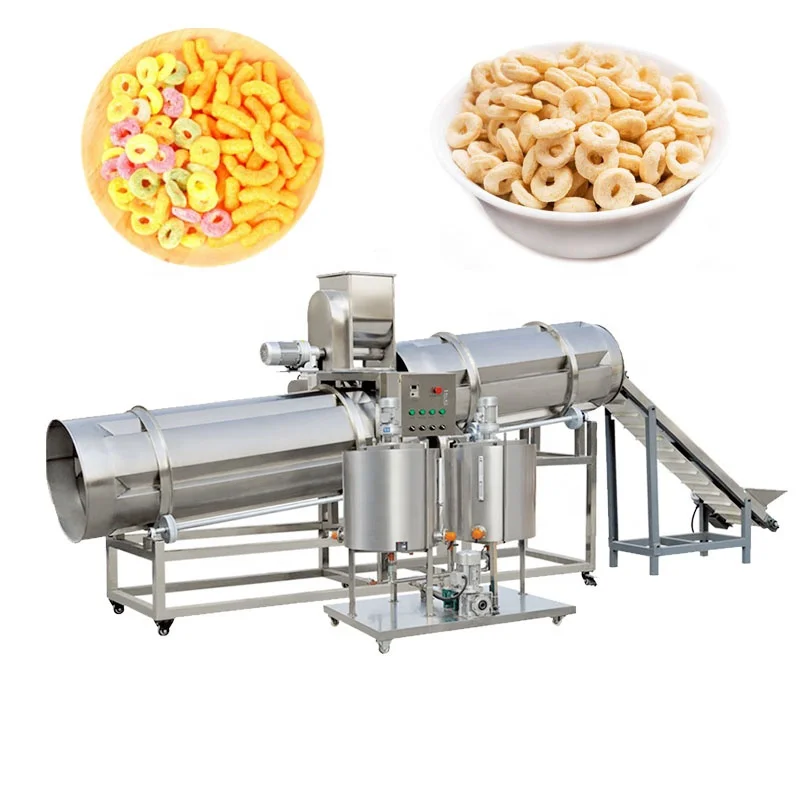
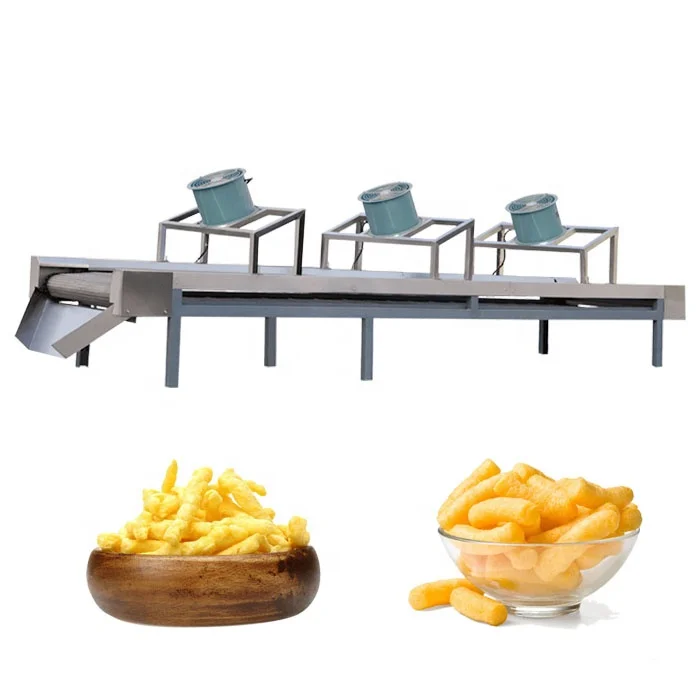
Twin Screw Snack Food Extrusion Line, Food Grade SS 201/304, Siemens Motor — designed as an integrated turnkey project where every station from mixer through extruder, vibrate cooler, roasting machine to packing is throughput-matched to eliminate bottlenecks common in multi-vendor assemblies. Screw and die configuration specified to your raw material and target puff shape, with multi-energy utility options for flexible site installation.
- In-house trial runs on your actual raw material before shipment validate output quality
- Complete line layout, capacity calculation, and electrical schematic provided for commissioning readiness
- On-site installation, operator training, and ongoing wear parts support included
Description
Screw Configured to Your Formula — Every die and screw segment is matched to the buyer’s raw material and target shape, verified during an in-house trial run before the line ships.
Technical Specifications
| Parameter | Value |
|---|---|
| Product Type | Twin Screw Snack Food Extrusion Line |
| Machine Type | Double screw extruder machine |
| Screw Type | Twin-screw |
| Contact Material | Food grade stainless steel 201/304 |
| Voltage & Frequency | Three phases 380V/50Hz, Single phase 220V/50Hz (customizable to local voltage) |
| Power (Electric) | Approximately 100 kW (basis not stated in source — confirm line configuration) |
| Power (Gas/Diesel) | Approximately 50-60 kW (basis not stated in source — confirm line configuration) |
| Energy Options | Electricity / Gas / Diesel / Steam |
| Motor Brand | Siemens (made in China) or China top brand |
| Inverter | Delixi or Delta |
| Line Stations | Mixer → Extruder → Vibrate cooler machine → Roasting machine → Packing machine |
| Die Configuration | Changeable moulds for various shapes (basis not stated in source — confirm specific die options) |
| Output Capacity | Capacity value not stated in source — confirm kg/h based on raw material |
| Control System | Available with PLC or MCC control (basis to be confirmed) |
Application Suitability
| Application | Material or Output |
|---|---|
| Corn cheese puffs and Cheetos-style chips | Corn grits, corn flour, cheese powder seasoning |
| Extruded snack balls | Corn, rice, millet, buckwheat blends |
| Core-filled snack pillows | Cereal dough with chocolate or cream filling |
| Rice cakes and cereal bars | Rice, brown rice, oat-based formulations |
| Artificial and fortified rice | Rice, millet, brown rice, buckwheat with added vitamins and minerals |
What a Nominal Output Figure Leaves Out About Snack Lines
A rated capacity means nothing when the dryer downstream cannot keep pace with the extruder.
When a snack extrusion production line turnkey is quoted on a single output number, buyers rarely ask whether the roasting station, the cooler, and the flavouring drum are all sized to that same throughput. I have watched lines arrive at a plant where the extruder pushed product faster than the dryer could handle it, forcing the operator to throttle back and run the entire line at a fraction of what was promised. The bottleneck is never the machine that was oversold — it is the station that was undersized to save cost on the quote [NEED_CITE: common causes of throughput mismatch in multi-station food lines]. This is why every station on this line is matched during the layout phase, not assembled from whatever inventory happens to be available.
Planning the Full Flow from Batch Infeed to Final Pack
A snack extrusion production line turnkey is only as reliable as the weakest handoff between stations. The mixer must deliver a consistent moisture level into the extruder feed hopper; the extruder must produce uniform expansion so the vibrate cooler receives pieces of equal density; the roasting machine must hold temperature across the full belt width. If any one of these transitions is mismatched, product quality drifts before the packing station ever sees it.
Utility Planning Before the First Bolt Goes Down
Every site has different energy infrastructure. This line supports electricity, gas, diesel, and steam as energy sources, which means the utility plan must be locked before production begins [NEED_CITE: industrial energy source planning for food processing facilities]. A plant running on gas-heated drying will have a different footprint and ventilation requirement than one running fully electric. Voltage and frequency are confirmed to the buyer’s local standard — three-phase 380V/50Hz is standard, but single-phase 220V/50Hz and other regional configurations are available. Getting this wrong after shipment delays commissioning by weeks.
Reading the Specs That Actually Matter
The twin-screw configuration is the core of this line’s flexibility. Unlike single-screw extruders that rely on the material’s own friction to move through the barrel, twin screws provide positive conveying — critical when working with high-fat corn blends or low-starch rice formulations that would stall in a single-screw design. The food-grade stainless steel 201/304 contact surfaces prevent corrosion from salty cheese seasonings and acidic flavouring compounds. Changeable moulds allow producers to shift between snack ball, chip, and pillow shapes without replacing the entire screw assembly. The Siemens or equivalent motor paired with a Delixi or Delta inverter gives the operator precise screw speed control, which directly governs shear rate, residence time, and final product density.
The Cost of Skipping the Trial Run
Buyers who skip the pre-shipment trial run often discover that their local raw material behaves differently from the reference sample the machine was tested on. Corn grits sourced in one region may carry higher fat content or coarser particle size than expected, reducing expansion and producing a hard, dense puff instead of the light, crispy texture the market demands. By the time the problem surfaces, the line is already installed, the electricians have left, and the screw configuration must be reworked on the factory floor instead of in a controlled testing environment [NEED_CITE: raw material variability effects on extrusion output quality].
Why Source the Entire Line from One Supplier
Every station on this line — mixer, extruder, vibrate cooler, roasting machine, packing machine — is designed as a single integrated flow, not pulled from separate catalogues. Screw and die configurations are specified to the buyer’s actual raw material and product shape, not copied from a generic template. The in-house testing workshop runs the buyer’s sample material before shipment, catching formulation issues early. Twin-screw expertise covers puffed snacks, core-filled pillows, cereal bars, and artificial rice on the same platform. Pre-sales engineering through on-site commissioning and operator training is handled by the same team that built the line.
Documentation & Verification
- Line layout and capacity calculation showing matched station throughput for your snack format
- Screw and die configuration record tied to your specific raw material and product shape
- Trial run report on your actual raw material produced in the testing workshop before dispatch
- Electrical schematic with voltage and frequency confirmed to your local grid standard
- CE declaration of conformity and electronic certificate edition available on request
- Operation and maintenance manual with wear parts list for screws, dies, and seals
Installation, Commissioning & Support
- Floor plan and utility connection points provided for the full station sequence from mixer to packing machine
- Power supply requirements confirmed for the approximately 100 kW electric or 50-60 kW gas/diesel configuration
- Machines shipped in modular assembly state for staged installation matching factory construction timelines
- First-run commissioning includes screw speed, barrel temperature, and die pressure calibration on your material
- Operator training covers die changeover, inverter adjustment, and daily cleaning of food-grade stainless steel surfaces
- Wear parts list with reorder specifications for screws, dies, and seals included at handover
What to Prepare Before Requesting a Quote
To size each station correctly, provide the raw material type and particle size, the target product shape and density, and the daily output goal in kilograms or tons. Share the available voltage, frequency, and energy source at the installation site, along with the control language preference for the operator interface. If you have existing upstream batching or downstream packing equipment, specify the connection points so the line layout accounts for integration.
Frequently Asked Questions
Q: How is throughput matched between stations to prevent line bottlenecks?
A: Each station — mixer, extruder, vibrate cooler, roasting machine, packing machine — is sized during the layout phase based on the confirmed target output. The capacity calculation document shows the throughput of every station so no single unit restricts the flow. This eliminates the common problem where an oversized extruder feeds an undersized dryer.
Q: What utility planning is required for the full line installation?
A: The line supports electricity, gas, diesel, and steam energy options. Before production begins, the buyer provides the site voltage, frequency, available gas pressure, and water supply capacity. A utility plan is then drawn to confirm that each station’s energy demand is covered, including dedicated circuits for the extruder motor and heating zones.
Q: How is the commissioning schedule structured on-site?
A: Commissioning follows a phased sequence: mechanical assembly and alignment, electrical connection and control language setup, dry run without material, then production run on the buyer’s raw material. Operator training runs in parallel, covering screw speed adjustment, die changeover, and daily maintenance. The schedule accounts for any phased factory construction at the buyer’s site.
Q: What happens during the in-house trial run before shipment?
A: The buyer sends a sample of their actual raw material to the testing workshop. The line is set up with the specified screw and die configuration, and a production run is conducted to verify product shape, expansion, density, and texture. A trial run report is generated and shared with the buyer before the line is cleared for packing and dispatch.
Related products
-

New Stainless Steel Automatic Puffed Rice Flour Snacks Making Machine High Productivity Multi-function
¥11,050.00 Select options This product has multiple variants. The options may be chosen on the product page -

Automatic Puffed Food Snack Machine Electric Corn Puffs Snacks Making Machinery New Condition Flavorful Puff Snack Production
¥7,550.00 Select options This product has multiple variants. The options may be chosen on the product page -

Hot Sale Corn Snack Extruder Puffed Snacks Production Machine Corn Puffs Making Machine
¥20,000.00 Select options This product has multiple variants. The options may be chosen on the product page -

Crunchy Puffed Snack Breakfast Cereal Corn Flakes Making Machine
¥1,000.00 Select options This product has multiple variants. The options may be chosen on the product page


