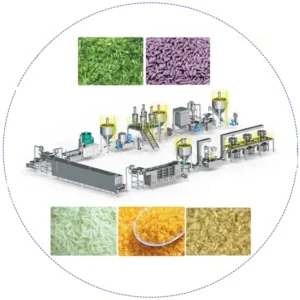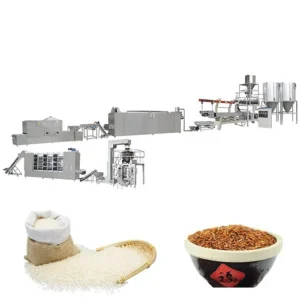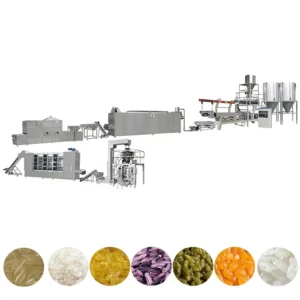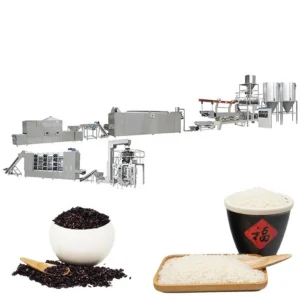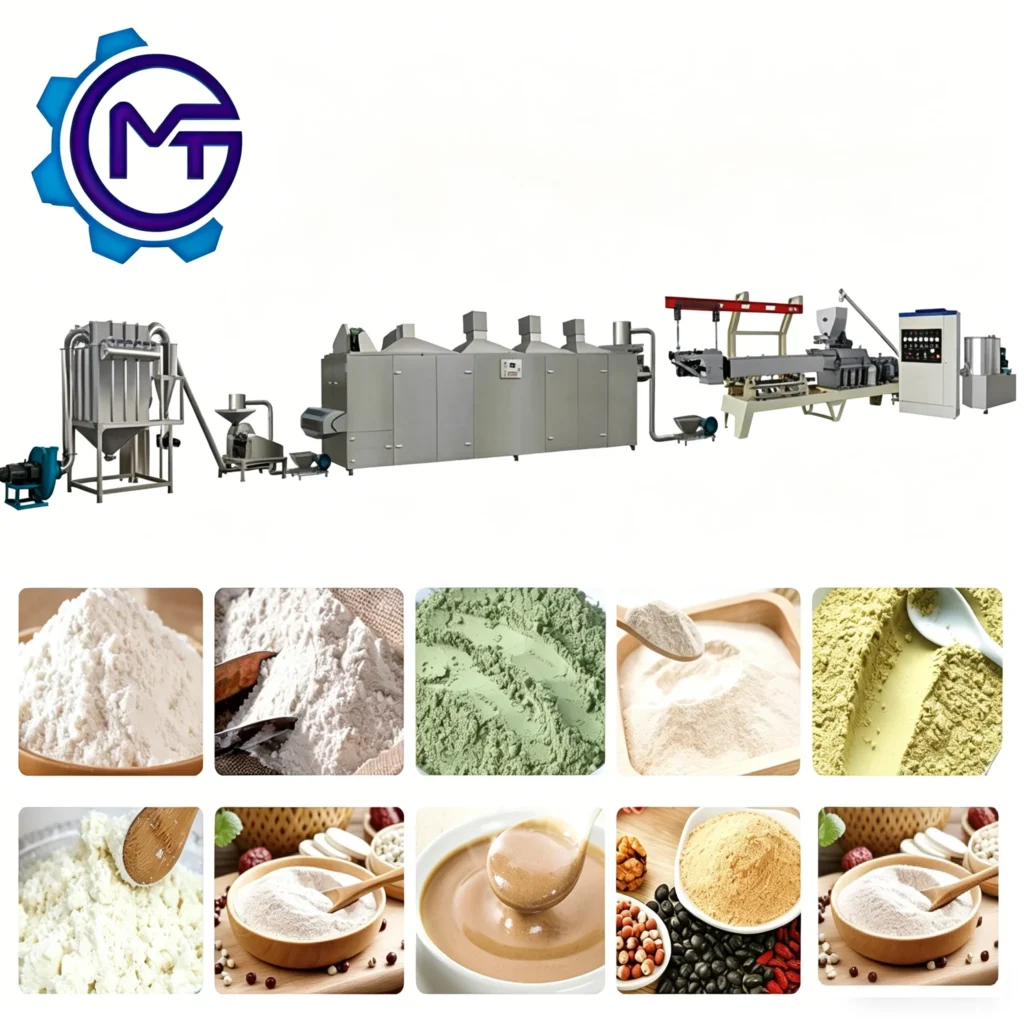


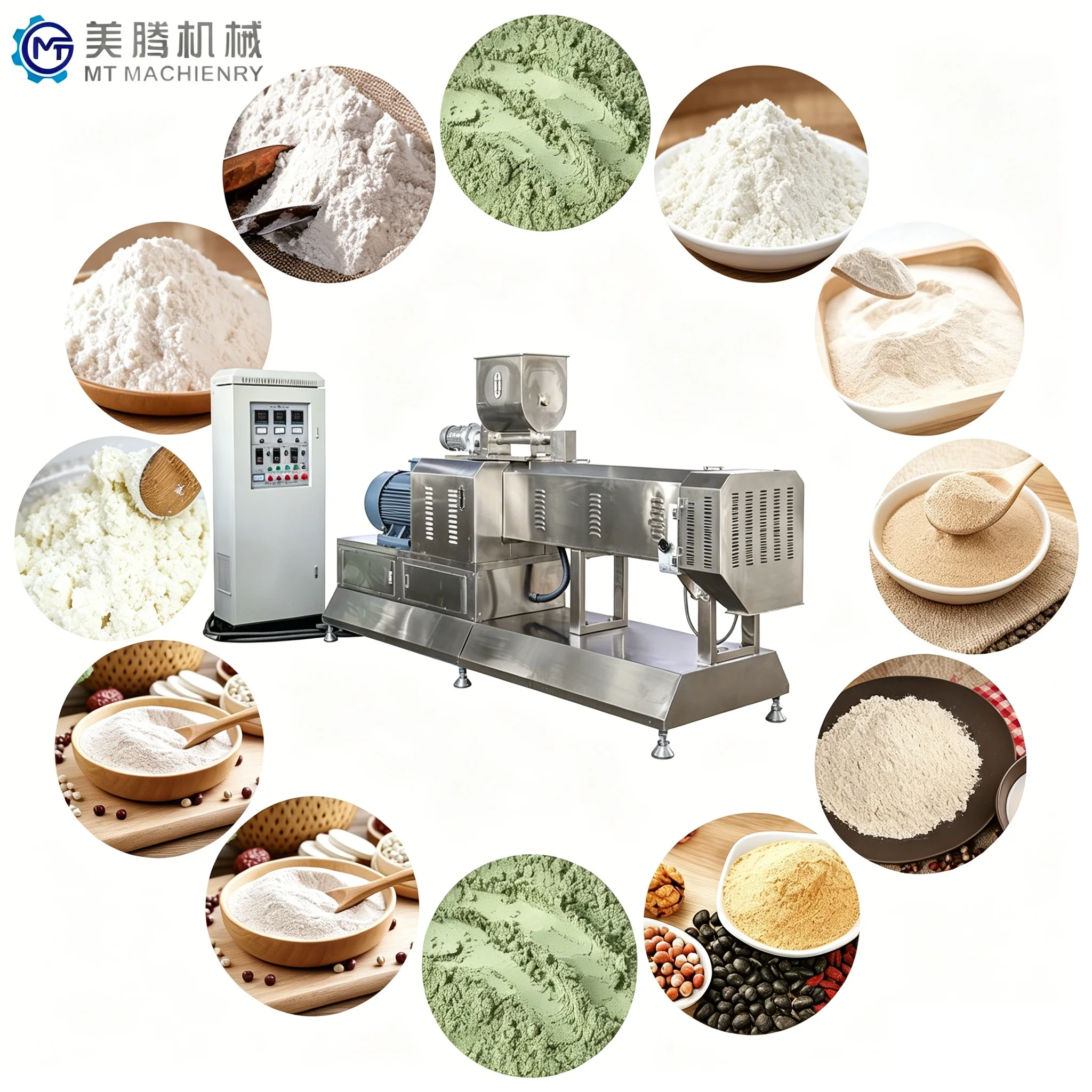


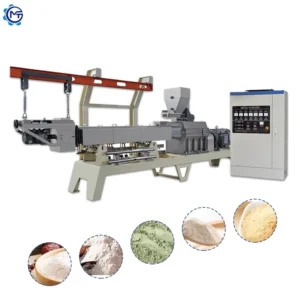
Nutritional Powder Processing Line, 200–500 kg/h, PLC Touch Control, Food-Grade 304 SS — throughput-matched from batching through extrusion, drying and packing under one turnkey project. Screw configuration and die design are specified to your grain formulation, with barrel temperature profile and moisture control tuned for consistent gelatinisation and target powder density. An in-house trial run on your raw material verifies actual output and product quality before shipment.
Description
Matched Throughput Design — every station from batching to packing is sized to the buyer’s actual grain formulation, preventing bottlenecks that emerge only after commissioning.
Technical Specifications
| Parameter | Value |
|---|---|
| Product Type | Baby Cereal Nutrition Powder Extrusion and Drying Production Line |
| Output Capacity | 200–500 kg/h (basis not stated in source — confirm raw material type, moisture content, and formulation) |
| Control System | PLC with touch control panel and digital system |
| Construction Material | Food-grade 304 stainless steel (all contact surfaces) |
| Heat Source Options | Electric / Gas / Steam (configurable to site utilities) |
| Line Stations | Mixers, baking ovens, extrusion unit, drying unit |
| Automation Level | Fully automatic |
| Warranty | 1 year |
| After-Sales Support | Overseas engineer service available |
Application Suitability
| Application | Material or Output |
|---|---|
| Infant baby cereal powder production | Rice, corn, and blended grain formulations with added micronutrients |
| Fortified nutritional porridge processing | Multi-grain blends including beans, oats, and pulse-based substrates |
| Pregelatinised starch nutrition powder | Corn and rice starch bases requiring controlled gelatinisation |
| Dietary supplement grain powder | Specialty grain mixes for adult and paediatric nutrition programmes |
What "200–500 kg/h" Leaves Out About Your Nutritional Powder Line
A capacity figure means nothing without the raw material and moisture conditions behind it.
I once watched a nutrition powder line stall at barely half its nameplate output because the buyer switched from a plain rice formula to a whey-protein-enriched blend. The gelatinisation window shifted, the extruder barrel temperatures were wrong for the new formulation, and the drying stage could not keep up with the changed moisture profile. The supplier had quoted a number tied to a standard test material, not the buyer’s actual recipe. This is the most common dispute in nutritional powder processing line turnkey projects — the throughput was real, just not for your formula. A meaningful capacity statement must name the grain type, moisture percentage, and formulation ratios that were used to establish it. [NEED_CITE: typical disputes over extrusion line capacity verification in infant food projects]
How Screw Profile and Barrel Zones Shape Powder Texture
In a nutritional powder processing line turnkey setup, the extruder screw configuration directly controls shear intensity and residence time. For infant cereal blends containing rice and corn, a moderate-shear profile allows starch to gelatinise without degrading heat-sensitive vitamins added downstream. Barrel temperature zones are set progressively to match the thermal behaviour of each grain component. The die plate geometry then determines particle size and density of the extrudate before it enters the dryer, which influences how the final powder reconstitutes in water or milk.
Why Dryer Sizing Cannot Be an Afterthought
The drying stage must handle the exact moisture load leaving the extruder — not an average figure pulled from a catalogue. When a line processes a bean-heavy formulation, the extrudate carries a different moisture profile than a pure corn blend, and the dryer must accommodate that variance. Inadequate drying capacity creates a backlog that forces the extruder to slow down, collapsing actual throughput below the quoted range. This station-to-station matching is what separates a functioning nutritional powder line from one that only performs during the factory acceptance test. [NEED_CITE: moisture load calculation methods for extrusion-based food drying systems]
Reading the Specs That Actually Matter
The PLC touch panel is not just a convenience — it stores batch recipes so operators can recall exact barrel temperatures, screw speeds, and feeder rates for each formulation, maintaining consistency when switching between a rice-based infant cereal and a multi-grain adult nutrition blend. Food-grade 304 stainless steel on all contact surfaces matters for cleaning validation, especially in markets where infant food production requires documented wash-down procedures. The heat source choice between electric, gas, and steam is often decided by what the buyer’s existing plant already supplies; switching later means replacing burners or heating elements across the dryer and oven sections. A flexible configuration avoids expensive utility modifications after installation.
The Cost of Skipping the Trial Run
Buyers who approve a line on paper specifications alone often discover formulation incompatibilities only after the equipment is bolted to their factory floor. By that stage, re-configuring screw elements, adjusting die geometry, and re-tuning dryer temperatures costs weeks of production time and may require component swaps that were not budgeted. The hidden expense is not just the engineering visit — it is the lost market window while the line sits idle. Every trial run should produce a documented report covering the buyer’s exact raw material blend, measured throughput, and finished powder characteristics. [NEED_CITE: risks of commissioning food extrusion lines without pre-shipment product trials]
Why Buyers Source This Line Here
Every station is throughput-matched under one supplier, so the extruder output aligns with dryer and packing capacity rather than arriving as mismatched modules from different vendors. Screw and die configurations are specified against the buyer’s grain blend and target powder density before production starts. An in-house testing workshop runs the buyer’s actual raw material to confirm output and product quality prior to shipment. Twin-screw expertise covers the full range from infant cereal to fortified adult nutrition powder, so process parameters are drawn from relevant application experience. Pre-sales engineering includes line layout, utility planning, and voltage confirmation so commissioning proceeds without electrical surprises.
Documentation & Verification
- Line layout and capacity calculation confirming throughput match across all stations
- Screw and die configuration record tied to your specific grain formulation
- Electrical schematic with voltage, frequency, and control language confirmed before build
- Factory trial run report using your raw material with measured output data
- CE declaration of conformity and ISO certificate at company level
- Wear parts list with part numbers for screws, dies, and dryer belts
Installation, Commissioning & Support
- Foundation and floor space plan provided based on full line station footprint
- Dedicated power circuit sizing confirmed from total connected load of extruder and dryer heaters
- Equipment ships in modular sections for container loading and on-site reassembly
- First-run parameter tuning covers barrel zones, screw speed, and dryer temperature for your formulation
- Operator training includes PLC recipe storage and batch changeover procedures
- Spare screw elements and die plates identified for first scheduled replacement
What to Include in Your Inquiry
Provide your target formulation — grain types, ratios, and any added protein or micronutrient components — along with the daily output volume you need to meet. Confirm your site voltage, frequency, and preferred control panel language. If you have existing upstream mixers or downstream packing equipment, share their throughput ratings so the line can be matched to them. Indicate whether you want your raw material trial-run in our testing workshop before shipment.
Frequently Asked Questions
Q: How is the 200–500 kg/h capacity verified for my specific formulation?
A: The stated range depends on raw material type, moisture content, and formulation ratios. Verification happens through an in-house trial run using your actual grain blend. The resulting report documents measured throughput, extrudate moisture, and finished powder density so you know the output before the line ships rather than discovering limits during commissioning.
Q: What screw configuration and die design will be used for my grain blend?
A: Screw elements and die geometry are selected based on your raw material characteristics and target powder texture. A configuration record is provided before production, detailing element sequence, compression ratio, and die hole pattern. This ensures the extruder produces the correct expansion and particle structure for your infant cereal or nutrition powder product.
Q: How do you prevent bottlenecks between the extruder, dryer, and downstream stations?
A: Each station is sized to handle the output of the preceding one under your specific formulation conditions. The dryer capacity accounts for the moisture load exiting the extruder, and packing speed matches the dried product flow. The line layout document shows calculated throughput at every stage to confirm balance before manufacturing begins.
Q: What electrical and control details are confirmed before the line is built?
A: Voltage, frequency, and control panel language are confirmed in writing during the specification stage. The electrical schematic reflects your site power supply and preferred operator interface language. This prevents the common delay where a line arrives with incompatible voltage or controls that local operators cannot read.
Q: What does the pre-shipment trial run actually cover?
A: The trial uses your supplied raw material to run the complete extrusion and drying sequence. Output rate, powder density, moisture content, and reconstitution behaviour are measured and recorded. You receive a trial run report with these results along with the screw and die settings used, so your team can replicate the parameters immediately at installation.
Related products
-
Hygienic Stainless Steel Infant Rice Powder Processing Line Automatic 500kg/h Capacity PLC Controlled
¥9,500.00 Add to cart -
150-500kg/h Twin Screw Extruder Baby Rice Flour Making Machine
¥9,500.00 Select options This product has multiple variants. The options may be chosen on the product page -

Full Automatic Complete Baby Food Nutrition Powder Porridge Processing Production Line for Infant Nutrition Factory
¥9,500.00 Add to cart -
CE cerelac Instant Baby Food Porridge Making Machine Production Line
¥35,000.00 Select options This product has multiple variants. The options may be chosen on the product page