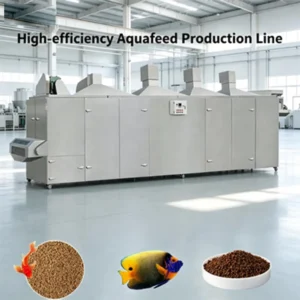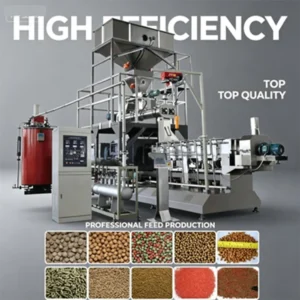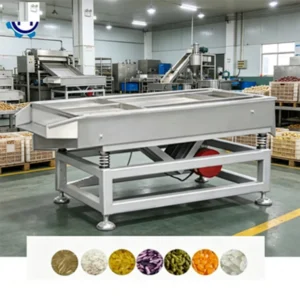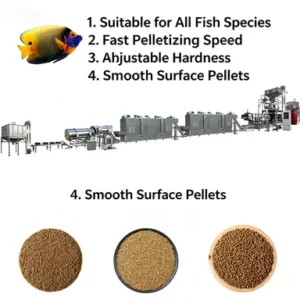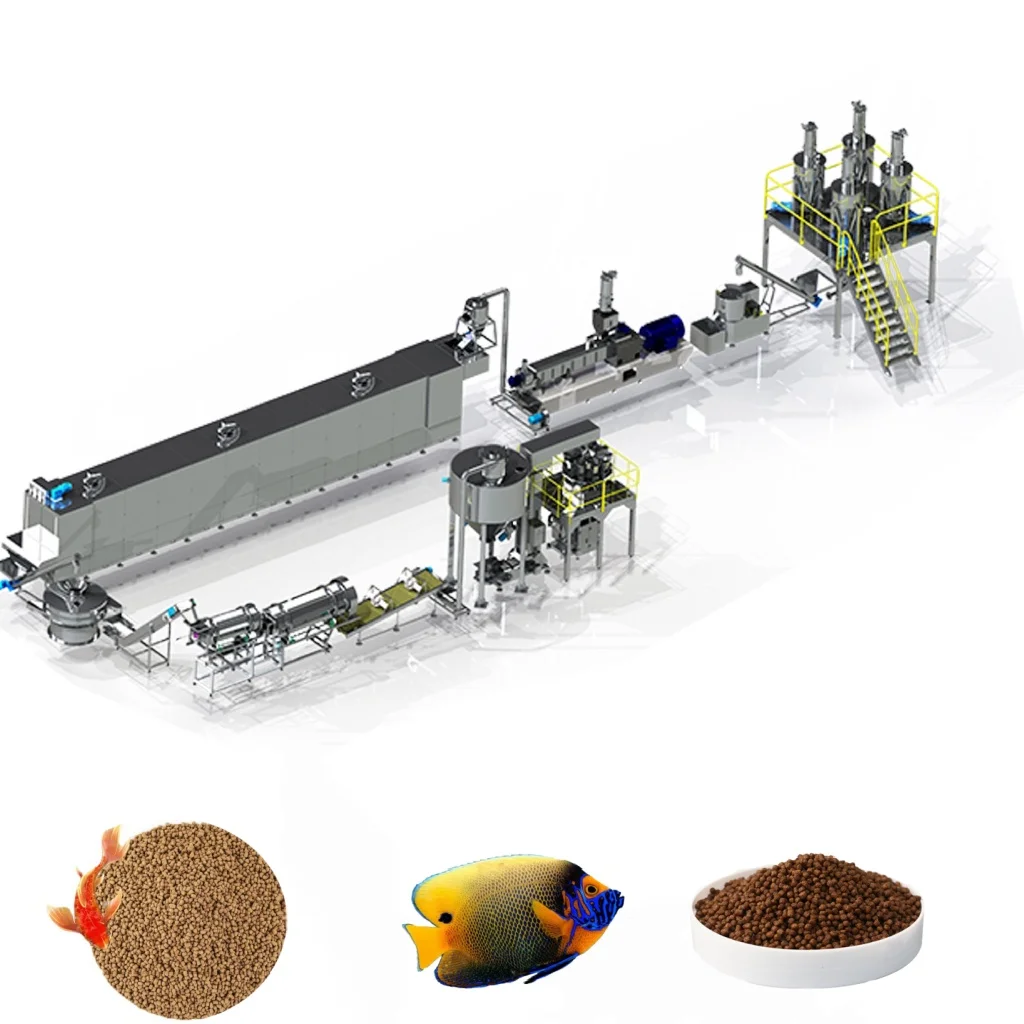



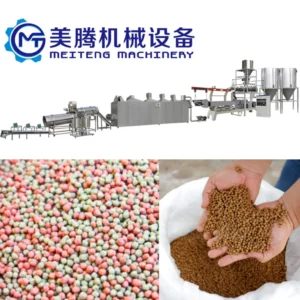
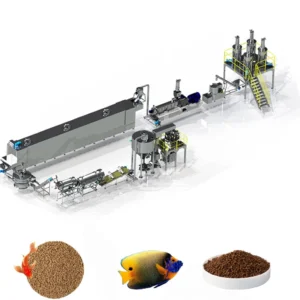
Floating and Sinking Fish Feed Production Line, 380V, Twin-Screw, Full-Automatic — engineered as one integrated turnkey project where throughput is matched across every station from batching through extrusion, drying, coating and packing. Screw configuration and die design are specified to your raw material and target pellet density, controlling expansion for both floating and sinking feed formats. Stainless steel contact materials ensure hygiene in continuous aquaculture production. Complete line layout, trial run report on your formulation and electrical schematic confirmed to destination voltage provided before shipment.
Description
Integrated Line Engineering — throughput across every station from batching to packing is calculated as one system, not assembled from separate vendor quotes.
Technical Specifications
| Parameter | Value |
|---|---|
| Product Type | Floating and Sinking Fish Feed Extrusion Production Line |
| Extruder Type | Twin-screw or single-screw (configurable per formulation) |
| Voltage | 380V (frequency and phase to be confirmed for destination market) |
| Contact Material | Stainless steel (food-grade) |
| Control System | PLC or MCC with customizable settings |
| Output Capacity | High capacity (basis to be confirmed — depends on raw material, pellet size, moisture content and target density) |
| Assembly State | Multi-station production line |
| Pellet Output | Floating and sinking |
Application Suitability
| Application | Material or Output |
|---|---|
| Floating pellets for surface-feeding species | Fish meal, soybean meal, corn flour, wheat flour, vitamin and mineral premix |
| Sinking pellets for bottom-feeding species | Soybean meal, fish meal, starch binders, aquatic premix blends |
| Catfish feed production | Mixed grain and protein formulations at varying moisture levels |
| Tilapia feed production | Plant-based protein blends with supplemental fish meal |
Why "Rated Capacity" Means Nothing Without the Full Line Context
The extruder is only as productive as the weakest station downstream.
A fish feed production line turnkey project often fails not at the extruder but at the dryer or coating drum. I have seen lines where the extruder pushed material at full speed, but the dryer could not remove enough moisture in the available residence time, forcing the entire line to throttle back. The fish feed production line turnkey proposal looked strong on paper — until the buyer ran their actual formulation and realized the coating station could not keep pace either [NEED_CITE: throughput mismatch between extrusion and drying in aquaculture feed lines]. When you source each station from a different vendor, nobody owns the throughput gap. The result is a line that runs below its quoted capacity from day one.
Matching Dryer Capacity to Extruder Output
The drying stage determines how much moisture is removed before coating and packing. If the dryer is undersized relative to the extruder output, pellets exit with moisture levels that cause spoilage or fail specification. A fish feed production line turnkey project must specify dryer belt length, air temperature profile and airflow volume based on the exact moisture content of the extruded pellets — not a generic calculation. Different formulations behave differently; high-fat formulations retain moisture in ways that lean, starch-heavy mixes do not.
Density Control from Screw Configuration Through Die Design
Floating and sinking pellets require fundamentally different processing conditions. Floating pellets need high expansion at the die, which means specific screw pitch, barrel temperature profile and moisture content at the extrusion point. Sinking pellets require denser compression and lower expansion, achieved through a different screw configuration and die geometry. When a line is copied from a generic build without adjusting these parameters to your target pellet type, the result is floating feed that sinks or sinking feed that floats — both rejected by the market [NEED_CITE: pellet density and buoyancy requirements in commercial aquaculture].
What the Specifications Actually Mean for Your Operation
The choice between twin-screw and single-screw extrusion affects raw material flexibility. Twin-screw extruders handle a broader range of ingredient blends, including formulations with higher fat or protein content that would stall a single-screw machine. The 380V power supply must be confirmed against local frequency and phase requirements before production begins — a mismatch here delays commissioning by weeks while transformers or panels are reconfigured. Stainless steel contact materials prevent corrosion from continuous exposure to fish meal and moisture, extending service intervals. The PLC or MCC control system must be set to the operator language at the destination site before the line ships, because relabeling and reprogramming on-site adds downtime that most installation schedules do not account for.
The Cost of Skipping the Trial Run
When a line ships without a trial run on the buyer’s actual raw material, the first production run becomes the test. I have watched formulations with high chicken meal or fish meal content behave completely differently from the standard corn flour used in factory testing — pellet density shifts, expansion drops, and entire batches are scrapped. On one project, the screw configuration had to be rebuilt on-site after the first ton of material was lost. A trial run in the testing workshop before shipment catches these mismatches early, allowing screw and die adjustments while changes are still inexpensive [NEED_CITE: material-specific screw configuration for aquaculture feed extrusion].
What Separates This Line from Assembled Alternatives
Throughput is calculated station by station and matched across the entire line, so the extruder, dryer, coating drum and packing system all run at the same effective rate. Screw configuration and die design are specified to the buyer’s raw material and target pellet type rather than copied from a standard template. The in-house testing workshop runs your actual formulation before the line ships, identifying adjustments before they become field problems. The line is supported from pre-sales layout design through on-site installation, commissioning and operator training. Documentation includes line layout, capacity calculation and screw configuration records specific to your project, not generic catalog sheets.
Documentation & Verification
- Line layout and capacity calculation showing matched throughput across all stations
- Screw and die configuration record tied to your target pellet density and formulation
- Trial run report conducted on your raw material in the testing workshop
- Electrical schematic with confirmed voltage, frequency and control language
- CE declaration of conformity and ISO certificate applicable to the line
- Factory test record and packing photographs for customs clearance
Installation, Commissioning & Support
- Foundation layout provided based on line footprint and station spacing requirements
- 380V supply confirmed for local frequency and phase before electrical panel build
- Stations shipped in assembly-ready modules with labeled connection points
- First-run parameter setting for screw speed, barrel temperature and dryer airflow
- Operator training on control system navigation and pellet density adjustment
- Wear parts list covering screws, dies and dryer belt sections for first replacement cycle
What We Need from You to Start the Layout
Provide your raw material formulation including protein, starch and fat ratios so we can specify screw configuration and die geometry. Confirm the target pellet diameter, whether you need floating or sinking output (or both), and the daily production volume your market requires. Share your workshop dimensions and local voltage and frequency standards so the line layout and electrical design match your site conditions from the start.
Frequently Asked Questions
Q: How is line capacity verified, and what raw material and pellet specification is it based on?
A: Capacity is calculated for each station — extruder, dryer, coating and packing — based on your specific raw material formulation, target pellet diameter and whether the output is floating or sinking. A trial run in the testing workshop confirms the calculation on your actual ingredients before the fish feed production line turnkey project ships.
Q: How do you match extruder output with dryer and coating capacity to avoid bottlenecks?
A: Each station is sized against the extruder output at the target moisture level. Dryer belt length, airflow and coating drum volume are calculated so no single station forces the line to run below its designed rate. This matching is documented in the line layout proposal.
Q: What is the process for a trial run on our raw material before the line ships?
A: You send a representative sample of your formulation to the testing workshop. The line runs your material through extrusion and drying, and the resulting pellets are measured for density, expansion and moisture. Screw and die adjustments are made during this stage, and a trial run report is included with your documentation package.
Q: How is floating vs. sinking pellet density controlled through screw configuration and die design?
A: Floating pellets require high expansion, achieved through specific screw pitch, barrel temperature and die opening geometry. Sinking pellets need higher compression and lower expansion, which requires a different screw arrangement and die profile. The configuration is selected based on your target pellet type during the layout phase.
Related products
-
High Capacity Pet Food Extrusion Production Line Suitable for Dog. Cat. Bird. Fish and Cattle Feed
¥9,500.00 Select options This product has multiple variants. The options may be chosen on the product page -
1.0-1.5t/h High Capacity Multi-Species Fish Feed Processing Line to Produce Fish Food
¥45,000.00 Select options This product has multiple variants. The options may be chosen on the product page -
2-3t/h High Capacity Multi-Species Fish Feed Processing Line to Produce Fish Food
¥55,000.00 Select options This product has multiple variants. The options may be chosen on the product page -
Automatic Fish Feed Production Line Machine Floating Sinking Pellet Manufacturing High Capacity Energy Saving Design
¥9,500.00 Select options This product has multiple variants. The options may be chosen on the product page