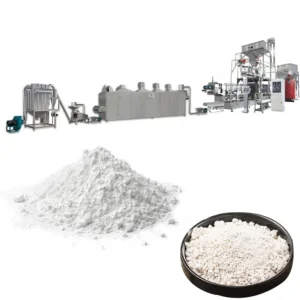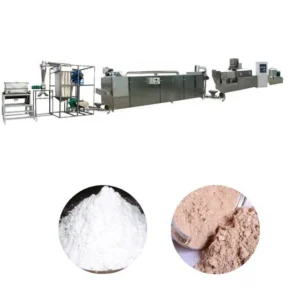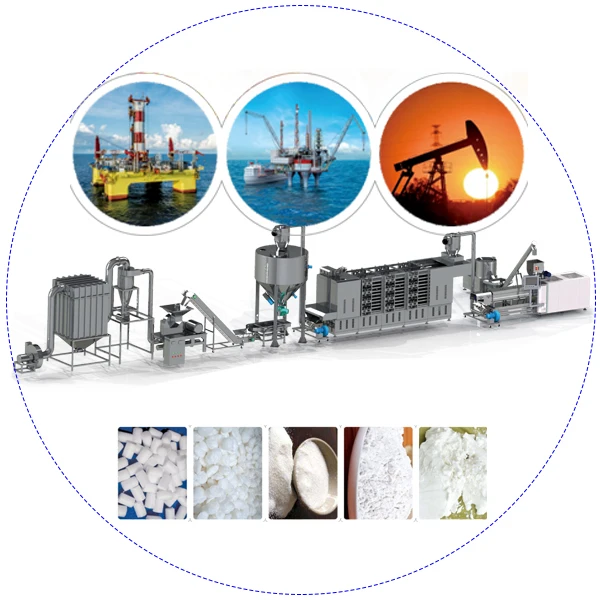
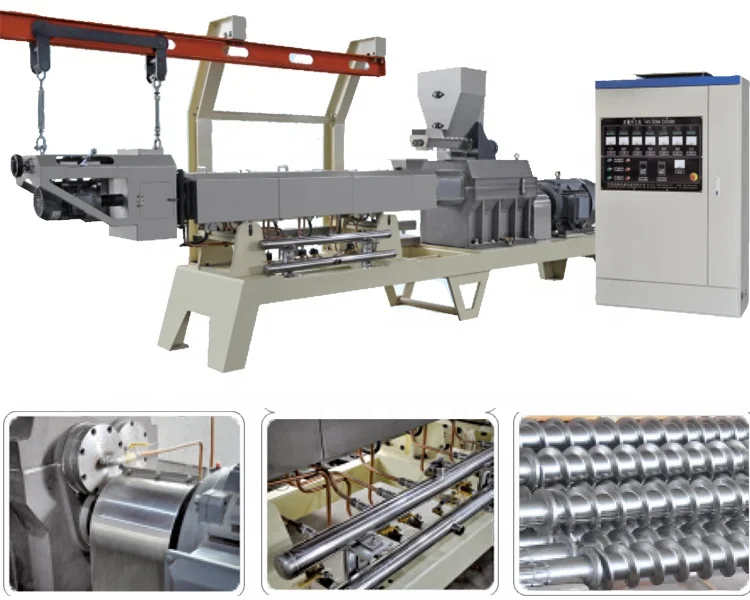


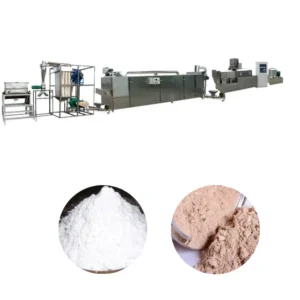
Modified Starch Production Line, Twin-Screw, 45–200 kW, PLC & MCC Control — engineered for industrial and food-grade starch modification with throughput synchronized across mixing, extrusion, cooling, grinding, and packing stations.
Screw configuration and multi-zone barrel temperature profile are specified to your raw material—corn starch, wheat flour, or potato starch—and target modification degree, controlling gelatinisation, shear, and expansion precisely for oil drilling, papermaking, or pregelatinized starch applications.
- Complete line from one supplier with every station capacity balanced to eliminate bottlenecks
- Factory trial run on your raw material and formulation before shipment, with full test report
- Electrical schematic, voltage confirmation, and control language matched to your site requirements
Description
Matched Throughput Stations — Every segment of the modified starch line is sized to the extruder’s actual output, so cooling conveyors and pulse grinders never bottleneck the twin-screw unit at full load.
Technical Specifications
| Parameter | Value |
|---|---|
| Product Type | Modified Starch Production Line |
| Screw Type | Twin-screw |
| Main Drive Power | 45–200 kW (selected per capacity tier) |
| Output Capacity | 100–1500 kg/h (basis not stated in source — confirm raw material type, moisture content, and target starch modification degree) |
| Control System | PLC and MCC with multi-zone barrel temperature profiling |
| Voltage & Frequency | Configurable: 380V/50Hz, 415V/60Hz, 220V/60Hz, three-phase |
| Line Stations | Batching mixer → Twin-screw extruder → Cooling conveyor → Pulse grinder → Packing |
| Raw Materials | Corn starch, wheat flour, potato starch, rice flour, soybean flour, chemical additives |
| Certification | CE, ISO |
Application Suitability
| Application | Material or Output |
|---|---|
| Oil drilling fluid starch | Industrial-grade modified corn and cassava starch with high viscosity stability |
| Papermaking sizing starch | Cationic and oxidized starch from potato or wheat base |
| Food-grade pregelatinized starch | Instant-thickening starch for bakery, sauce, and instant noodle formulations |
| Textile printing thickener | Modified starch with controlled shear-thinning behavior |
What "Rated Capacity" Leaves Out on a Modified Starch Line
A capacity figure means nothing until it is proven on your exact raw material and formulation.
I spent weeks in a cassava belt region where a line ran perfectly on standard corn starch during factory tests. The buyer’s local cassava starch had a different amylose ratio, and the entire screw combination plus barrel temperature profile had to be rebuilt from scratch. Two extra weeks of on-site commissioning vanished into recipe tuning. When evaluating any Modified Starch Production Line turnkey project, the question is never just "how many kilos per hour" — it is whether the supplier has validated output on your specific starch source, moisture level, and target modification degree before the equipment ships. [NEED_CITE: starch gelatinisation behavior varies by amylose-to-amylopectin ratio]
Barrel Zoning and Starch Modification Precision
The twin-screw extruder divides its barrel into independently heated and cooled zones, each governing a distinct phase of starch transformation. Early zones handle moisture equilibration and initial gelatinisation, while downstream zones control the shear intensity that determines the degree of molecular modification. On a Modified Starch Production Line turnkey installation, the PLC manages these zones as a coordinated profile rather than isolated setpoints.
Screw Configuration as the Real Recipe
Screw elements are not interchangeable across starch types. Forward-flight elements generate gentle conveyance for delicate pregelatinization, while kneading blocks introduce the mechanical shear required for deeper structural breakdown. The configuration must be specified against the buyer’s raw material and target modification degree — a setup optimized for industrial drilling starch will produce the wrong viscosity profile if run on a food-grade pregelatinized recipe without reconfiguration. [NEED_CITE: twin-screw element geometry and starch modification degree correlation]
Interpreting the Power and Capacity Envelope
The 45–200 kW drive range maps to the line’s capacity tiers, where lower power suits pilot-scale production of specialty food starches and higher power drives continuous industrial output for drilling fluids. Output figures of 100–1500 kg/h represent the full envelope; actual throughput on any given formulation depends on moisture content, additive loading, and the viscosity target. The cooling conveyor length and pulse grinder throughput must be calculated against the extruder’s real output on the buyer’s recipe — not a generic benchmark. Multi-zone barrel temperature profiling ensures that each starch transition phase receives controlled thermal input, preventing hot spots that cause uneven gelatinisation or localized degradation.
The Cost of Mismatched Downstream Equipment
An extruder running at full output means little if the cooling conveyor cannot dissipate heat fast enough, leaving starch sheets tacky and prone to clumping in the grinder. Similarly, a pulse grinder undersized for the actual pellet hardness will bottleneck the entire line. These mismatches are invisible in a quotation that lists station capacities independently. [NEED_CITE: throughput synchronization between extrusion and downstream processing stations]
Why This Line Holds Together
Each station — from the batching mixer through the packing end — is specified under single-supplier accountability, so throughput is calculated across every transition point. The screw and die configuration is documented against the buyer’s raw material sample, not copied from a generic starch build. Before shipment, the complete line runs a trial on the customer’s actual formulation in the testing workshop, generating a report that confirms capacity and modification degree. Electrical schematics lock in voltage, frequency, and control language before production begins. CE and ISO compliance covers the full assembly, not just the extruder.
Documentation & Verification
- Line layout and throughput calculation showing matched station capacities
- Screw and die configuration record tied to your raw material sample
- Trial run report on customer formulation before dispatch
- Electrical schematic confirming voltage, frequency, and HMI language
- Factory acceptance test record covering all stations under load
- CE declaration of conformity for the complete assembled line
Installation, Commissioning & Support
- Foundation plan reflecting the full line footprint from mixer to packing station
- Dedicated three-phase circuit sized to the selected 45–200 kW drive motor
- Modular station delivery with sequenced assembly to reduce floor congestion
- On-site screw configuration validation and barrel profile tuning to local material
- Operator training covering PLC setpoints, die changes, and emergency stops
- Wear parts schedule for screws, dies, and grinder blades from day one
What to Prepare Before Requesting a Quote
Share your starch source — corn, cassava, potato, wheat — along with the target modification type and the viscosity or functional specification your end market requires. Confirm your site voltage, frequency, and preferred control language. If you have existing upstream batching or downstream packing equipment, provide model details so the line can be configured around them. A raw material sample sent for workshop trial runs eliminates the most common commissioning delays.
Frequently Asked Questions
Q: How is output capacity verified on my specific starch formulation and moisture level?
A: We run your raw material through the twin-screw extruder in our testing workshop before shipment. The trial covers your target moisture content and modification degree, generating a documented report that confirms actual throughput. This eliminates the risk of a line rated on generic corn starch failing to perform on your local cassava or potato source.
Q: Can the same screw configuration handle both food-grade and industrial-grade modified starch?
A: No. Industrial drilling starch requires higher shear intensity and different kneading block placement compared to food-grade pregelatinized starch. The screw configuration and barrel temperature profile are specified separately for each product target. If you plan to run both, we document two distinct setups with changeover procedures.
Q: How do you prevent cooling and grinding from bottlenecking the extruder?
A: Every station capacity is calculated from the extruder’s verified output on your formulation, not from independent nominal ratings. The cooling conveyor length and pulse grinder model are selected so that material residence time and throughput match the twin-screw unit at full production rate.
Q: What voltage and control language options are available for my facility?
A: The line supports 380V/50Hz, 415V/60Hz, and 220V/60Hz three-phase configurations. The PLC interface and MCC labeling can be configured in your preferred language. Electrical schematics are confirmed and locked before production begins to avoid commissioning delays on site.
Related products
-
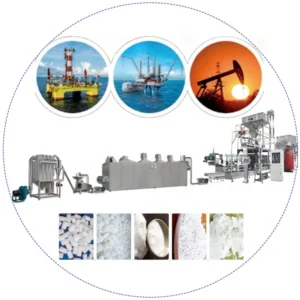
Automatic Modified Tapioca Starch Production Line 304 Stainless Steel Flour Mill and Bakery Machine
¥30.00 Select options This product has multiple variants. The options may be chosen on the product page -
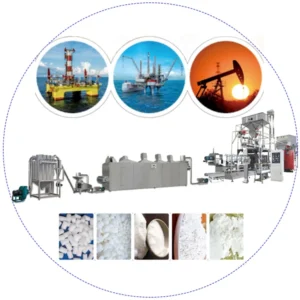
New Automatic Modified Starch Puffing Production Line – Long Service Life Pregelatinized Starch Equipment
¥65.00 Select options This product has multiple variants. The options may be chosen on the product page -
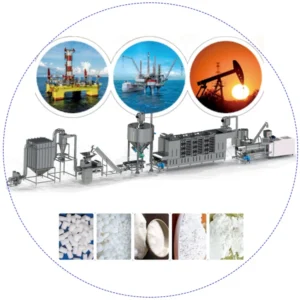
Automatic 304 Stainless Steel Modified Corn Starch Making Machine TWIN SCREW 500kg/h Capacity Starch Processing Production Line
¥50.00 Select options This product has multiple variants. The options may be chosen on the product page -
Modified Starch Production Line Modified Starch Processing Line Modified Starch Extruder
¥8,580.00 Select options This product has multiple variants. The options may be chosen on the product page