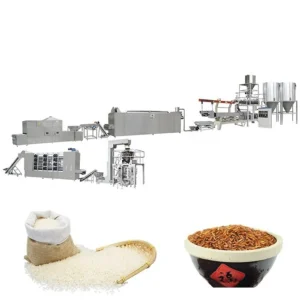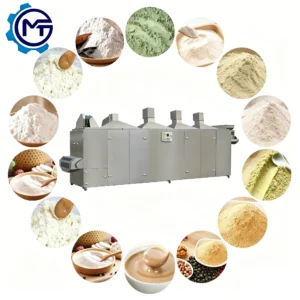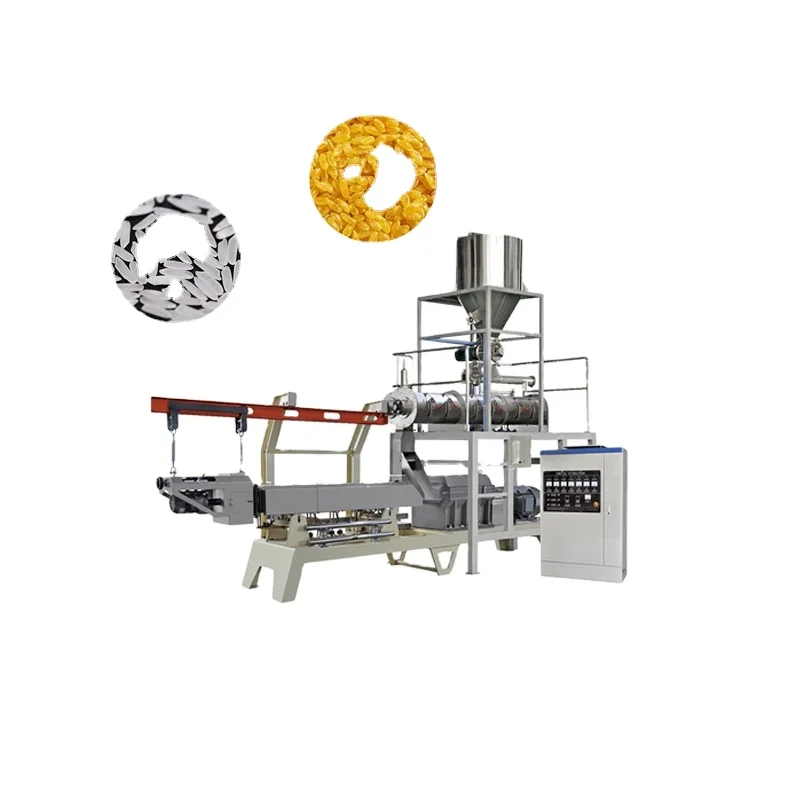
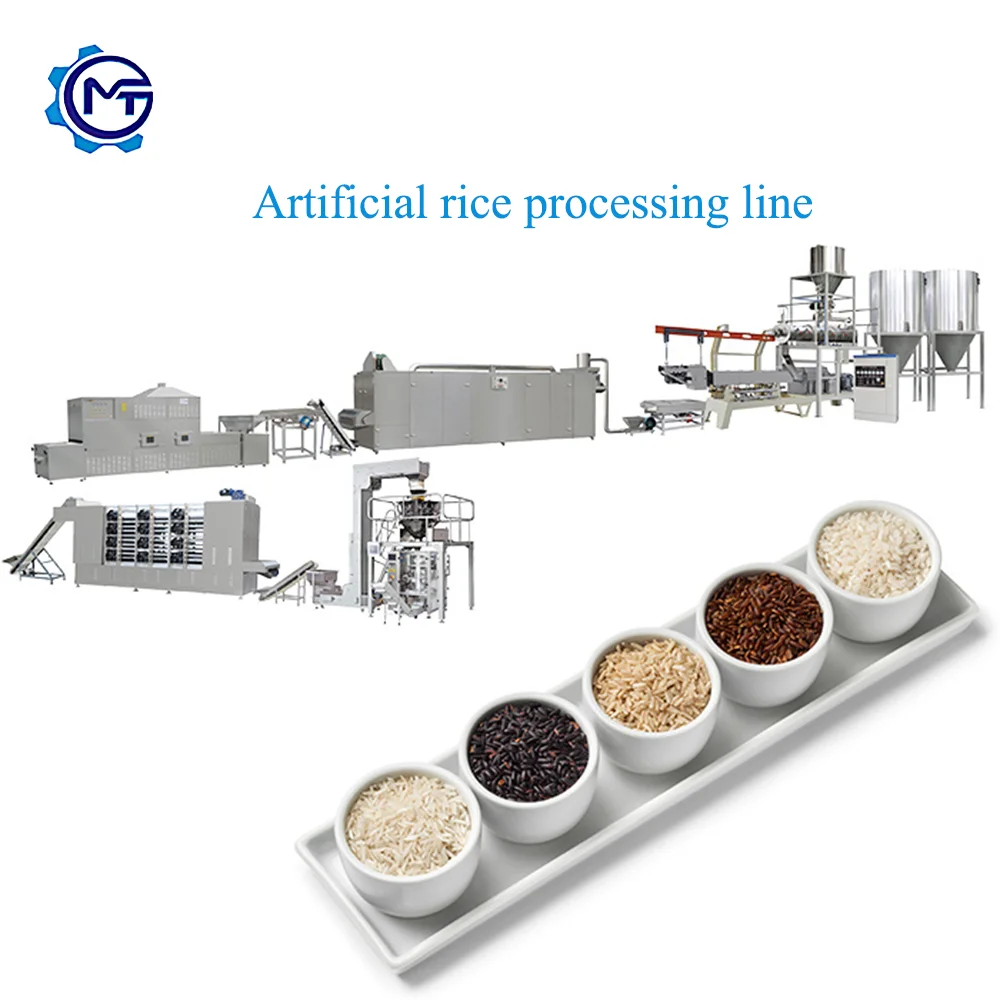

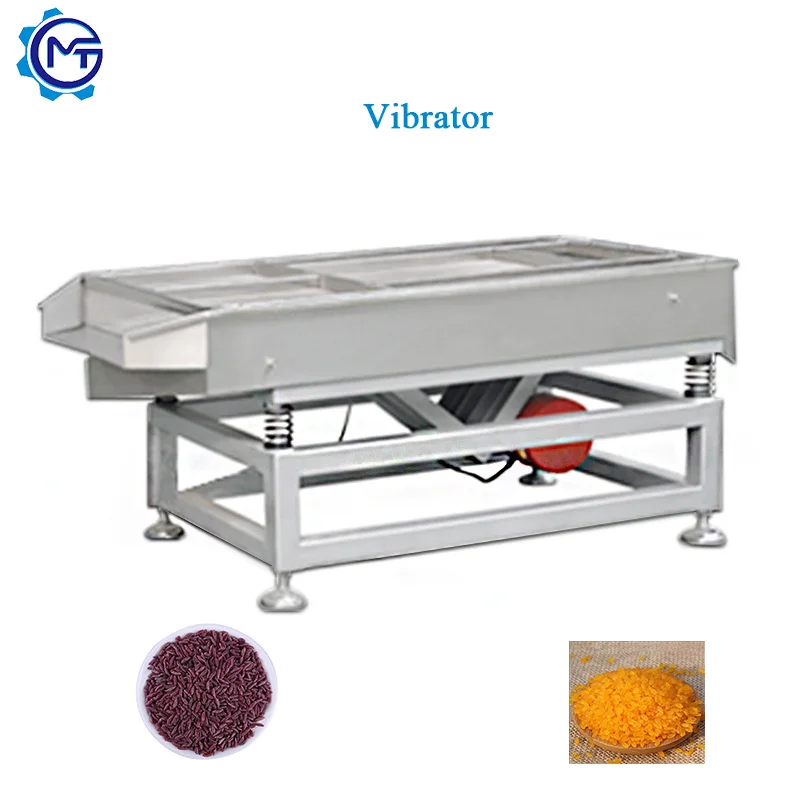
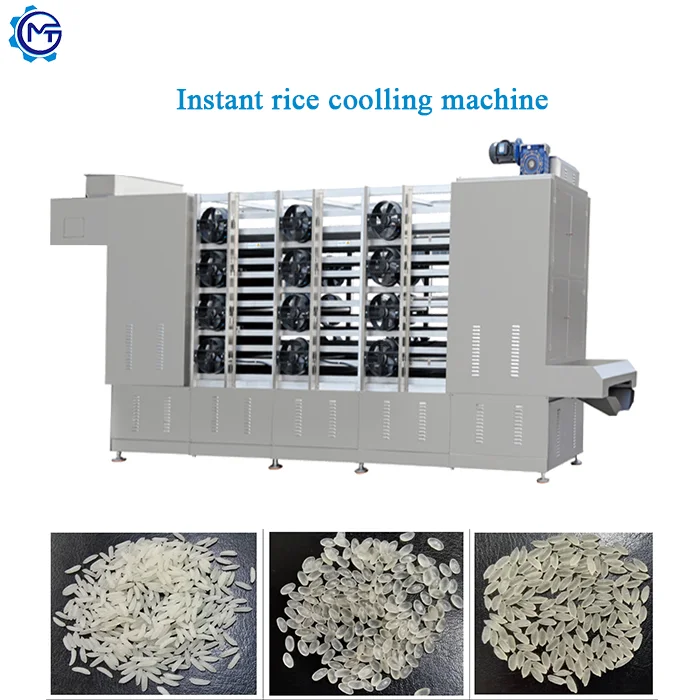
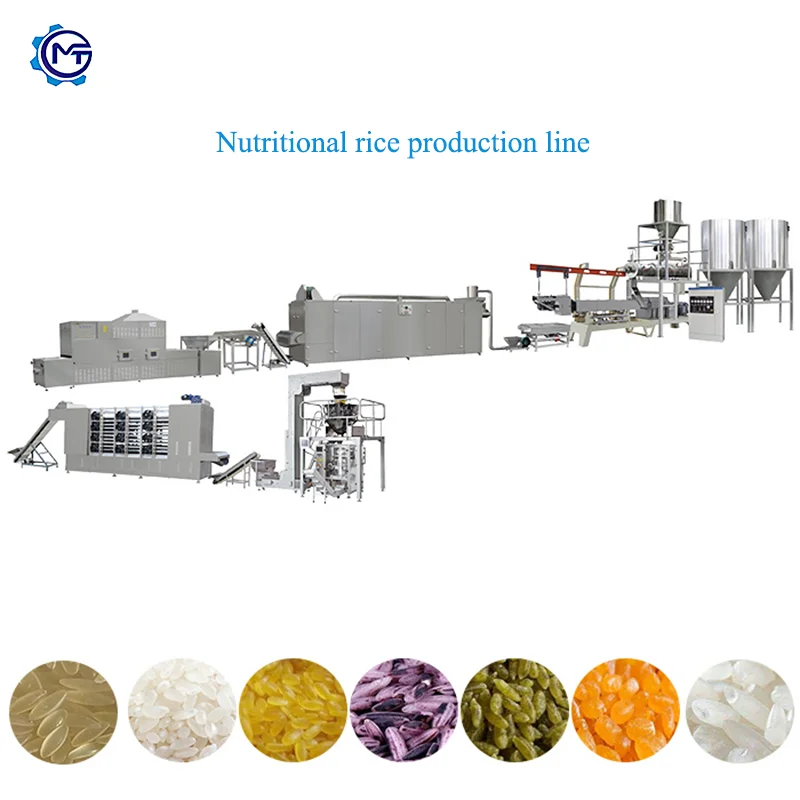
MT65, MT70, MT85, MT75, MT95 Fortified Rice Kernel Extruder Production Line, Twin-Screw, 85–260 kW — complete turnkey layout from batching through extrusion, drying, roasting and packing. Every station is throughput-matched to your broken-rice or grain formulation so rated output holds on your actual recipe, not a catalog figure. Screw and die configuration is specified to your kernel size and micro-nutrient retention targets. Line layout, capacity calculation, and trial run on your raw material are delivered before shipment, with on-site commissioning and operator training included.
- Frequency-controlled feeding, extrusion and drying mesh belt for stable process across the full line
- Circulation drying oven with adjustable moisture profile to preserve kernel integrity
- Automatic lubrication and cooling system for continuous extruder operation safety
- Single-supplier responsibility from engineering design through ongoing maintenance support
Description
Turnkey Line Accountability — Every station from batching through packing is throughput-matched on your actual fortified rice formulation, so the rated capacity holds beyond the extruder barrel.
Technical Specifications
| Parameter | Value |
|---|---|
| Product Type | Fortified Rice Kernel Extruder Production Line |
| Model | MT65 / MT70 / MT85 / MT75 / MT95 |
| Screw Type | Twin-screw extruder |
| Installed Power | MT65: 85 kW; MT70: 120 kW; MT85: 235 kW; MT75: 180 kW; MT95: 260 kW |
| Power Consumption | MT65: 60 kW; MT70: 85 kW; MT85: 165 kW; MT75: 135 kW; MT95: 195 kW |
| Output Capacity | MT65: 80–100 kg/h; MT70: 100–120 kg/h; MT85: 200–300 kg/h; MT75: 300–500 kg/h; MT95: 800–1000 kg/h (basis not stated in source — confirm raw material formulation, moisture content, and kernel size) |
| Overall Dimensions (L×W×H) | MT65: 28 × 1.2 × 2.2 m; MT70: 30 × 1.5 × 2.2 m; MT85: 34 × 3.5 × 4.3 m; MT75: 32 × 3.5 × 4.3 m; MT95: 36 × 3.5 × 4.3 m |
| Control System | Frequency speed control with high automation |
| Feeding System | Single or double screw feeding, selected by material characteristics |
| Screw Material | Wear-resistant alloy |
| Lubrication & Cooling | Automatic lubricating and cooling system |
| Drying Oven Heating Source | Electric or gas |
| Drying Oven Features | Circulation drying with mesh belt speed controlled by frequency motor |
| Basic Material Input | Broken rice, rice, corn, millet, wheat, oats, buckwheat, bean, starch; vitamins and minerals as supplementary ingredients |
| Production Procedure | Mixing → Extruding → Vibrating → Low-temperature drying → Cooling → High-temperature roasting → Cooling → Packing |
| Final Products | Artificial rice, fortified rice kernels |
| Assembly State | Complete production line from batching through packing |
Application Suitability
| Application | Material or Output |
|---|---|
| Nutrition program supply | Fortified rice kernels from broken rice base with added vitamins and minerals |
| Grain upcycling | Artificial rice manufactured from broken rice, rice bran, and recovered grain fractions |
| Multi-grain instant rice | Extruded kernels from corn, millet, wheat, oats, buckwheat, and bean formulations |
| Emergency and institutional food reserves | Shelf-stable fortified kernels for government and NGO nutrition programs |
What "Rated Capacity" Means When Your Recipe Changes the Rules
Capacity on a catalog sheet is not capacity on your broken-rice blend with 8% added fat from micro-nutrient premix.
Every turnkey project contractor and nutrition program supplier has encountered the same gap. A Fortified Rice Kernel Production Line turnkey proposal quotes an output figure based on a standard starch formulation, then the buyer’s actual recipe — higher fat, different moisture, coarser particle size — enters the extruder barrel and the whole line chokes. The dryer backs up, kernel integrity collapses, and the roasting stage cannot catch the moisture differential. I watched a line stall in West Africa because the vitamin-mineral premix introduced enough fat to alter the gelatinisation behaviour entirely; the screw configuration was set for pure rice flour and could not compensate [NEED_CITE: starch gelatinisation behaviour under lipid-modified formulations].
This Fortified Rice Kernel Production Line turnkey proposal starts with your raw material specification, not a generic throughput number. The layout, station sizing, and screw-and-die combination are all calculated against the formulation you will actually run.
Matching Every Station to the Extruder Output
A turnkey line only performs as well as its weakest station transition. When the extruder delivers product at a steady rate but the vibrating conveyor cannot distribute kernels evenly across the dryer belt, moisture pockets form and downstream roasting becomes inconsistent. The batching system, feeding mechanism, low-temperature dryer, high-temperature roaster, and packing station on this line are each sized so the material flow rate remains balanced from input to bagging. Frequency-controlled drives on the feeder, extruder screws, and dryer mesh belt allow fine adjustment during commissioning to absorb minor formulation variances without creating bottlenecks at transfer points.
Recipe-Specific Screw and Die Configuration
The twin-screw extruder in this line does not run a universal screw profile across all grain and fortification recipes. Screw element arrangement — conveying, kneading, and reverse-screw sections — is configured based on the starch source, particle size distribution, and the fat and fibre content introduced by your micro-nutrient premix. Die geometry is matched to the target kernel dimension and expansion ratio. A broken-rice base with a vitamin-mineral slurry behaves differently under shear and heat than a pure corn formulation, and the screw combination reflects that difference. This is why the in-house testing workshop runs your actual material before the line ships, rather than asking you to develop the process after installation [NEED_CITE: twin-screw element arrangement impact on product density and expansion].
How Installed Power and Drying Capacity Interact
The installed power across the five models ranges from 85 kW on the MT65 to 260 kW on the MT95, with actual power consumption substantially lower under normal operating load. That gap between installed and consumed power represents the thermal and mechanical headroom available when a formulation demands higher shear or a longer barrel residence time. The drying oven — available with electric or gas heating — operates on a circulation principle with a frequency-controlled mesh belt, meaning belt speed and temperature profile can be adjusted independently. For a high-moisture fortified kernel that must retain micro-nutrient viability, the low-temperature drying stage runs slower with gentler heat, and the high-temperature roasting stage is then calibrated to finish the moisture reduction without degrading the added vitamins.
The Cost of Skipping the Trial Run
Lines that ship without a material-specific trial run transfer all process development risk to the buyer’s factory floor. Screw combinations that work on one starch source fail on another, die openings that produce uniform kernels at low throughput create irregular shapes when the line is pushed to its rated output, and dryers that handle standard moisture levels cannot cope with formulations that introduce additional water or fat during mixing. The consequence is not a single adjustment — it is a cascading re-configuration of temperature zones, screw speeds, and belt timing that delays production for weeks [NEED_CITE: on-site commissioning delays due to untested raw material formulations]. Every parameter you lock in during a pre-shipment trial run is one fewer variable to resolve under installation pressure.
What This Line Delivers Beyond the Extruder
The batching and mixing system is designed to handle the specific dosing requirements of micro-nutrient premixes, where vitamin and mineral additions are measured in small proportions against a bulk grain base and must remain homogeneous through the feeding stage. The automatic lubrication and cooling system on the extruder supports continuous operation without scheduled stops for manual bearing maintenance, which matters when a nutrition program contract requires sustained daily output. The wear-resistant alloy screw material extends the interval between screw element replacements, reducing the frequency of barrel disassembly. Voltage and frequency are confirmed against your facility’s power supply before production begins, and the control panel language is specified at the order stage so operators are not navigating an unfamiliar interface on day one. The electrical schematic is delivered as part of the documentation package, allowing your maintenance team to trace circuits without waiting for remote support.
Documentation & Verification
- Line layout and capacity calculation matched to your grain formulation and target kernel dimensions
- Screw and die configuration record specifying element arrangement for your recipe
- Trial run report on your raw material conducted in the testing workshop before dispatch
- Electrical schematic with voltage and frequency confirmed for your facility’s power supply
- Factory test record documenting throughput, moisture profile, and kernel integrity at each station
- Operation and maintenance manual covering all stations from batching through packing
Installation, Commissioning & Support
- Foundation and utility plan accounting for the full line length, up to 36 m on the MT95 configuration
- Dedicated electrical circuit sized to the model’s installed power rating, up to 260 kW for the MT95
- Phased assembly from extruder barrel alignment through dryer belt tensioning and roaster calibration
- First-run parameter setting using your actual raw material, adjusting screw speed and barrel temperature zones
- Operator training covering frequency-controlled drives, automatic lubrication monitoring, and dryer belt speed adjustment
- Wear parts list specifying screw elements, die inserts, and dryer belt sections with recommended stock quantities
Before You Request a Quote
To build an accurate line layout and capacity proposal, we need your base grain type and particle size specification, the composition and fat content of your micro-nutrient premix, your target kernel dimensions and daily output requirement, your facility’s available floor space and ceiling height, and your local voltage and frequency standard. If you have an existing mixing or packing system that will connect to this line, share those specifications so the interface points can be matched in the layout stage.
Frequently Asked Questions
Q: How is line capacity verified on my specific raw material and recipe formulation?
A: We run your actual grain base and micro-nutrient premix in the in-house testing workshop before the line ships. The trial run tests the full extrusion, drying, and roasting sequence, and the resulting report documents throughput, kernel integrity, and moisture profile. Capacity figures in your proposal are tied to these trial results, not a generic catalog number.
Q: What is the phased installation and commissioning schedule for a complete turnkey line?
A: Installation proceeds from extruder positioning and barrel alignment through to dryer and roaster assembly, followed by electrical connection and control system activation. Commissioning includes dry runs, then material runs with your formulation to set screw speed, temperature zones, and belt speeds. Operator training runs concurrently over the final commissioning days.
Q: How are upstream mixing and downstream drying stations throughput-matched to the extruder?
A: Each station is sized based on the extruder output rate for your specific formulation. The feeding system is selected for your material characteristics, the dryer belt width and length are calculated for the required residence time, and the roaster capacity matches the moisture reduction target. Frequency drives on all stations allow fine adjustment during commissioning.
Q: What utility planning is required for the full line?
A: You need to confirm total electrical load based on your selected model’s installed power, gas supply if the dryer and roaster use gas heating, compressed air for pneumatic controls, and water supply for the automatic cooling system. A utility requirement sheet is provided with the line layout so your facility team can prepare connections before equipment arrives.
Q: Do you provide operator training and documentation covering all stations from batching to packing?
A: Training covers every station in the line, including batching dosing, extruder screw speed and temperature control, dryer and roaster belt speed adjustment, and packing station operation. The documentation package includes an operation manual, maintenance schedule, wear parts list, electrical schematic, and the configuration record for your specific screw and die setup.
Related products
-

Máquina de hacer polvo de nutrición de cereal de arroz para bebés fortificado con hierro automático 500kg/h controlada por PLC
¥8,238.27 Add to cart -

Línea de Extrusión y Secado de Polvo de Nutrición para Bebés de 500kg/h Totalmente Automática con Control PLC
¥9,500.00 Add to cart -
Línea de Producción de Alimentos Saludables para Bebés Equipos de Polvo Nutricional para Suplementos Alimenticios para Bebés para Maquinaria de Procesamiento de Harina
¥8,500.00 Select options This product has multiple variants. The options may be chosen on the product page -
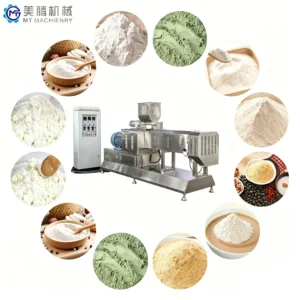
Máquina de hacer harina de arroz para bebés con extrusora de doble tornillo de 150-500kg/h
¥9,500.00 Select options This product has multiple variants. The options may be chosen on the product page