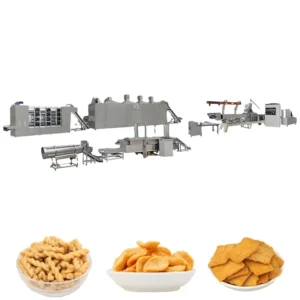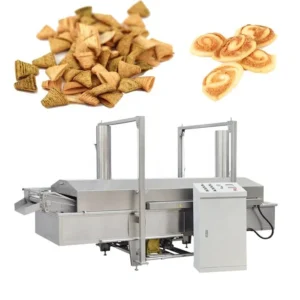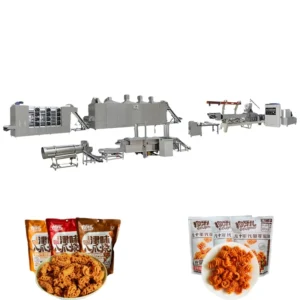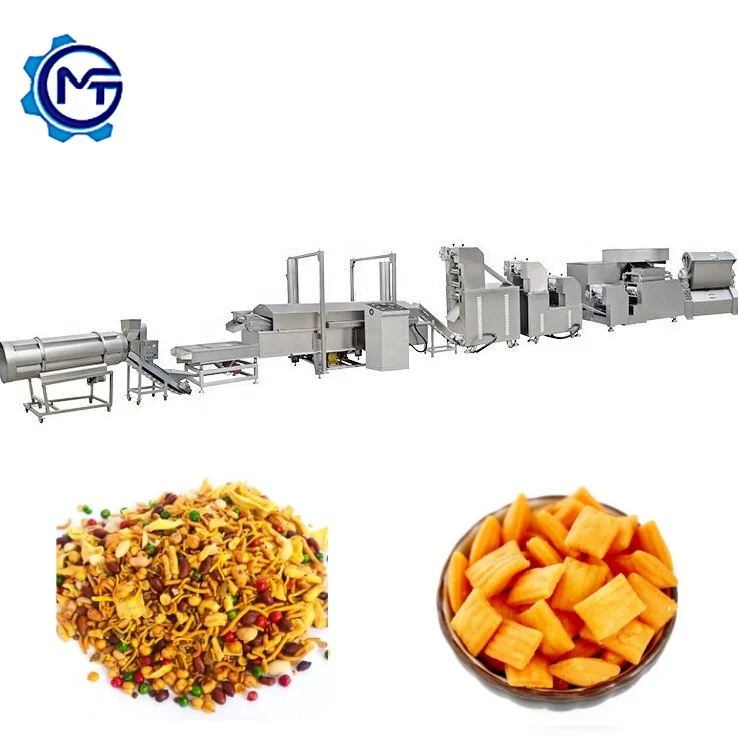
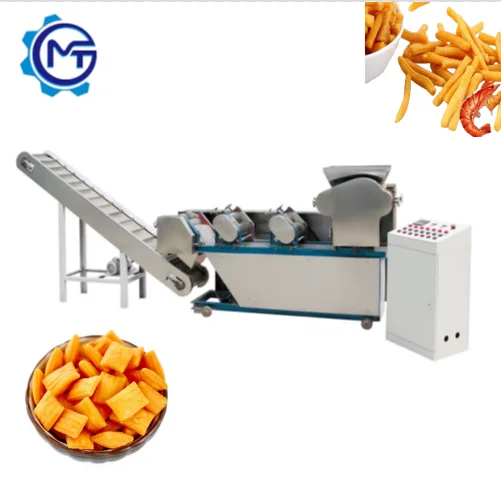
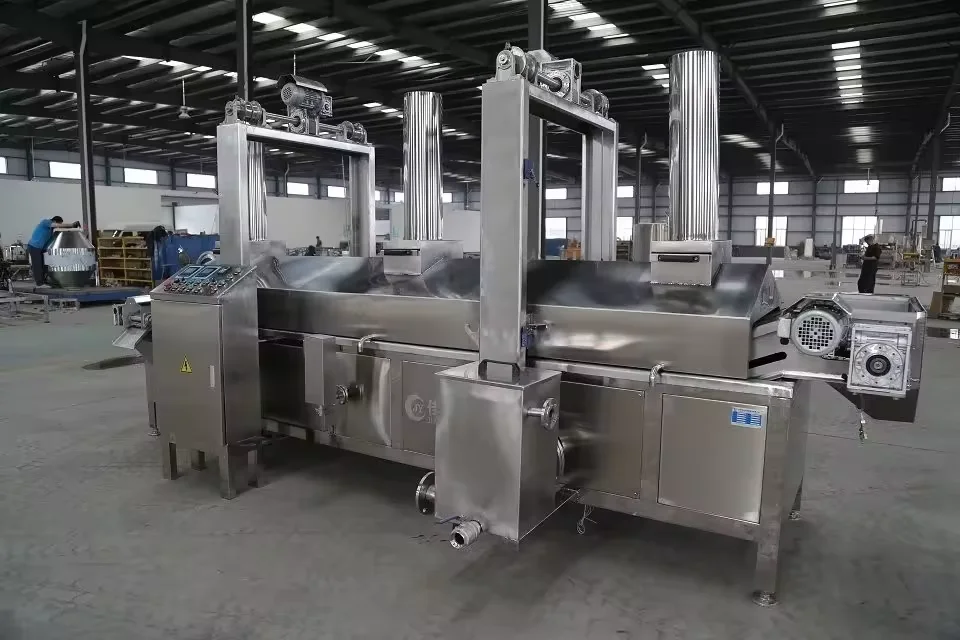
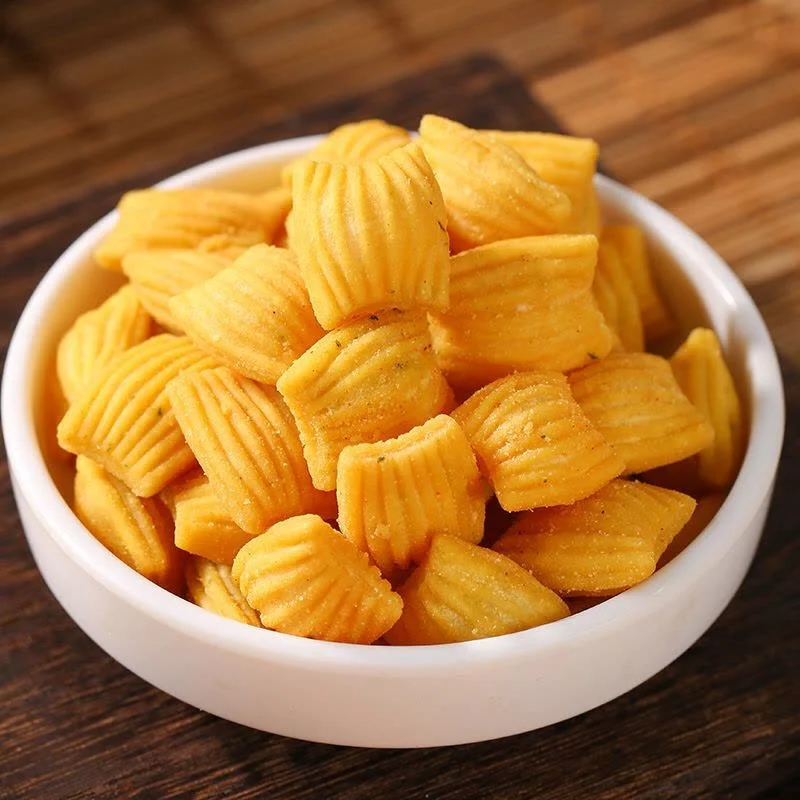
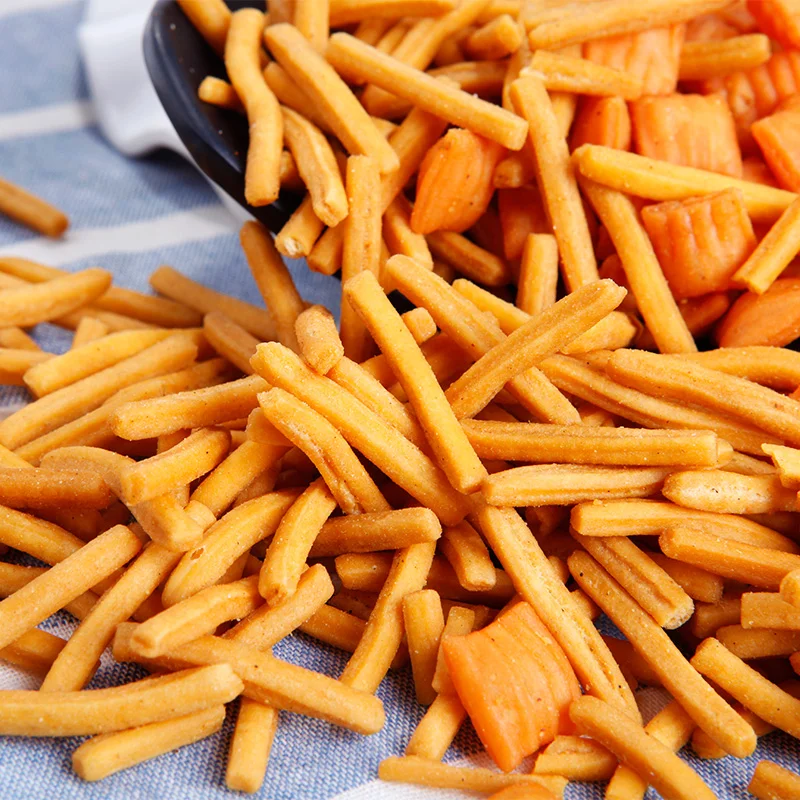
Continuous Deep Fryer, 60 kW Heating, 380V 50Hz, PLC Control — designed for fried stick snacks, corn curls and pellet chips within a complete extrusion line.
- Double-layer mesh belt sandwiches product to prevent floating during frying
- Continuous oil filtration and frequency-controlled belt speed ensure uniform color and texture
- Automatic hood lifting simplifies sanitation between production runs
We match fryer throughput to your upstream extruder and downstream seasoning stations, then verify performance with a trial run on your actual raw material before shipment.
Description
Capacity Matched Across Every Station — this continuous frying machine is configured as one node within a complete snack line, with throughput verified against upstream extruders and downstream coating systems using your actual product format.
Technical Specifications
| Parameter | Value |
|---|---|
| Product Type | Continuous Deep Fryer |
| Heating Method | Electricity or Gas |
| Rated Power | 60 kW (heating tube) / 2.6 kW (drive system) |
| Voltage & Frequency | 380V / 50Hz |
| Control System | PLC |
| Oil Capacity | 320 L |
| Overall Dimensions (L×W×H) | 6700 × 2200 × 1200 mm |
| Net Weight | 2000 kg |
| Capacity Range | 100–1000 kg/h (basis not stated in source — confirm product type, moisture & oil absorption rate) |
| Construction Material | Food-grade 304 Stainless Steel |
| Mesh Belt | Upper and lower double-layer |
| Speed Control | Frequency conversion stepless regulation |
| Oil Filtration | Automatic continuous circulation system |
| Slag Discharge | Bottom-mounted automatic system |
| Lifting System | Automatic lifting of upper hood and mesh belt |
| Assembly State | Fully assembled |
| Certification | CE, ISO |
Application Suitability
| Application | Material or Output |
|---|---|
| Fried pellet chip production | Extruded 2D/3D pellets fried to target color and crispness |
| Corn curl frying line | Twin-screw extruded corn curls with controlled oil uptake |
| Fried stick snack processing | Formed dough sticks requiring uniform surface browning |
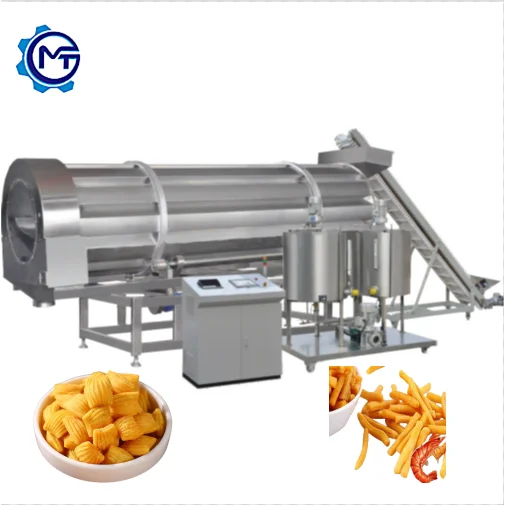
| Integrated snack line station | Positioned between extruder output and seasoning drum input |
Why the Fryer Becomes the Bottleneck Nobody Planned For
A fryer specified on paper capacity will choke the moment real product hits the oil.
I remember setting up a fried snack line for a Southeast Asian buyer years ago. The extruder was rated at full output, but the fryer we paired with it could not absorb that volume — half-cooked product piled up on the transfer conveyor while the oil temperature dropped below the frying threshold. The buyer watched a full batch turn to waste on day one. Since then, I calculate fryer throughput against actual product geometry, moisture content, and oil absorption behaviour before anything ships [NEED_CITE: throughput matching between extrusion and frying stations in snack lines]. A continuous frying machine turnkey snack production line only works when every station speaks the same throughput language.
Double-Layer Mesh Belt and Product Behaviour Under Oil
Extruded snacks vary in density, and lighter formats tend to float the moment they enter hot oil. The double-layer mesh belt on this fryer sandwiches the product between upper and lower belts, holding each piece at a consistent depth throughout the fry zone. This matters especially for pellet chips and hollow-format snacks where uneven submersion produces colour banding and inconsistent texture. Belt speed adjusts through frequency-controlled stepless regulation, so frying dwell time can be tuned per product format without mechanical changeover.
Oil Circulation, Acid Value, and Production Continuity
Frying oil degrades as particulate matter accumulates and free fatty acid levels climb. The automatic continuous circulation filtration system on this unit removes fine sediment in real time, keeping the acid value within an acceptable range over longer production runs [NEED_CITE: oil degradation rates in continuous industrial frying operations]. Slag collects at the bottom of the fryer tank and discharges automatically, reducing the need for manual scraping mid-shift. When oil quality stays stable, product colour and flavour remain consistent from the first kilogram to the last.
Reading the Specification Sheet Against Your Snack Format
The 60 kW heating capacity determines how quickly the oil recovers temperature after product enters the tank. Denser products with higher moisture — like formed dough sticks — pull more thermal energy from the oil than light corn curls, so recovery rate directly affects whether you can sustain target throughput. The 320 L oil volume sets the thermal mass available to buffer those drops. PLC control manages temperature profiling across zones, which matters when you switch between a light puffed pellet and a denser fried stick in the same shift. Stepless belt speed and adjustable hood height give operators the mechanical range to dial in frying conditions for each format rather than relying on guesswork.
The Cost of Skipping Throughput Verification
When a fryer is specified without testing against the buyer’s actual extruded product, the consequences surface on the first production day. Oil temperature oscillates as the belt feeds in more mass than the heating system can compensate for. Downstream seasoning drums receive product that is either under-fried or over-darkened. The entire line stops while operators manually throttle the extruder output to match what the fryer can handle [NEED_CITE: production losses from mismatched line stations in food processing]. That idle time is not factored into anyone’s return-on-investment calculation.
Why Buyers Source This Fryer Within a Full Line
Throughput calculations are run across extruder, fryer, seasoning drum, and packing station together, not as isolated numbers. Screw and die configurations upstream are specified so the extruded geometry entering the fryer matches what the belt and oil volume can handle. Every line ships with a trial run report produced on the buyer’s own raw material, so frying behaviour is documented before installation. Electrical schematics confirm voltage, frequency, and PLC language for the destination market before the machine leaves the workshop. CE and ISO documentation is provided at the equipment level, supporting import compliance without last-minute certification scrambles.
Documentation & Verification
- Line layout showing throughput balance between extruder output and fryer intake rate
- Trial run report fried on buyer’s actual extruded snack format before dispatch
- Electrical schematic with voltage and frequency locked to destination market standard
- Wear parts list covering mesh belt segments, heating tubes, and filtration consumables
- Factory acceptance test record with temperature profile and belt speed logged per product
Installation, Commissioning & Support
- Floor plan accounts for 6700 mm length with clearance for hood lifting and belt maintenance access
- Dedicated 380V circuit sized for 60 kW heating load plus 2.6 kW drive motor on separate breaker
- Machine arrives fully assembled; utility connections limited to power, oil fill, and exhaust duct
- PLC parameters set during commissioning with product-specific frying profiles stored per recipe
- Operator training covers belt speed adjustment, oil filtration cycle, and automatic slag discharge procedure
- Spare mesh belt segments and heating elements identified and stocked at first installation
What We Need From Your Inquiry
Provide the exact snack format you are producing — corn curls, pellet chips, fried sticks — along with the extruder model feeding the line and its verified output on your recipe. Share your workshop voltage and frequency, plus any PLC language preference for operators. If you have existing seasoning or packing equipment downstream, include those station capacities so the continuous frying machine turnkey snack production line can be balanced end to end.
Frequently Asked Questions
Q: How is frying capacity verified against the actual snack format and extruder output?
A: We run a trial using your raw material and extruded product geometry in our testing workshop. Oil absorption rate, moisture loss, and colour development are measured, and belt speed is adjusted until throughput matches upstream output. The trial run report documents these results before the line ships.
Q: What voltage, frequency, and PLC language options are confirmed before shipment?
A: Electrical schematics are prepared after confirming your site voltage and frequency. The standard configuration is 380V/50Hz, but other industrial voltages are available. PLC interface language is set to match your operator team before dispatch, and this is documented in the pre-shipment specification pack.
Q: How is the fryer matched to upstream extrusion and downstream seasoning stations?
A: Capacity calculations cover every station from extruder through fryer to seasoning drum and packing. Belt speed, oil volume, and heating recovery rate are balanced against extruder output and downstream intake rate so no single station bottlenecks the continuous frying machine turnkey snack production line.
Q: Can a trial run be conducted on our raw material before the line ships?
A: Yes. Our testing workshop runs your actual extruded product through the fryer under production conditions. Results including frying time, oil temperature profile, and final product colour are recorded in a trial report that ships with the equipment documentation.
Q: What installation, commissioning, and operator training is included on site?
A: Engineers arrive for on-site installation, utility connection verification, and first-run commissioning. They set PLC frying profiles for each product format and train your operators on belt speed adjustment, oil filtration maintenance, and the automatic lifting system for daily cleaning.
Related products
-
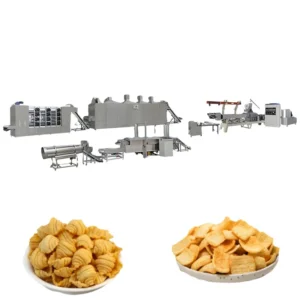
Máquinas automáticas para la fabricación de snacks crujientes Bugles, extrusora de alimentos Sala a base de harina de trigo.
¥100.00 Select options This product has multiple variants. The options may be chosen on the product page -
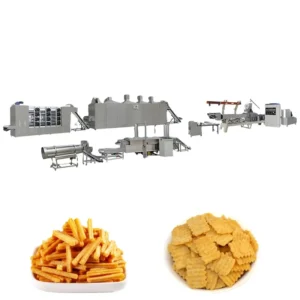
Línea de producción de chips de Bugles fritos Extrusora de alimentos para bocadillos de tortilla Doritos fritos
¥100.00 Select options This product has multiple variants. The options may be chosen on the product page -
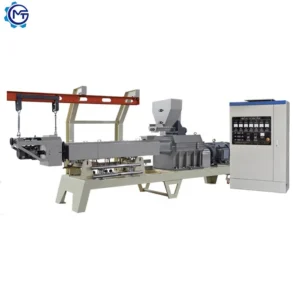
Industrial Fully Automatic Stainless Steel Deep Fried Line – Snack Factory Miscellaneous Grains Special Processing Equipment
¥65.00 Select options This product has multiple variants. The options may be chosen on the product page -
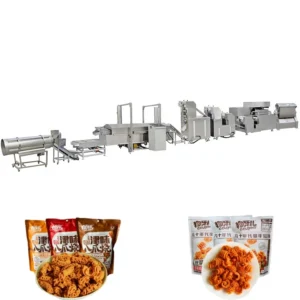
Puffed Octopus Snack Processing Line – Full-Automatic Fried Octopus Production Machinery
¥65.00 Select options This product has multiple variants. The options may be chosen on the product page