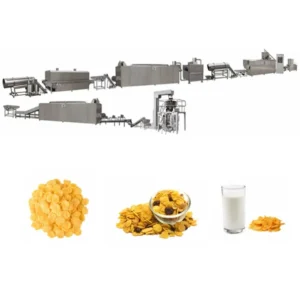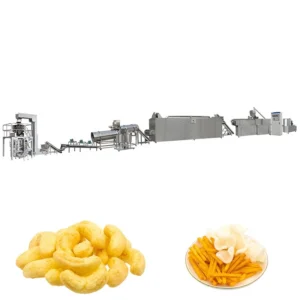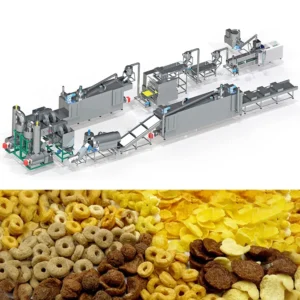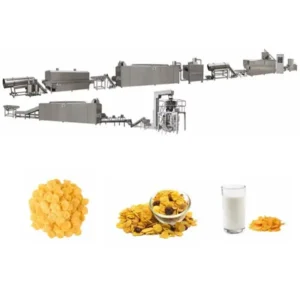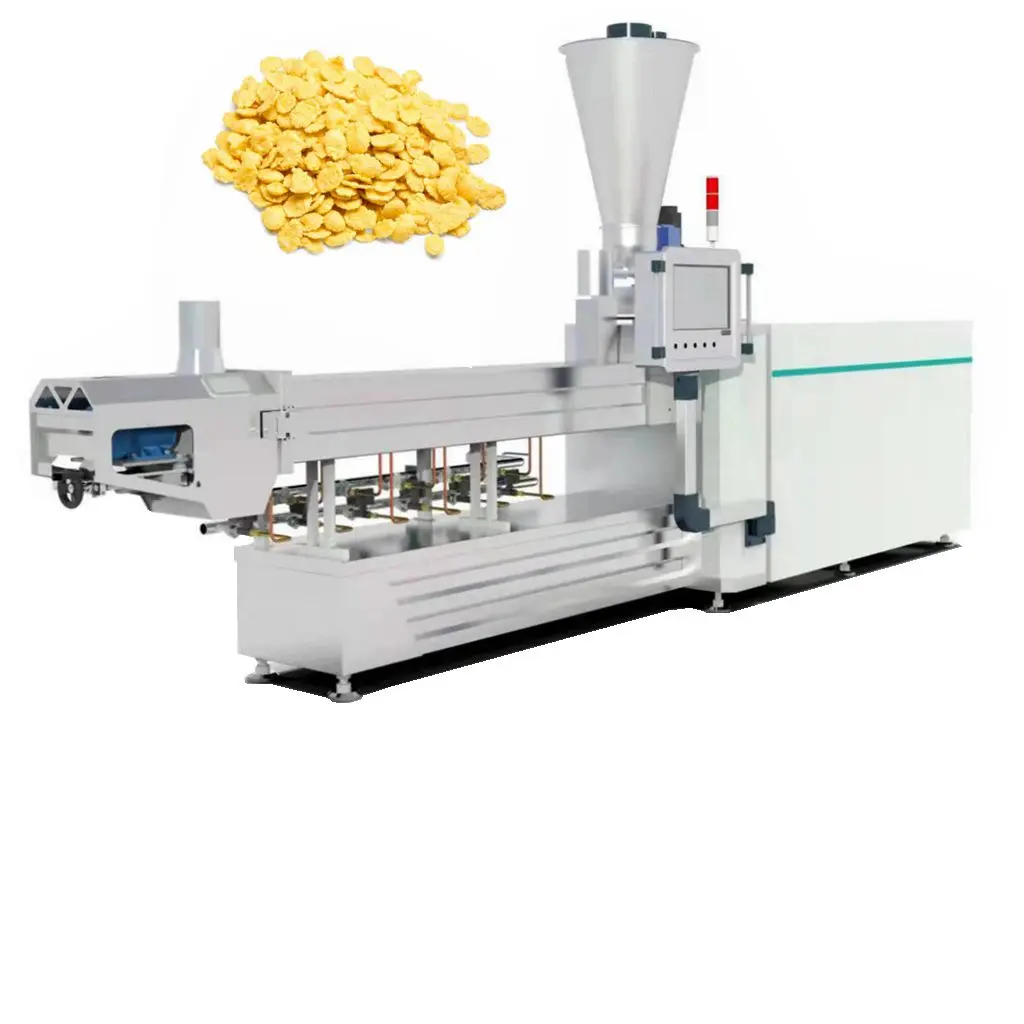
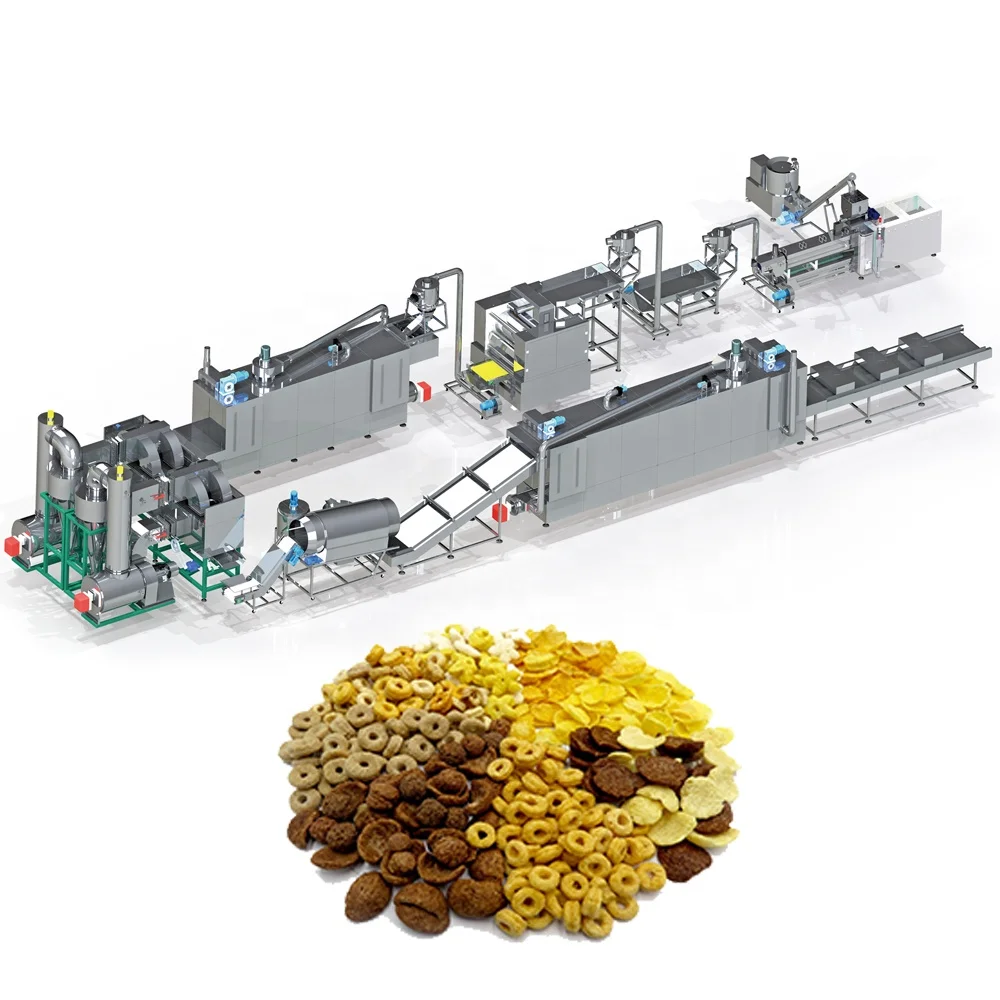
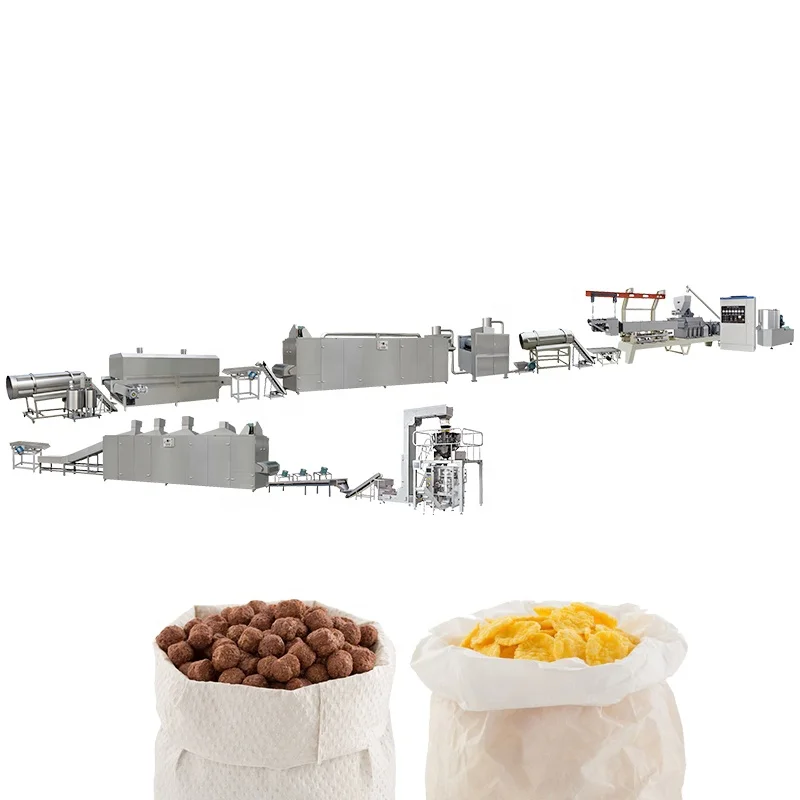
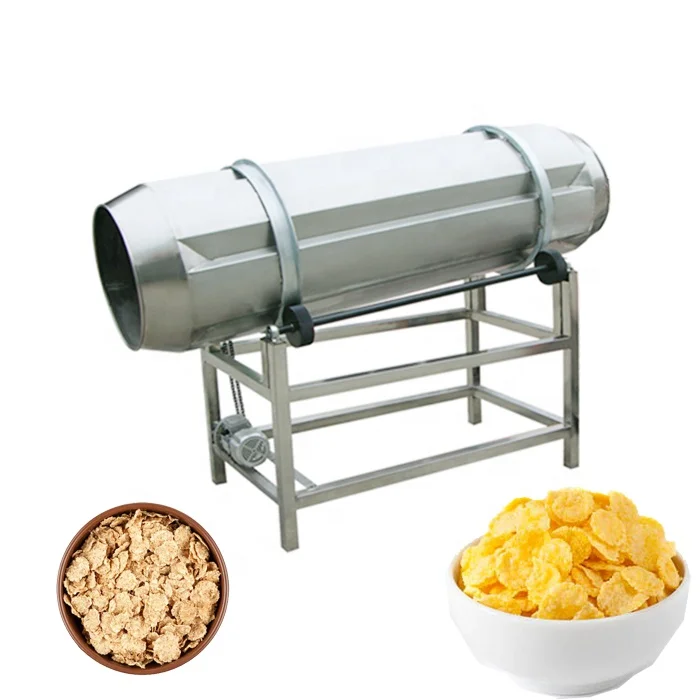

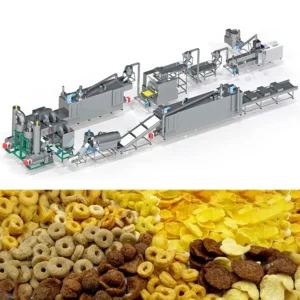
MT75 Corn Flakes Production Line, Twin Screw Extruder, PLC & MCC Control — complete turnkey project from mixing through extrusion, flaking, roasting and packing, designed as one integrated system.
- Screw configuration and die design matched to your raw material blend and target flake density, with throughput balanced across every station to prevent bottlenecks.
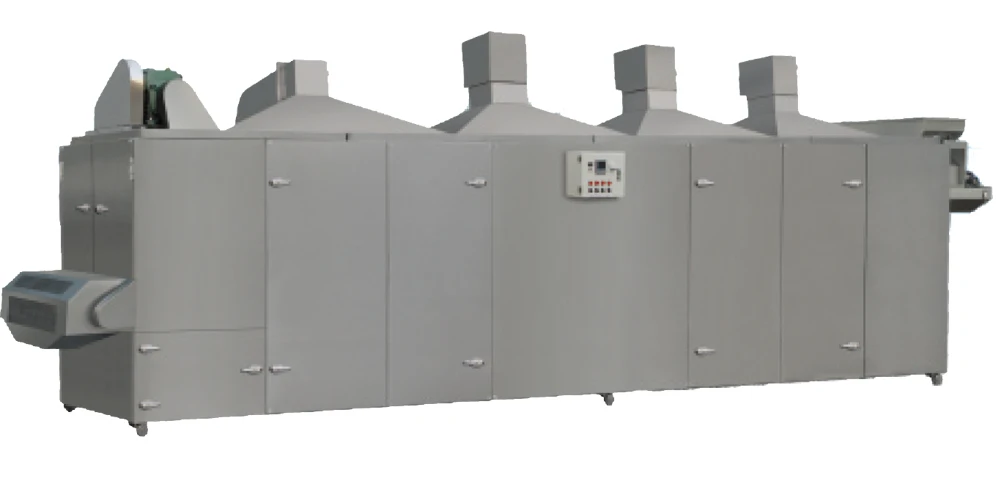
- PLC-controlled hydraulic flaking system and hot air roasting oven with dual circulating fans ensure consistent flake thickness and uniform surface blistering.
Layout design, trial run on your raw material before shipment, and on-site commissioning included in project scope.
Description
Integrated line engineering — Every station from mixing to packing is sized against the same throughput target, so the extruder never outpaces the flaker or the roasting oven on a corn flakes line.
Technical Specifications
| Parameter | Value |
|---|---|
| Product Type | Corn Flakes Breakfast Cereals Production Line |
| Line Options | MT70 / MT75 / MT85 |
| Extruder Type | Twin Screw |
| Installed Power | MT70: 160 kW; MT75: 210 kW; MT85: 190 kW |
| Power Consumption | MT70: 120 kW; MT75: 150 kW; MT85: 140 kW |
| Output Capacity | MT70: 150–200 kg/h; MT75: 300–500 kg/h; MT85: 300–400 kg/h (basis not stated in source — confirm raw material, moisture content and product format) |
| Overall Dimensions (Line) | MT70: 41 × 1.5 × 2.2 m; MT75: 45 × 1.5 × 3.5 m; MT85: 43 × 1.5 × 3.2 m |
| Control System | PLC and MCC control at line level |
| Flaking Machinery | Hydraulic double-roller system with infrared sensor temperature control |
| Roasting Oven | Hot air roasting with dual circulating fans and cyclone dust removal |
| Coating System | Double tumble sugar melting, coating drum with spraying nozzle |
| Die Configuration | Adjustable mould for ball, tube, stick, ring, fruit loop, star, wheel, flower, heart shapes |
| Dryer Heating Source | Gas or electric, configurable to site utility |
| Automation Level | Fully automatic |
| Voltage & Frequency | Customized to destination market (confirm local standard) |
| Basic Raw Materials | Corn, rice, wheat, oat, barley powder |
| Standards | CE; ISO certified |
Application Suitability
| Application | Material or Output |
|---|---|
| Natural corn flakes production | Corn grits or corn flour blended with water and malt |
| Sugar-coated corn flakes | Extruded corn pellets flaked, roasted and sugar-sprayed |
| Multi-shape breakfast cereals | Rice, wheat, oat or barley blends formed through interchangeable dies |
| Fortified cereal lines | Base grain powder with added vitamin and mineral premix |
| Extruded snack cereals | Corn and rice mixtures shaped as rings, balls, stars or loops |
Why the Raw Material Question Must Come Before the Capacity Number
A capacity plate means nothing until the screw profile meets your actual flour blend.
I once watched a Latin American plant shut down on day one because the trial runs used standard corn flour, but the buyer ran full-fat corn grits on arrival. The higher oil content collapsed the expansion, and the flakes came off the rollers as dense, lifeless sheets. The entire corn flakes production line turnkey installation stalled for a week while we rebuilt the screw combination and adjusted moisture targets on site [NEED_CITE: effect of lipid content on starch gelatinisation in twin-screw extrusion]. That single raw material mismatch cost more in lost production than any equipment discount could have offset. Specifying a line without first confirming your exact grain source, particle size and fat content is how projects fail before the first bag is packed.
How the Whole Line Stays Balanced from Batching to Packing
A turnkey corn flakes production line turnkey project succeeds or fails on throughput matching between stations. The extruder output must align with the flaker intake rate; otherwise, dough accumulates upstream or the rollers run starved, producing uneven sheet thickness. The drying and roasting stages introduce the longest residence times in the process, so their belt speed and bed depth are calculated backward from the extruder discharge rate. When every station is sourced from one supplier with a single layout drawing, the responsibility for balance sits in one place rather than scattered across vendors who each blame the other when the line bottlenecks.
Screw Configuration and Die Design Specific to Your Grain Blend
The twin-screw extruder is the heart of any corn flakes production line turnkey system, and its screw elements are arranged in zones of conveying, kneading and metering that must match the starch behaviour of your raw material. A high-amylose corn blend needs a different shear profile than a waxy maize or rice-dominant formulation [NEED_CITE: starch gelatinisation behaviour in twin-screw extruders by grain type]. The die plate determines pellet geometry, which directly controls how the dough flattens between the flaking rollers. An undersized die opening on a high-moisture mix creates back-pressure that surges the extruder, while an oversized opening yields pellets too thin to survive the drying tunnel. Every configuration is recorded and shipped with the machine so your team can reproduce the exact setup on future runs.
Reading the Specification Sheet Against Real Production Conditions
The installed power figures — ranging from 160 kW to 210 kW across line options — reflect the combined motor load of the extruder, flaking rollers and conveying motors under nominal conditions. Actual draw depends on dough viscosity, which shifts with ambient humidity and grain moisture content at the mixer. The hydraulic double-roller flaking system uses infrared sensors to hold roller surface temperature within a narrow band; this matters because a cold roller condenses moisture on the dough sheet, causing it to stick and tear, while an overheated roller skins the surface before the interior moisture equalises. The roasting oven relies on two separate circulating fans and a conciliation burner to deliver uniform hot air across the belt width, which is what produces the consistent surface blistering buyers expect on a premium corn flake [NEED_CITE: hot air distribution and surface blistering in cereal roasting ovens].
What Happens When the Dryer Is Undersized for the Extruder
I have walked into plants where the extruder ran at its rated output but the dryer could not keep up, forcing operators to slow the entire line to avoid sending wet flakes into the roasting oven. Wet flakes entering a high-temperature roaster case-harden on the outside while trapping steam inside, producing a product that snaps unevenly and stales within days. On a corn flakes production line turnkey project, the dryer capacity must be verified against the actual moisture content leaving the flaking rollers, not a generic value from a different grain or product format. When stations are purchased separately from different vendors, no one takes ownership of that calculation, and the mismatch surfaces only after installation when production targets are already missed [NEED_CITE: moisture balance between extrusion and drying stages in cereal processing].
Why Procurement From One Integrated Supplier Matters Here
The screw and die configuration is specified to the buyer’s raw material before the extruder enters production, not copied from a generic build. Every corn flakes line layout is drawn with throughput matched across the mixer, extruder, flaker, dryer, roasting oven and packing station so no single machine constrains the project output. An in-house testing workshop runs trial production on the buyer’s own grain blend before shipment, catching expansion and density issues early. The complete electrical schematic, including voltage and frequency confirmation, is issued before manufacturing starts to prevent commissioning delays at the destination plant. PLC and MCC control panels are wired and labelled to the agreed control language, reducing operator confusion during the first production week.
Documentation & Verification
- Line layout drawing with throughput calculation matched per station for your cereal format
- Trial run report on your corn grits or flour blend performed before dispatch
- Screw and die configuration record specific to your target flake density and shape
- Electrical schematic with confirmed voltage, frequency and control language for your market
- CE declaration of conformity and ISO certificate for customs and regulatory clearance
Installation, Commissioning & Support
- Foundation plan reflecting the 41–45 m line footprint and flaker hydraulic load points
- Dedicated power circuit sized to the 150–210 kW installed load of your selected line option
- Flaking roller gap calibrated and infrared sensor validated during on-site commissioning
- PLC parameter sets loaded for your raw material, with operator training on recipe changes
- Wear parts list covering screws, dies and roller surfaces with recommended reorder intervals
- Roasting oven burner and cyclone dust removal system inspected during first production run
What We Need to Move Forward
To configure a line that matches your actual production targets, share the grain type and particle size you plan to run, along with the moisture content at the mixer. Confirm your local voltage standard and frequency, the control panel language your operators need, and the available workshop length and ceiling height. If you are producing both natural and sugar-coated flakes on one line, let us know the coating ratio and target pack weight so the sugar spraying and secondary drying stages are sized correctly from the start.
Frequently Asked Questions
Q: How is line capacity verified against my specific raw material and moisture content?
A: We run a trial in the in-house testing workshop using your actual corn grits or flour blend at the moisture level your mixer produces. The test records expansion ratio, pellet density, flake thickness after the hydraulic rollers and final crispness after roasting. Those results are documented in a trial run report and used to finalise the screw and die configuration before the extruder ships.
Q: Can the screw and die configuration produce both natural and sugar-coated flakes on one line?
A: Yes. The die plate is interchangeable, and the screw element arrangement can be adjusted between campaigns. The sugar coating section — comprising the double tumble melter, spraying nozzle and coating drum — is positioned after the roasting oven, so the same extruded and flaked base product feeds both natural and coated packing runs.
Q: How is throughput matched between the extruder, flaker and roasting oven?
A: Each station is selected during the layout phase based on the extruder discharge rate at your confirmed raw material and moisture content. The flaker roller speed, dryer belt length and roasting oven residence time are all calculated from that single throughput figure, so no station accumulates backlog or runs starved during steady-state production.
Q: What does the turnkey project scope include for layout and utility planning?
A: The scope covers the full line drawing showing station placement within your workshop footprint, utility connection points for water, gas, compressed air and electrical circuits, and a phased installation schedule. Voltage, frequency and control language are confirmed before panel fabrication to avoid rewiring after arrival.
Related products
-
Kelloggs Corn Flakes Breakfast Cereal Normal Making Machine Breakfast Cereal Extruder Production Line
¥30,000.00 Select options This product has multiple variants. The options may be chosen on the product page -
Automatic 500kg/h Corn Flakes Making Machine New Condition High Productivity Sweet Breakfast Cereal Processing Line From Factory
¥8,500.00 Select options This product has multiple variants. The options may be chosen on the product page -
New High Efficiency Electric Corn Flakes Production & Manufacturing Machine
¥7,500.00 Select options This product has multiple variants. The options may be chosen on the product page -
Corn Flakes Breakfast Cereal Production Line Making Machine Automatic
¥8,000.00 Select options This product has multiple variants. The options may be chosen on the product page