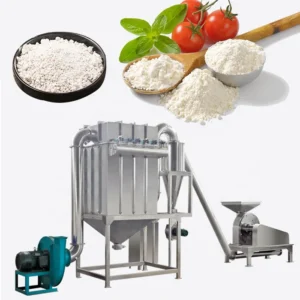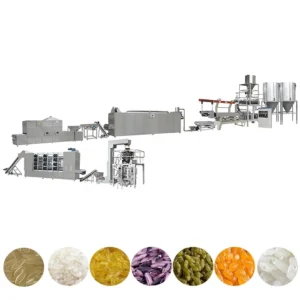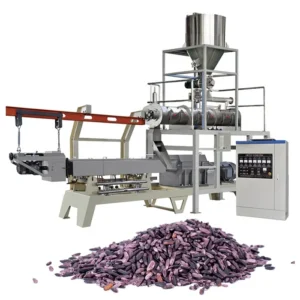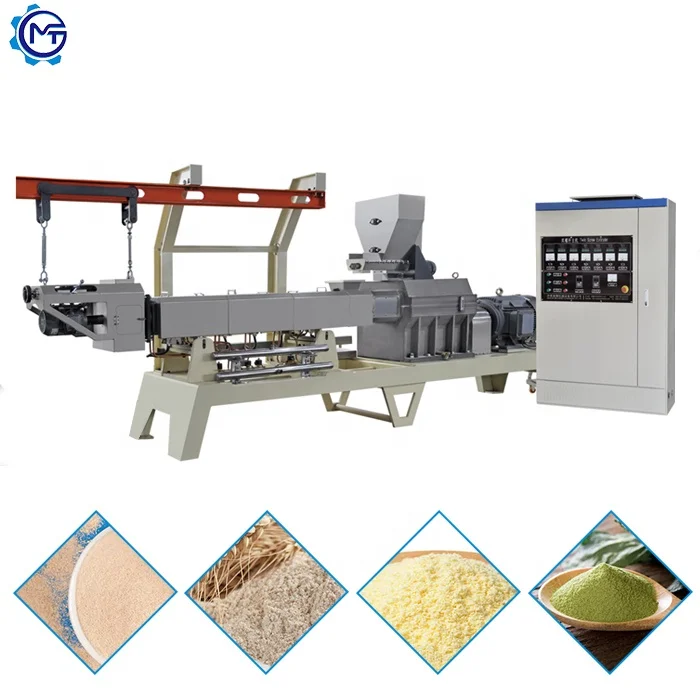
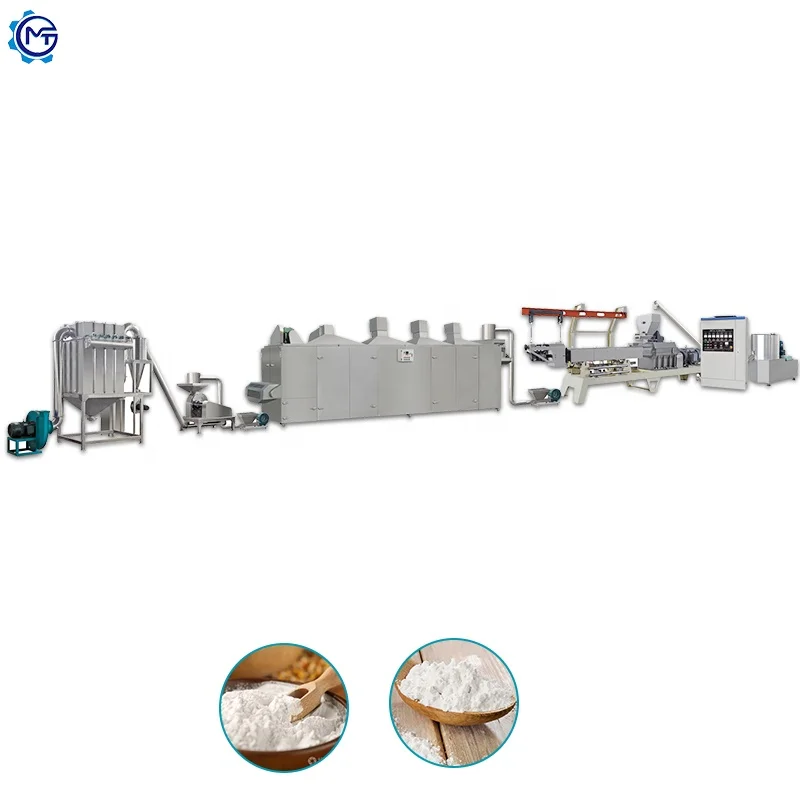
Nutritional Powder Production Line — Twin-screw extrusion, PLC & MCC control, complete turnkey layout from batching to packing, food-grade contact materials.
- Screw configuration and die design matched to buyer’s raw material formulation, ensuring target powder density, solubility, and nutrient retention across infant formula, meal replacement, and fortified food applications.
- Every station throughput-matched under one integrated project, eliminating bottleneck risk common when assembling from separate vendors.
- In-house trial runs on customer’s actual raw material confirm output and specification compliance before shipment, supported by full documentation and on-site commissioning.
Description
Integrated Throughput Design — every station from batching to packing is calculated against the same raw material formulation, so no single unit chokes the rest of the line.
Technical Specifications
| Parameter | Value |
|---|---|
| Product Type | Nutritional Powder Production Line |
| Control System | Available with PLC and MCC integration |
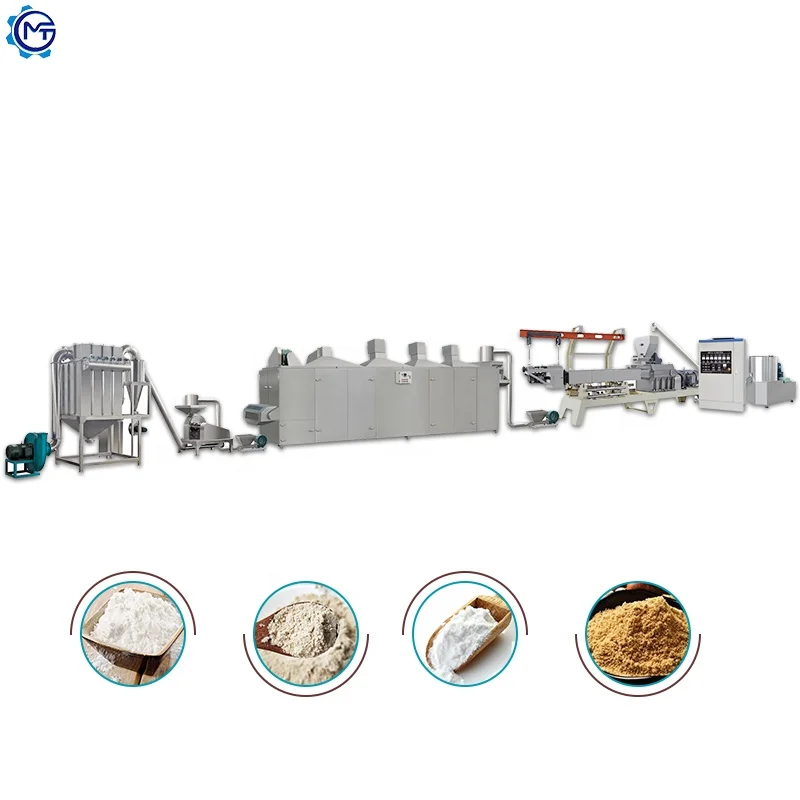
| Assembly State | Complete line from batching through packing |
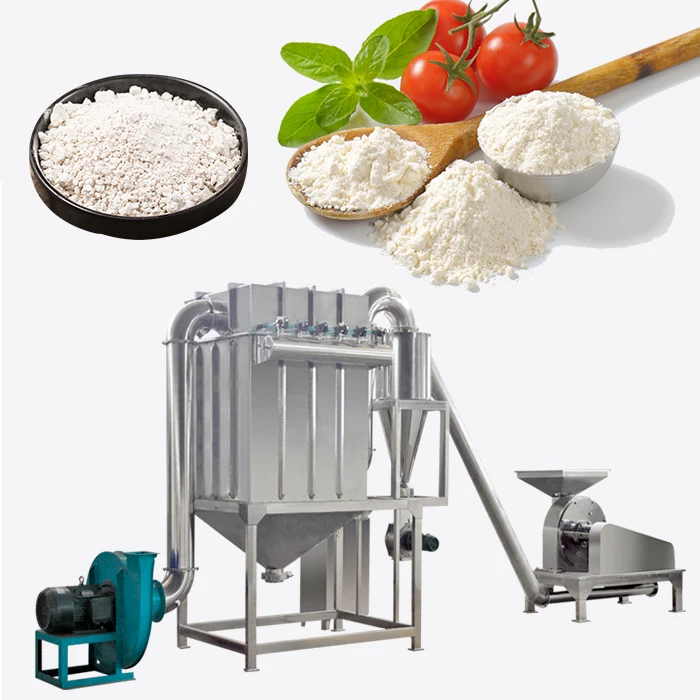
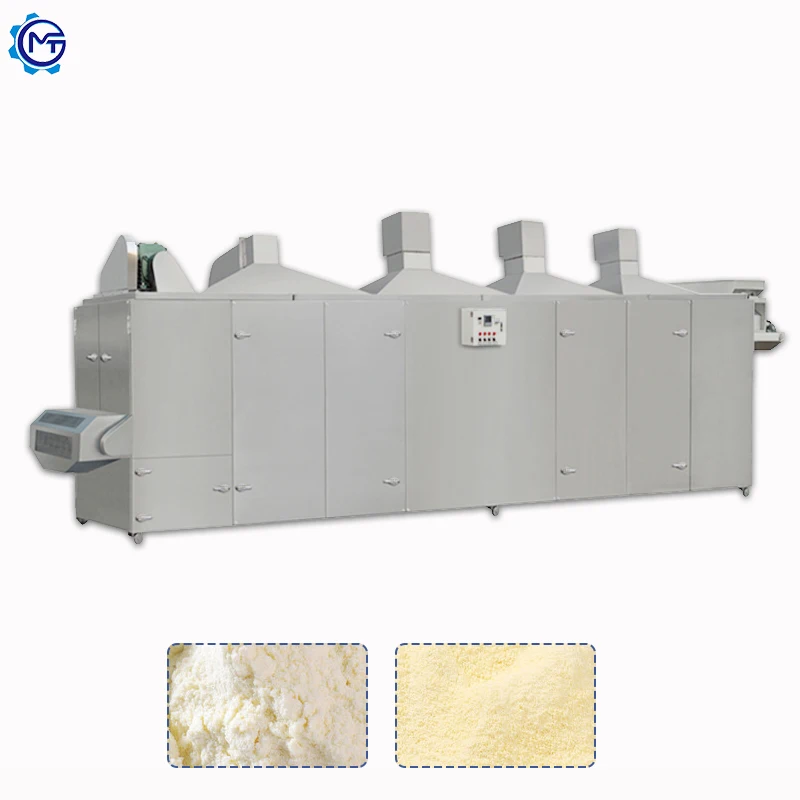
| Line Stations | Mixing and batching, extrusion, conveying, drying, cooling, packing |
| Screw Type | Twin-screw extruder |
| Contact Materials | Food-grade stainless steel throughout product zones |
| Testing Protocol | In-house trial run on customer raw material before shipment |
| Customization Scope | Factory footprint and local voltage matched to buyer’s facility |
| Formula Support | Basic recipe and machine setting parameters supplied |
| Output Capacity | Basis not stated in source — confirm raw material formulation, moisture content, and target powder density |
| Voltage & Frequency | Confirmed per customer’s local supply before production |
| Standards | CE, ISO |
Application Suitability
| Application | Material or Output |
|---|---|
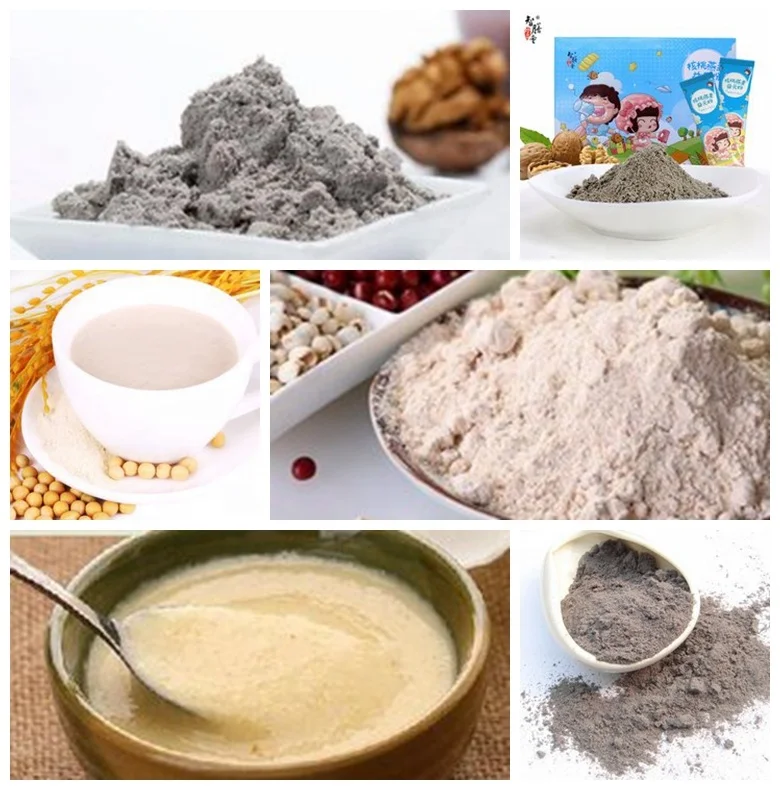
| Infant formula production | Milk powder base, whey protein, vitamin and mineral premix |
| Nutritional meal replacement powder | Soy protein isolate, oat flour, pea protein, fiber blends |
| Fortified food powder for nutrition programmes | Maize flour, rice flour, micronutrient sachets |
| Health supplement powder blending | Collagen peptides, plant-based protein, functional additives |
Why Nominal Capacity Numbers Fail on Nutritional Powder Lines
A nutritional powder production line turnkey quoted at a fixed hourly output rarely holds that number once the buyer’s actual raw material blend enters the extruder barrel.
Capacity is a function of formulation, not a label on the nameplate. Every protein source, starch ratio, and fat percentage changes how the material behaves under heat and shear. A line designed around corn starch will not deliver the same throughput on a high-whey formulation without adjustments to screw speed, barrel temperature, and die geometry [NEED_CITE: extrusion throughput variance across protein-starch ratios]. I have seen buyers sign off on a capacity figure only to discover during commissioning that their specific vitamin premix increases material viscosity enough to drop output noticeably. The mismatch surfaces late because most quotations treat capacity as a static machine attribute rather than a variable tied to recipe chemistry.
Recipe-Specific Screw and Die Engineering
The twin-screw configuration on this nutritional powder production line turnkey is not a generic build copied across applications. Screw element sequencing — forward pitch, kneading blocks, reverse elements — is arranged to match the gelatinisation window and shear sensitivity of the buyer’s declared formulation. A high-protein infant formula requires different residence time and mechanical energy input than a starch-heavy fortified flour blend.
Pre-Shipment Trial Runs on Actual Raw Material
Before the line leaves the factory, the buyer’s raw material runs through the extruder in the in-house testing workshop. This step confirms whether the target powder density, particle size, and nutrient retention are achievable at the quoted throughput range. Product development happens at the factory, not on the buyer’s floor after installation [NEED_CITE: benefits of pre-shipment extrusion trials for food processing lines]. The trial run report documents screw speed, barrel temperature profile, moisture addition rate, and die pressure — parameters the buyer’s operators use as a baseline during commissioning.
Reading the Specs That Matter for Powder Quality
Twin-screw extrusion gives processors independent control over thermal and mechanical energy, which is critical when heat-sensitive vitamins and probiotics are part of the formulation. Barrel zones with individual heating and cooling circuits let operators hold a precise temperature gradient — typically starting lower at the feed section and ramping through the melting and metering zones. The PLC and MCC control system logs these temperatures continuously, so batch-to-batch deviation stays within tight limits. Food-grade contact materials prevent metallic contamination that could compromise infant formula safety standards. Die aperture and land length determine the expansion ratio of the extrudate before it enters the dryer, directly influencing final powder bulk density and reconstitution behaviour in water or milk.
The Cost of Skipping Throughput Matching
When the extruder, dryer, and packing station are sourced from separate vendors, each unit runs at its own rated speed with no guarantee the downstream equipment can absorb the upstream output. A dryer undersized for the extruder’s actual moisture evaporation load forces the entire line to slow down. The bottleneck is invisible until commissioning, when operators notice material backing up on the conveyor or powder exiting the dryer above target moisture [NEED_CITE: line balancing failures in multi-vendor food processing projects]. Retrofitting a larger dryer or repacking station after installation costs more in downtime and re-engineering than specifying matched throughput from the start.
Why Procurement Lands Here
Single-supplier responsibility means every station — mixing, extrusion, drying, cooling, packing — carries a throughput figure calculated against the same raw material data set, eliminating finger-pointing between vendors. Screw and die configurations are documented per buyer formulation, so replacement parts reorder with confidence. The in-house testing workshop validates the recipe before the line ships, compressing the ramp-up period at the buyer’s facility. On-site commissioning includes operator training on the PLC interface, covering recipe recall, alarm response, and routine screw wear inspection. Voltage, frequency, and control language are locked in before production begins, so electrical panels arrive matching the facility’s supply and the operator’s language preference.
Documentation & Verification
- Line layout drawing showing throughput calculation at each station for the declared formulation
- Trial run report recording screw speed, temperature profile, and powder density on buyer’s raw material
- Screw and die configuration sheet specific to the buyer’s recipe, not a generic template
- Electrical schematic with voltage, frequency, and control language confirmed against buyer’s facility specs
- CE declaration of conformity and ISO certificate for customs and regulatory filing
- Operation and maintenance manual with wear parts list and recommended replacement intervals
Installation, Commissioning & Support
- Foundation and utility plan referencing the PLC cabinet footprint and MCC panel load requirements
- Dedicated power circuit sizing matched to the extruder main drive and dryer heating elements
- Assembly sequence for the integrated line from batching through packing within the buyer’s floor layout
- First-run parameter setting on the buyer’s raw material with the trial run report as baseline
- Operator training covering HMI recipe management, barrel temperature adjustment, and alarm diagnostics
- Wear parts supply plan for screws, dies, and dryer mesh belts with reorder lead times documented
What to Prepare Before Sending an Inquiry
Buyers evaluating a nutritional powder production line turnkey should gather a few specifics before requesting a quotation. The raw material list with approximate ratios and moisture content lets the engineering team size the extruder and dryer correctly. Local voltage, frequency, and preferred control panel language must be declared so electrical components are sourced before assembly begins. Factory floor dimensions including ceiling height determine whether the dryer and cooling conveyor ship horizontal or require a mezzanine layout.
Frequently Asked Questions
Q: How is line capacity verified on my specific nutritional powder formulation?
A: The buyer supplies raw material samples and a target recipe. These run through the twin-screw extruder in the testing workshop, where operators record throughput, powder density, and temperature profile. The trial run report documents the results, and the quoted capacity reflects that specific formulation rather than a generic benchmark.
Q: How do you prevent bottlenecks between the extruder, dryer, and packing station?
A: Each station is sized against the same throughput calculation derived from the buyer’s raw material data. The dryer evaporation rate is matched to the extruder’s moisture output, and the packing speed is set to the cooled powder flow rate, so no single unit restricts the others.
Q: What does the in-house trial run cover before shipment?
A: The trial run processes the buyer’s actual raw material through the extruder, recording screw speed, barrel temperatures, die pressure, and resulting powder characteristics. A full report is delivered before shipping, giving the buyer verified baseline parameters for commissioning.
Q: How are voltage and control language confirmed for my facility?
A: Before production starts, the buyer provides local voltage, frequency, and preferred HMI language. These are written into the electrical schematic and control specification, ensuring the PLC panels and motor drives match the facility’s supply and operator requirements upon arrival.
Q: What support is available after installation?
A: On-site commissioning includes first-run testing with the buyer’s raw material, operator training on recipe management and alarm handling, and a handover of the wear parts list with recommended replacement intervals. Ongoing technical support covers troubleshooting and spare parts supply.
Related products
-

Línea de Extrusión y Secado de Polvo de Nutrición para Bebés de 500kg/h Totalmente Automática con Control PLC
¥9,500.00 Add to cart -
Línea de producción de polvo de reemplazo de comida para bebés nutritivo en condiciones nuevas de alta productividad
¥30.00 Select options This product has multiple variants. The options may be chosen on the product page -
Línea de procesamiento de producción automática de 500 kg/h de polvo de nutrición de arroz para bebés orgánico y sin gluten
¥8,238.27 Add to cart -

Máquina Extrusora de Doble Tornillo Automática Controlada por PLC de Alta Calidad de 500kg/h para Polvo de Nutrición de Arroz para Bebés
¥8,238.27 Add to cart