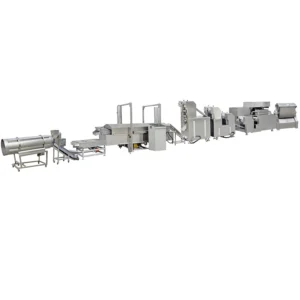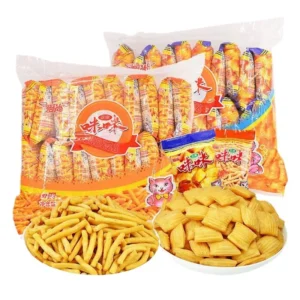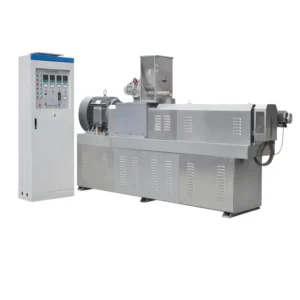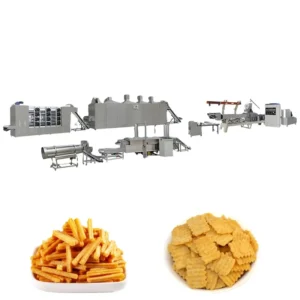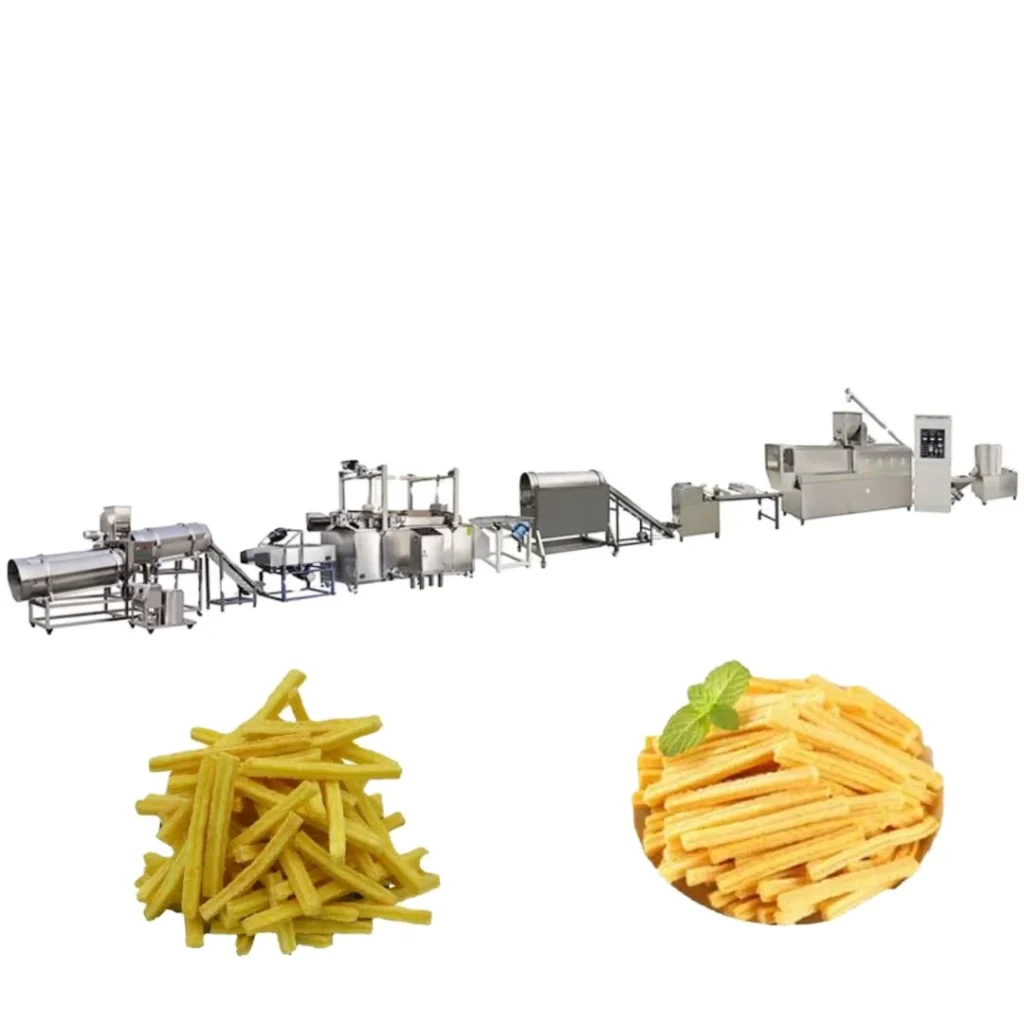
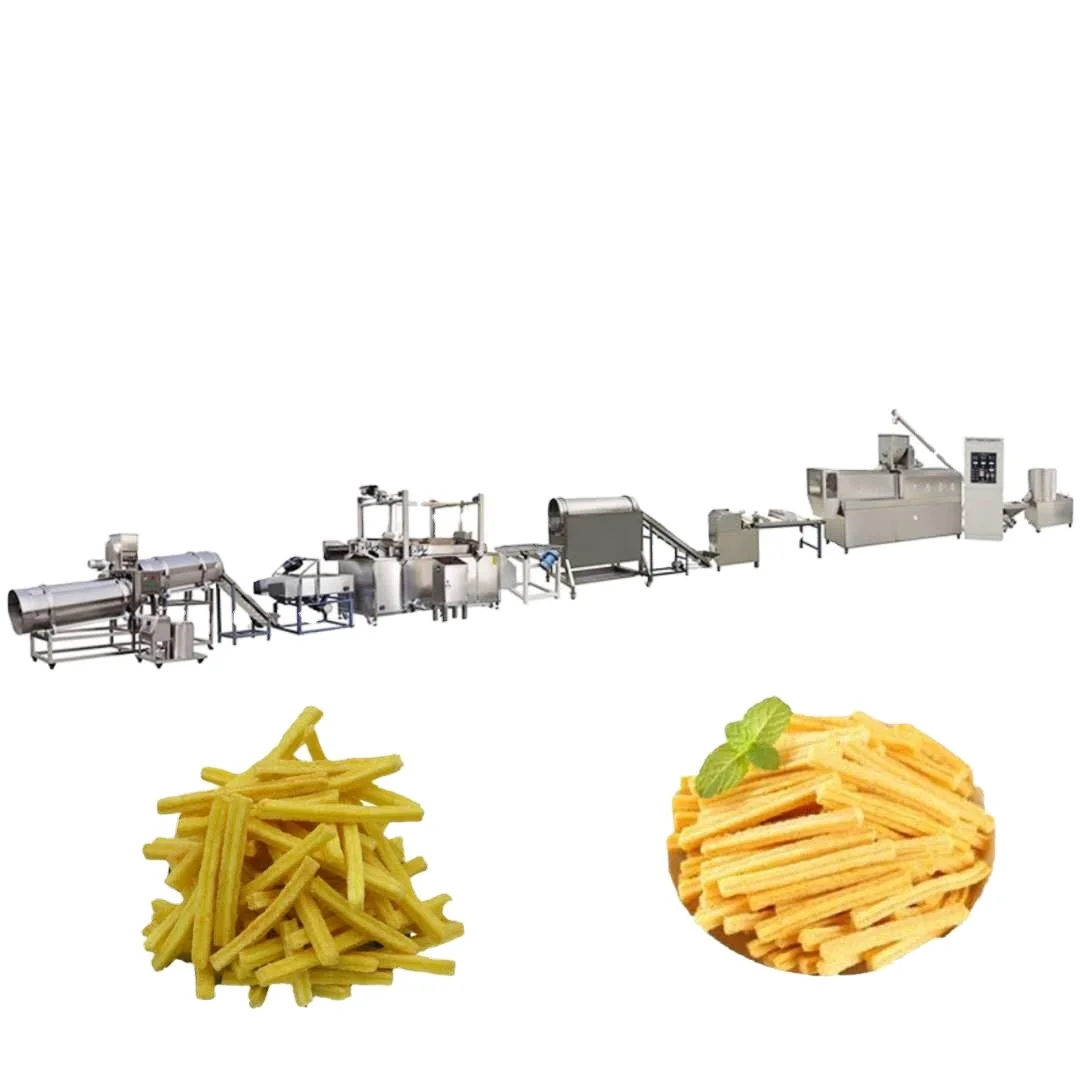
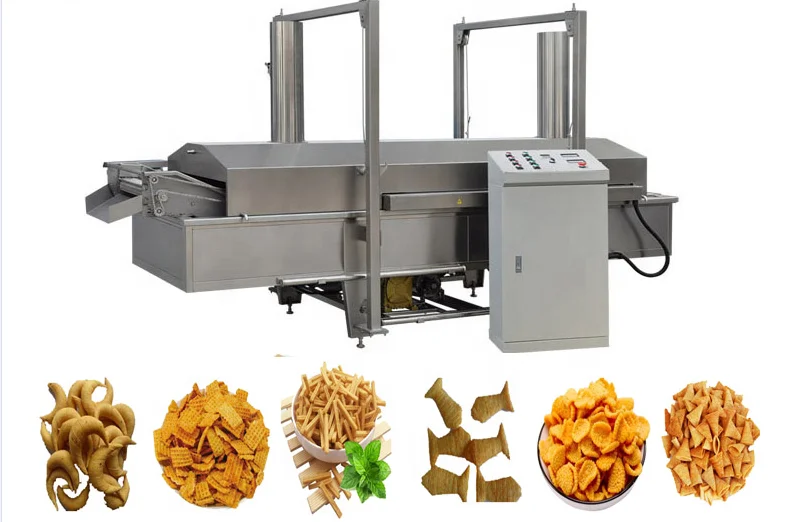
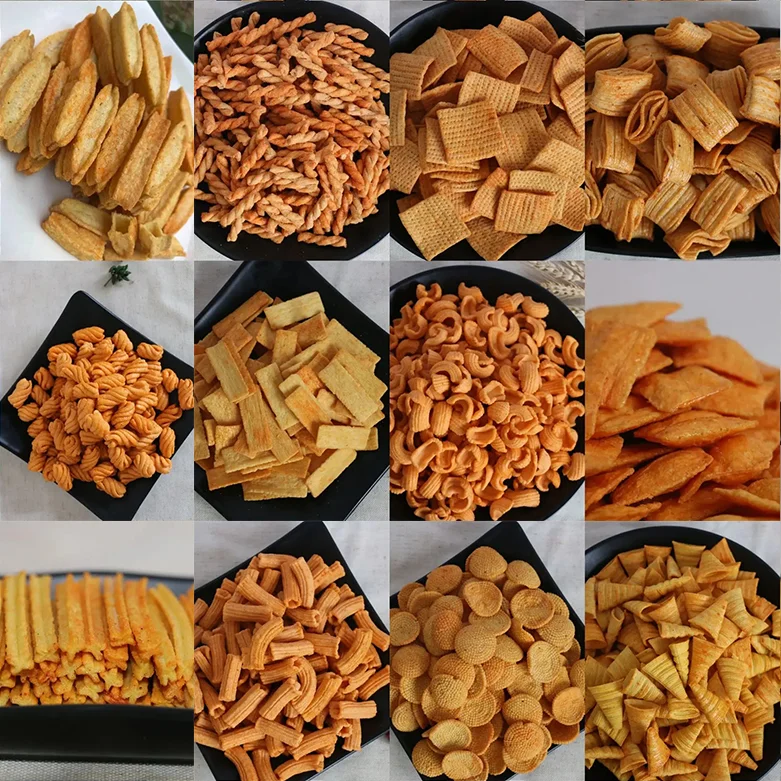
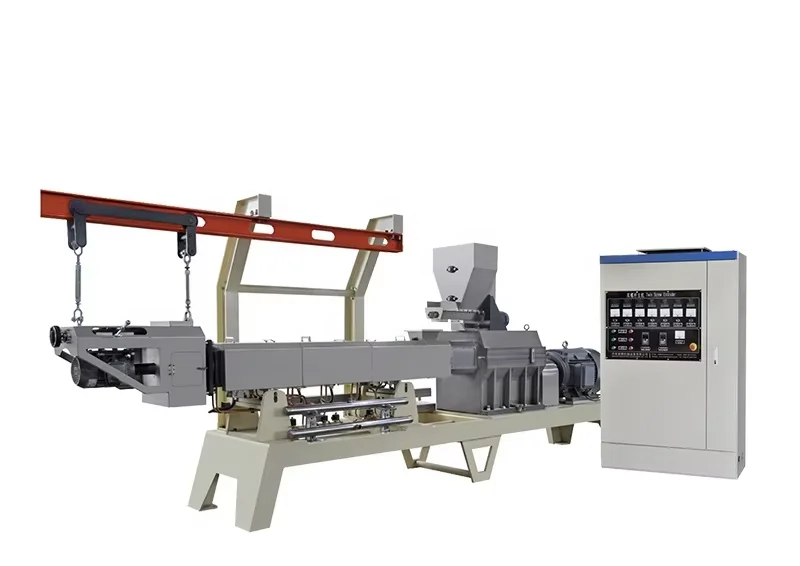
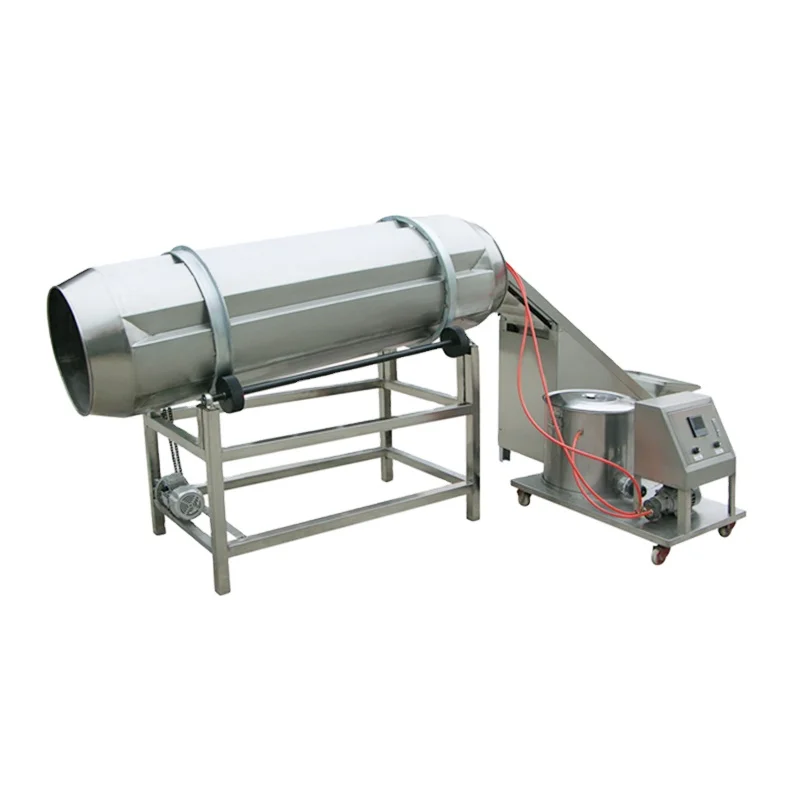
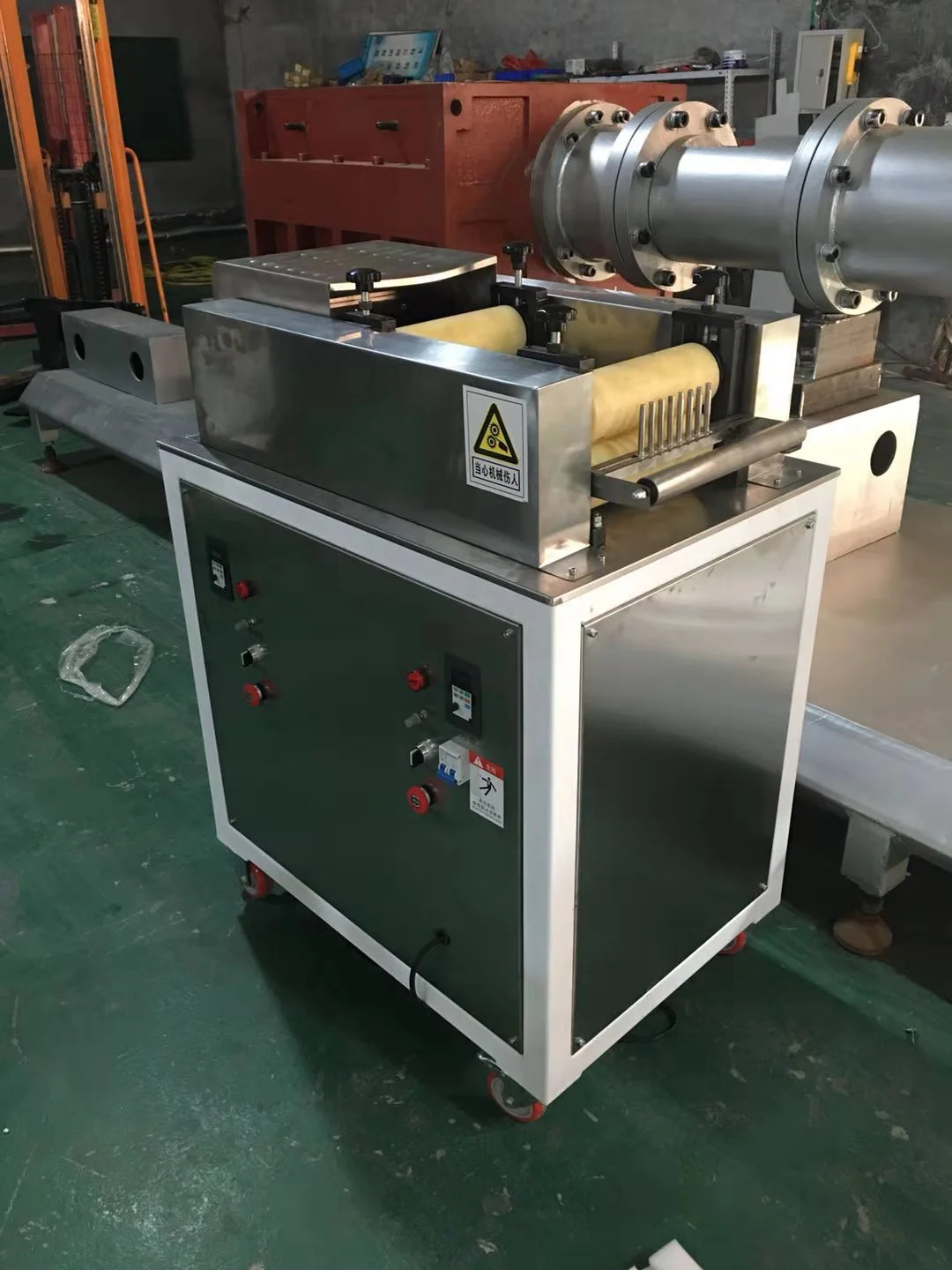
MT100/MT120 Single Screw Fried Snack Production Line, 50–70 kW, 380V/50Hz — configured for starch and flour-based snacks including screw shells, tubes, rings, and cartoon shapes via interchangeable dies.
- Single screw design with high and low pressure screw options, supporting wheat flour, corn starch, and potato starch recipes
- Integrated stations from mixer through extruder, fryer, and flavoring line with matched throughput
- Energy options include electricity, gas, diesel, or steam to suit site utilities
Complete turnkey layout, in-house trial runs on your raw material, and on-site commissioning ensure the line performs as specified from day one.
Description
Matching Stations Across the Line — Every component from mixer to cooler is sized to prevent bottlenecks, so the extruder, fryer, and flavouring drum all run at the same sustained rate.
Technical Specifications
| Parameter | Value |
|---|---|
| Model | MT100 / MT120 |
| Product Type | Fried Snack Production Line with Single Screw Extruder |
| Extruder Type | Single Screw Extruder (high and low pressure screw) |
| Rated Power | 50–70 kW (electricity); 50–60 kW (gas or diesel option) |
| Voltage & Frequency | Three phases 380V/50Hz; Single phase 220V/50Hz (customizable) |
| Output Capacity | 120 kg/h (basis not stated in source — confirm raw material, moisture, product format) |
| Raw Materials | Wheat flour, corn starch, potato starch |
| Product Shapes | Screw shell, round tube, square tube, ring, cartoon shapes |
| Energy Options | Electricity, gas, diesel, or steam |
| Motor | Siemens (made in China) or China top brand; Delixi or Delta inverter |
| Material | Food-grade stainless steel 201/304 |
| Overall Dimensions (L×W×H) | 12,000–26,000 × 1,200 × 2,200 mm |
| Standards | CE, ISO 9001 |
Application Suitability
| Application | Material or Output |
|---|---|
| Secondary puffing fried snacks | Salad strips, millet crust from wheat flour and starch blends |
| Golgappa / pani puri shells | Starch-based dough formed into hollow rounds before frying |
| Extruded tube and shell snacks | Corn starch or potato starch shaped via die into screw shells and rings |
| Cartoon-shaped children’s snacks | Coloured flour-starch blends cut and fried into character formats |
| Turnkey snack line projects | Complete station matching from batching through flavouring and cooling |
What "120 kg per Hour" Actually Requires You to Confirm
A capacity figure only holds when the raw material, moisture level, and product format match the test conditions.
I spent two weeks on site in the Middle East adjusting an entire fried snack line because the buyer’s actual grain blend carried more moisture than the standard flour recipe we trialled. The dough expanded differently in the extruder, the fryer cycle drifted, and flavouring adhesion dropped. Every fried snack production line turnkey project must be validated against the exact flour, starch, and water ratio the buyer will run in their own factory. [NEED_CITE: starch gelatinisation behaviour across moisture levels in single screw extrusion]
Matching Extruder Pressure to Your Starch Blend
The MT100 and MT120 use a single screw extruder with high and low pressure screw configurations, which matters when you switch between corn starch and potato starch. Potato starch gelatinises at a lower temperature and holds more water, demanding a gentler shear profile inside the barrel. Running a high-pressure screw on a high-moisture potato dough causes premature expansion and surface blistering before the product even reaches the fryer. Specifying the screw to the buyer’s actual recipe keeps the fried snack production line turnkey running within density targets from day one.
Die Selection and the Shape Library
Multiple die options allow the line to produce screw shells, round tubes, square tubes, rings, and cartoon shapes from the same extruder platform. The pulling and cutting machine downstream slices the extruded strand to length, and the die profile determines wall thickness, which in turn sets oil absorption during frying. A thin-wall ring fries faster and absorbs more oil than a thick-wall tube, so die choice directly influences final product texture and nutritional labelling. [NEED_CITE: relationship between extruded wall thickness and oil uptake in secondary puffing snacks]
Reading the Specs That Matter for Your Factory
The rated power band of 50–70 kW on electricity tells you the connected load the extruder motor and barrel heaters will draw together, so your transformer and main panel must carry that plus the fryer and flavouring drum. Voltage customisation beyond the default 380V/50Hz three-phase is available, which prevents commissioning delays in markets running 415V or 440V systems. The food-grade stainless steel 201/304 contact surfaces meet hygiene expectations for snack lines that undergo daily wash-downs with caustic detergents. The Siemens or equivalent motor paired with a Delixi or Delta inverter gives you speed control at the extruder without needing a separate VFD panel on site.
When the Fryer Becomes the Bottleneck
An extruder that outpaces the fryer forces operators to idle the screw, creating temperature fluctuations inside the barrel that change expansion consistency batch by batch. Conversely, an oversized fryer running half-empty burns more energy per kilogram of finished snack and accelerates oil degradation. This mismatch is one of the most common reasons a fried snack production line turnkey underperforms its nameplate capacity within the first production quarter. [NEED_CITE: throughput mismatch consequences in integrated frying and extrusion lines]
Why Procurement Here Reduces Integration Risk
The line is supplied as a complete project from mixer through cooler, so throughput calculations cover every station rather than leaving gaps between separately sourced machines. Screw and die configuration is matched to the buyer’s raw material sample before shipment, avoiding the generic build trap. An in-house testing workshop runs trial production on customer-supplied flour or starch before the equipment leaves the factory. Layout drawings account for the 12 to 26-metre line footprint and the 2.2-metre ceiling clearance, so site preparation starts well before the containers arrive. Pre-sales consultation extends through installation, commissioning, and operator training on site.
Documentation & Verification
- Line layout drawing showing station spacing for the 12,000–26,000 mm footprint
- Screw and die configuration record matched to your flour or starch recipe
- Trial run report on your raw material from the in-house testing workshop
- Electrical schematic confirming voltage, frequency, and control language
- Factory test record covering extruder, fryer, and flavouring drum together
- Wear parts list with lead times for screws, dies, and fryer baskets
Installation, Commissioning & Support
- Foundation must support the 12 to 26-metre line length with level tolerance for the extruder barrel
- Dedicated electrical circuit sized for 50–70 kW extruder load plus fryer and flavouring stations
- Line arrives as complete station modules requiring on-site alignment and belt tensioning
- First production run sets screw speed, barrel temperature zones, and fryer dwell time to your recipe
- Operator training covers die changes, inverter adjustment, and daily wash-down procedures
- Spare screw and die set recommended before the first scheduled replacement cycle
What to Share When You Enquire
To size the fried snack production line turnkey correctly, we need the exact flour or starch blend you will run, including moisture percentage after mixing. Share your target daily output and the specific snack shapes you plan to launch first. Confirm the voltage and frequency at your facility, along with the preferred control language for the operator interface. Let us know whether you have existing upstream mixing or downstream packing equipment that the line must integrate with.
Frequently Asked Questions
Q: How is the output capacity verified on my specific raw material and recipe?
A: We request a sample of your actual flour or starch blend and run it through the single screw extruder in our testing workshop. The trial records expansion ratio, moisture loss, and product density. A full trial run report accompanies the shipment, so you know the confirmed output before installation begins.
Q: How do you ensure throughput matching between extruder, fryer, and flavouring stations?
A: Each station is calculated against the same target output and product format during the layout phase. The fryer belt speed and oil volume are sized to handle the extruder’s continuous strand output, and the flavouring drum diameter is set to coat that same volume without overflow or under-seasoning.
Q: What is the phased installation and commissioning schedule for a complete line?
A: Foundation and utility preparation starts from the layout drawing before shipment. Once modules arrive, mechanical assembly and alignment take several days, followed by electrical connection and dry testing. Wet commissioning with your raw material then sets all process parameters station by station.
Q: What operator training and documentation are included with the turnkey delivery?
A: On-site training covers extruder screw speed adjustment via the inverter, die changeover for different snack shapes, fryer temperature control, and daily maintenance routines. You receive an operation manual, electrical schematic, screw and die configuration record, and a wear parts list with reorder references.
Q: How are voltage, frequency, and control language confirmed before shipment?
A: We collect your site electrical specification during the quotation stage and reflect it on the electrical schematic. The motor, heaters, and control panel are all built to that voltage and frequency. Control language is set in the inverter and any PLC interface before the factory test, so operators see their own language on day one.
Related products
-
Automatic Rice Crust Chips Making Machine Bugles Pizza Rolls Fried Snack Food Processing Line Machine
¥8,570.00 Select options This product has multiple variants. The options may be chosen on the product page -
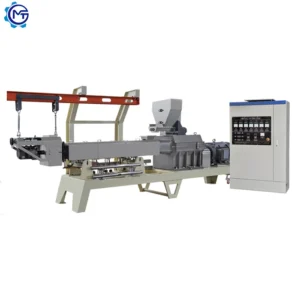
Industrial Wheat Flour Snacks Processing Equipment – Stainless Steel Fried Food Production Line
¥65.00 Select options This product has multiple variants. The options may be chosen on the product page -
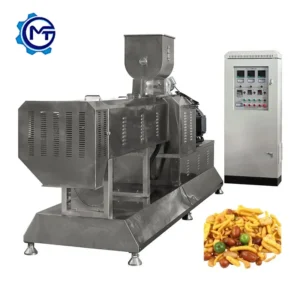
New 100-200kgh Automatic Fried Nimko Extruder Machine Food Grade Stainless Steel for High Productivity Fried Snacks Processing
¥8,575.00 Select options This product has multiple variants. The options may be chosen on the product page -
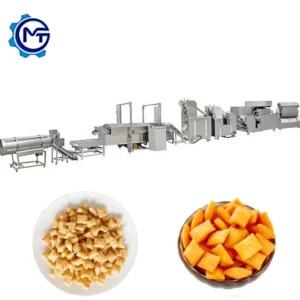
Hot Selling Full Automatic Fried Dough Wheat Flour Bugles Snacks Frying Machine Fried Puffed Food Bugles Snack Production Line
¥7,349.41 Select options This product has multiple variants. The options may be chosen on the product page